



Unexpected Winters in Arid Worlds: Snowfall Across Deserts in Mongolia, China, Africa, the Americas, and the Polar Regions
Unexpected Winters in Arid Worlds: Snowfall Across Deserts in Mongolia, China, Africa, the Americas, and the Polar Regions
When deserts are mentioned, scorching heat, endless dunes, and cloudless skies are usually imagined. Snow-covered landscapes rarely fit into this picture. However, deserts are defined not by temperature but by extremely low precipitation levels. This crucial distinction explains why snow is not only possible but relatively normal in several desert regions around the world. Across Asia, Africa, North America, South America, and the polar regions, snowfall has been regularly observed in deserts under the right conditions.
These environments experience extreme temperature variations, particularly those located far inland or at high altitudes. During winter months, heat escapes rapidly after sunset, allowing nighttime temperatures to plunge below freezing. When cold air systems move through and minimal moisture is present, snowfall can occur even in landscapes typically associated with dryness. This phenomenon has been documented in places such as Mongolia, China, the United States, Argentina, Chile, and even parts of Northern Africa.
Snowfall in deserts may be brief, but its ecological importance is significant. Meltwater supports fragile plant life, sustains animals, and contributes to underground water reserves. Understanding how desert snowfall, cold deserts, and high-altitude arid regions function offers valuable insight into Earth’s most extreme ecosystems and how they respond to shifting global climate patterns.
Understanding What Defines a Desert
Deserts are categorized by the amount of precipitation they receive annually rather than by temperature. Any region receiving less than approximately 250 millimeters of rainfall per year qualifies as a desert. This definition allows for a wide range of climates, from the blistering heat of Northern Africa to the freezing expanses of Central Asia and the polar regions.
As a result, deserts can be hot, temperate, or cold. Snowfall becomes possible in deserts where winter temperatures fall below freezing, particularly in continental interiors or mountainous areas. These characteristics are common across many deserts worldwide, making snowfall an unusual but natural occurrence.
Why Snowfall Occurs in Desert Regions
Snowfall in deserts is primarily driven by sharp temperature fluctuations. Many deserts are located far from oceans, which limits the moderating influence of maritime air. Others sit at high elevations, where thinner air allows heat to dissipate quickly after sunset.
During winter, cold air masses moving from higher latitudes can intersect with these arid regions. When even limited moisture is present, snowfall can develop. This combination of cold temperatures, altitude, and minimal humidity creates conditions where snow becomes possible despite extremely low annual precipitation.
Cold Deserts of the Northern Hemisphere
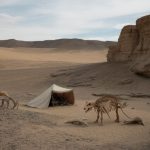
Gobi Desert in Mongolia and Northern China
The Gobi Desert spans large areas of Mongolia and Northern China and is one of the most extreme cold deserts on Earth. Rocky plains dominate the landscape, and dramatic seasonal temperature swings are common.
Winters in the Gobi Desert are marked by severe cold, with temperatures frequently dropping well below freezing. Snowfall occurs regularly during winter months due to the desert’s continental climate and its exposure to icy winds originating in Siberia. The absence of nearby oceans allows cold air to settle over the region with little resistance.
The most suitable period for travel to the Gobi Desert is generally between May and September, when temperatures are milder and conditions are dry.
Great Basin Desert in the United States
Located in the western United States, the Great Basin Desert covers parts of Nevada, Utah, Oregon, and California. This desert is characterized by high elevation, rugged mountain ranges, and broad valleys.
Snowfall is a regular feature during winter, often covering both valleys and surrounding mountains. The high altitude of the region allows winter storm systems to bring cold air and moisture, resulting in snow rather than rain.
The desert is typically visited between April and June or from September to October, when temperatures are moderate and accessibility improves.
Sahara Desert in Northern Africa
The Sahara Desert, stretching across Northern Africa, is the largest hot desert in the world. Although extreme heat defines much of the region, certain northern areas experience cold winter nights.
Snowfall in the Sahara Desert is rare but has been documented, particularly near the Atlas Mountains. Cold air systems originating from Europe occasionally move southward, allowing temperatures to fall low enough for snow to form.
The most favorable time to visit the Sahara Desert is between November and February, when daytime temperatures are less intense.
Snowfall in Southern Hemisphere Deserts
Patagonian Desert in Argentina
The Patagonian Desert extends across southern Argentina and is known for strong winds, vast plateaus, and sparse vegetation. This cold desert experiences long, harsh winters.
Snowfall occurs regularly during winter, especially at higher elevations. The desert’s southern latitude and exposure to polar air masses contribute to freezing conditions for much of the year.
Travel to the Patagonian Desert is best planned between October and March, when temperatures are relatively stable.
Atacama Desert in Chile
The Atacama Desert in Chile is recognized as the driest non-polar desert on Earth. Despite its extreme aridity, snowfall has been observed in its high-altitude regions near the Andes Mountains.
Cold fronts moving inland from the Pacific Ocean occasionally reach these elevated zones. When temperatures drop sufficiently, rare but dramatic snowfall events can occur.
The most suitable time to visit the Atacama Desert is generally from April to October, when temperatures are cooler and skies remain clear.
Other Deserts Where Snowfall Is Observed
Arctic Desert in the Arctic Region
The Arctic Desert, located around the North Pole, is classified as a polar desert due to its extremely low precipitation levels. Ice sheets, tundra, and exposed rock dominate the landscape.
Snowfall occurs frequently, although it is typically light. Constant sub-zero temperatures ensure that precipitation falls as snow rather than rain. Visits to this region are usually limited to June through August.
Antarctic Desert in Antarctica
Antarctica represents the largest desert on Earth, despite being entirely covered in ice. Precipitation levels are extremely low, qualifying it as a cold desert.
Light snowfall is common, as moisture from surrounding oceans freezes almost immediately upon contact with the surface. Travel to Antarctica is generally restricted to November through February.
Taklamakan Desert in China
The Taklamakan Desert, located in western China, is surrounded by mountain ranges such as the Tian Shan. These mountains contribute to extreme winter cold.
Occasional snowfall occurs during winter months when cold winds descend from the surrounding peaks. The desert is best visited between April and June or from September to October.
Karakum Desert in Turkmenistan
The Karakum Desert covers much of Turkmenistan and experiences a sharply continental climate. Summers are intensely hot, while winters can be bitterly cold.
Light snowfall has been recorded during winter, driven by rapid temperature drops and cold air intrusions. Spring and autumn are considered the most favorable seasons for visiting this desert.
The Ecological Importance of Snow in Deserts
Although snowfall in deserts is often brief, its impact on local ecosystems is substantial. Meltwater provides essential moisture for plants, insects, and animals that have adapted to extreme aridity. Underground water sources are also replenished, supporting life long after surface snow has disappeared.
At the same time, sudden cold spells can pose challenges for species accustomed to heat and dryness. Survival becomes more difficult during freezing nights, highlighting the delicate balance within desert ecosystems.
Climate Change and the Future of Snowy Deserts
Global climate change is altering weather patterns across continents. Some deserts may experience more frequent or unexpected snowfall due to shifting wind systems and temperature anomalies. Others may see snowfall decline as average temperatures rise.
By studying deserts where snow is a natural occurrence, scientists gain valuable insight into how sensitive and interconnected these environments are. These landscapes serve as powerful reminders that deserts are far more diverse and dynamic than commonly assumed.
The post Unexpected Winters in Arid Worlds: Snowfall Across Deserts in Mongolia, China, Africa, the Americas, and the Polar Regions appeared first on Travel And Tour World.
Source: travelandtourworld.com


Sorry, the comment form is closed at this time.