


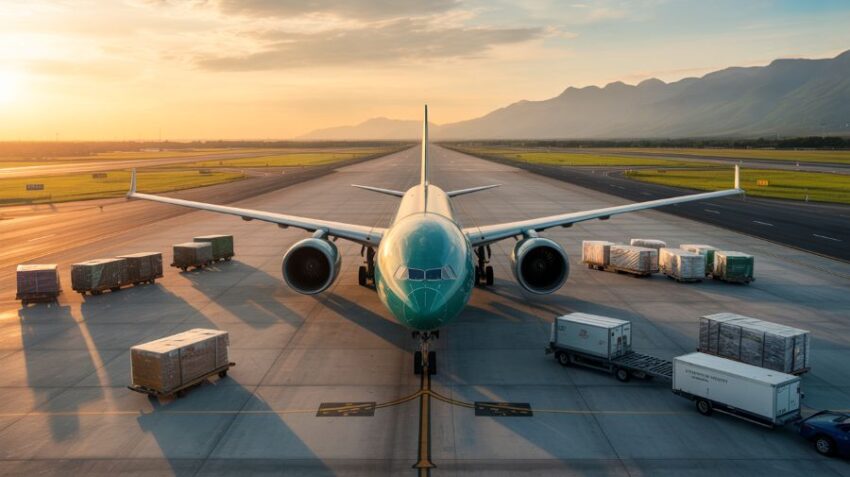
Nigeria Increases Airport Cargo Levy, Impacting Agricultural Exporters in Lagos and Beyond: Everything You Need to Know
Nigeria Increases Airport Cargo Levy, Impacting Agricultural Exporters in Lagos and Beyond: Everything You Need to Know
The Federal Airports Authority of Nigeria (FAAN) has revealed that the new cargo levy is now set at a staggering N25 per kilo from the previous N7 per kilo, which directly affects the cost of exporting goods, especially agricultural produce. The new charge has raised concerns from exporters, claiming that the new pricing will worsen the pricing challenges of perishable goods from Nigeria on the international market.
As per the National Bureau of Statistics, Nigeria’s agricultural exports via air, in 2024, were estimated at N220 billion (US$146 million), which is a considerable figure. The volume of exports has been decreasing despite the high cost of air freight, which is making Nigerian goods less competitive in the international market.
Impact of the Cargo Levy on Agricultural Exporters
Nigeria’s agricultural exports are facing challenges that are aggravated by the recent hike in the cargo levy. With the increase in the cost of exports, perishable exports like bananas, peppers, and vegetables are also facing stiff competition. Nigerian exporters have to deal with high and rising shipping charges of $3 to $14 per kilo owing to multiple tariffs cumulatively charged by airlines, handling, and agency companies at the airport. It is a heavy financial burden, and the increase adds the risk of Nigerian produce being priced out of the international market.
Industry experts believe that Nigerian agricultural products are likely to be less and less competitive compared to the rest of the world with the increase in cargo levy. High costs will also be incurred by importers, which will lead to a decline in the demand for agricultural products in Nigeria. This poses the risk of exports from Nigeria declining further.
Freight Costs Because of Government and Airline Charges
Along with the new levies by FAAN, exporters and stakeholders in the industry claim that new charges by different government agencies, i.e., Nigeria Customs Service, Quarantine Service, Nigeria Security Agencies (which have all increased their individual charges), and now, also, Air France and DHL and other cargo carriers, have increased the costs for doing business at the airports.
In the face of multiple and continuing government agency charge increases, exporters are forced to confront the reality that their costs are increasing, and their ability to respond by increasing retail prices in other countries is very limited, and in many instances, is non-existent, which has also resulted in a significant and continuing reduction in the quantity of goods being exported. Some producers have had to reduce their production, which has resulted in less export shipping. This has forced some exporters to reduce their export volumes from Nigeria’s International Market by a drastic 50%, from 10 tons to 5 tons.
Concerns Over FAAN Tariff Adjustment and Its Wider Impact
Multiple trade bodies and cargo agents have started opposing the recent tariff increase. FAAN’s decision has drawn ire from the National Association of Government Approved Freight Forwarders and the Association of Nigerian Licensed Customs Agents. These organizations have submitted petitions to the police IG, the chief customs controller, the civil aviation DG, and other government officials to legitimize their concerns on the increase in levies and their likely effects on Nigeria’s position in international trade.
Other than opposing the levy increase, cargo agents have expressed concerns regarding the alleged intention of FAAN to demolish cargo agents’ secretariats as part of FAAN’s retaliation to their protests. If this is true, it will create more disruption in airport trade and hinder it even further.
The Future of Nigerian Exporters and Increased Costs
With the cargo levy increase, there are concerns, but there is still optimism in the Nigerian agricultural export sector. Exporters are asking the government to address the concerns regarding the negative effects the levy increase will have on the agricultural sector. Offering a cargo levy subsidy will make Nigerian produce price competitive in the export markets.
Failure to control the increase in air freight costs will continue to negatively affect Nigerian agricultural exporters. Nigerian exporters need the government to address air freight costs to remain competitive exporters in the global market.
The post Nigeria Increases Airport Cargo Levy, Impacting Agricultural Exporters in Lagos and Beyond: Everything You Need to Know appeared first on Travel And Tour World.
Source: travelandtourworld.com



Sorry, the comment form is closed at this time.