


Madhya Pradesh Sets a Global Standard for Museum Innovation and Living Heritage with Pioneering Discussions at the Wakankar National Seminar
Madhya Pradesh Sets a Global Standard for Museum Innovation and Living Heritage with Pioneering Discussions at the Wakankar National Seminar
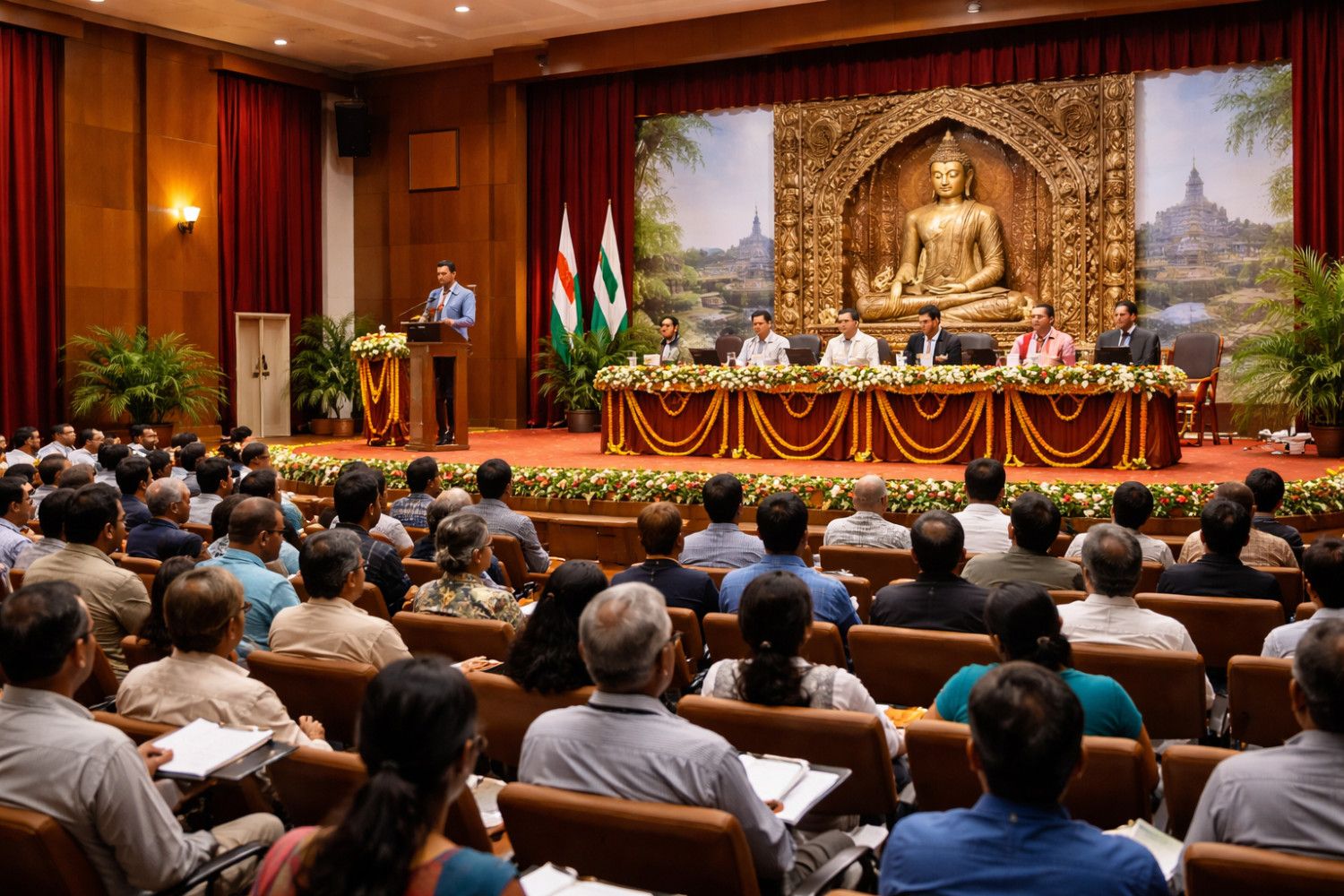
Madhya Pradesh, a state known for its rich cultural heritage and deep historical significance, has emerged as a significant voice in global conversations surrounding museum innovation and living heritage. On February 24, 2026, the state hosted the Dr. Vishnu Shridhar Wakankar National Seminar, organized by the Directorate of Archaeology, Archives, and Museums (DAAM). The event marked a monumental step in positioning Madhya Pradesh as a leader in the modern transformation of museum spaces and the governance of heritage.
The seminar, focused on “Latest Developments in the Collection, Curation, Accessibility, and Conservation of Tangible and Intangible Heritage and Trends in Digital Curation,” brought together renowned scholars, museum professionals, conservation scientists, and policy makers to discuss the future of museums and heritage institutions in the 21st century. With the world experiencing rapid technological changes and shifting societal norms, the discussions at the seminar explored how museums could embrace digital transformation while preserving their authentic cultural value.
Leading the Way in Museum Transformation
Madhya Pradesh’s commitment to redefining museums was evident throughout the seminar. Dr. D. Dayalan, former Director of the Archaeological Survey of India (ASI), chaired the session, with Dr. Manoj Kurmi, Superintending Archaeologist at the ASI Bhopal Circle, moderating the discussions. The seminar featured two keynotes that set the intellectual framework for the event. Dr. Nandini Bhattacharya Sahu, Joint Director General of Archaeology at ASI, presented groundbreaking research on the rock shelters of the Gavilgarh Hills, home to 247 decorated shelters and rare petroglyphs. These rock art landscapes, she explained, act as open-air museums preserving socio-cultural memory that spans from the Upper Paleolithic to historic periods. She called for an interdisciplinary approach to conservation that combines scientific analysis and community engagement to protect these precious cultural sites.
Embracing Digitalization Without Losing Authenticity
As museums worldwide wrestle with the challenge of incorporating digital technologies without losing the essence of their collections, Madhya Pradesh’s efforts have been groundbreaking. Dr. Arun Raj T., Regional Director of ASI for Central India, emphasized that museums in Madhya Pradesh serve as dynamic spaces that must integrate technology while also ensuring they maintain their physical and emotional connection with visitors. This balance between digital innovation and physical authenticity is a central issue facing museums today, and the seminar highlighted India’s forward-thinking approach to this challenge.
One of the most debated topics at the seminar was the ‘Dilemma of Digital vs. Real,’ presented by Dr. Jawa Madhur and Dr. D. B. Singh. This paper examined how Indian museums are integrating immersive technologies such as virtual reality (VR) and augmented reality (AR) to enhance the visitor experience, all while ensuring that these technologies do not replace the tactile, real-world experience of interacting with historical artefacts. The focus was clear: digital tools should serve as aids in interpretation and access, not as substitutes for physical engagement with the artefacts.
Pioneering the Living Museum Concept
Madhya Pradesh also stands out for its advocacy of the ‘living museum’ concept, which underscores the importance of heritage that is embedded within communities. This approach was explored in-depth by Ms. Suvechha Ganguli, who presented a case study on the importance of crafts, ritual traditions, and indigenous knowledge systems. These elements, she argued, cannot be fully understood when removed from their social and ecological contexts. Instead, heritage must be seen as a living, breathing part of the communities that maintain it.
This ‘living museum’ model challenges the traditional notion of museums as static collections housed within brick-and-mortar buildings. Instead, Madhya Pradesh’s vision promotes the idea of museums as networks that connect people, heritage sites, and cultural memory, allowing visitors to experience heritage in its real, living context.
Scientific Conservation and Cutting-Edge Technologies
Alongside digital and community-driven approaches to museum evolution, the seminar also emphasized the importance of scientific conservation. Dr. Rini Hazel Templeton’s paper on evidence-based conservation techniques for historic interiors and textiles highlighted how the integration of traditional craftsmanship with advanced scientific analysis ensures the long-term sustainability of cultural heritage. This approach has set a new standard for conservation practices that are both scientifically rigorous and culturally sensitive.
Participants discussed the necessity of preventive conservation and risk management strategies to protect vulnerable cultural assets from environmental damage and decay. The importance of material-specific restoration techniques was emphasized as essential for safeguarding the integrity of historic sites and collections for future generations.
Expanding Heritage Infrastructure and Capacity Building
The discussions also focused on the need for more comprehensive heritage infrastructure in Madhya Pradesh. Several key recommendations were put forward, including the development of museum circuits within historic cities and the strategic use of digital interpretation tools to increase visitor engagement. In addition, a call was made for building capacity within local communities through interdisciplinary training programs and creating scientific databases to document building materials and conservation efforts at lesser-known sites.
A crucial takeaway from the seminar was the importance of a coordinated, systems-level approach to heritage management that incorporates technological, scientific, and community perspectives. Participants agreed that enhancing the visitor experience through digital tools and creating sustainable conservation frameworks would play a pivotal role in ensuring the longevity of Madhya Pradesh’s rich cultural heritage.
Madhya Pradesh’s Vision for Global Leadership in Heritage Innovation
Through the Dr. Vishnu Shridhar Wakankar National Seminar, Madhya Pradesh demonstrated its commitment to becoming a global leader in heritage innovation and responsible cultural governance. The state has long been known for its vast collection of monuments, temples, and ancient sites, but the seminar highlighted how it is also taking bold steps to transform the museum and heritage landscape in the modern age.
By fostering interdisciplinary dialogue and aligning regional heritage management with international best practices, Madhya Pradesh is not only preserving its own cultural legacy but also setting an example for other regions to follow. As the world faces new challenges in balancing digital advancements with the protection of physical heritage, the discussions held at this seminar will help shape future policy frameworks, research collaborations, and global partnerships.
Madhya Pradesh’s role as a thought leader in the museum and heritage sectors is undeniable. The Dr. Vishnu Shridhar Wakankar National Seminar reinforced the state’s commitment to pushing boundaries and redefining the role of museums in society. With its focus on digital transformation, community participation, and sustainable conservation, Madhya Pradesh is poised to shape the future of cultural stewardship on a global scale.
The seminar’s outcomes will undoubtedly inform the development of policy frameworks and collaborative research initiatives that promote the preservation of heritage in an increasingly digital world. By embracing the challenges and opportunities of the 21st century, Madhya Pradesh has positioned itself at the forefront of global conversations on museum innovation and living heritage, helping to ensure that cultural memory is preserved for generations to come.
The post Madhya Pradesh Sets a Global Standard for Museum Innovation and Living Heritage with Pioneering Discussions at the Wakankar National Seminar appeared first on Travel And Tour World.
Source: travelandtourworld.com



Sorry, the comment form is closed at this time.