


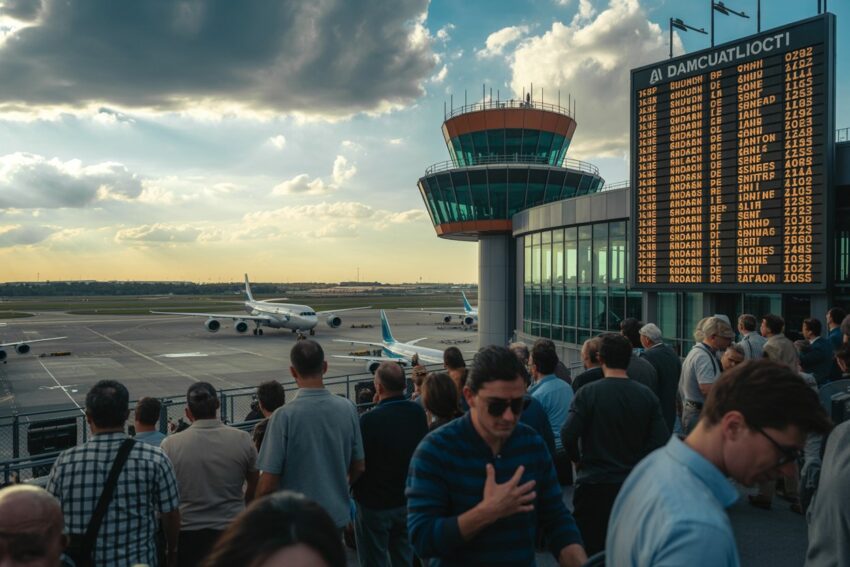
Shocking Air Travel Chaos Strikes Dubai, Doha & Abu Dhabi Qatar Airways, Emirates, Etihad Cancel Sunday Flights Amid Major Middle East Airspace Shutdown!
Shocking Air Travel Chaos Strikes Dubai, Doha & Abu Dhabi Qatar Airways, Emirates, Etihad Cancel Sunday Flights Amid Major Middle East Airspace Shutdown!
In the early hours of Sunday, major carriers including Qatar Airways, Emirates and Etihad Airways were forced to cancel key flights on some of the busiest routes linking Europe with the Middle East and beyond, after multiple aviation authorities across the region imposed temporary airspace restrictions due to unfolding security tensions involving neighbouring states. This extraordinary operational disruption follows formal airspace closures declared by civil aviation regulators in the United Arab Emirates, Qatar, Iran, Israel and neighbouring Gulf states, which have effectively rendered large portions of the regional skies off‑limits for scheduled passenger flights for at least part of the weekend.
According to official aviation sources, all scheduled Sunday flights between Dublin and Doha operated by Qatar Airways have been completely cancelled, affecting both departures from Dublin and inbound services returning to Ireland’s capital. At the same time, early morning Sunday services by Emirates and Etihad have also been called off from their respective hubs in Dubai and Abu Dhabi, although these airlines continue to assess the remainder of their daily schedules based on ongoing airspace directives. Passengers travelling on affected services have been strongly advised to contact their airline directly for the latest flight status, rebooking options or refunds.
This situation has arisen amid exceptional measures taken by civil aviation authorities in the region to close or heavily restrict their airspace as a precautionary step to protect civilian aircraft and crew following escalations in military activity between Iran and other regional actors, which have extended into areas under clear civilian flight corridors. The General Civil Aviation Authority of the UAE designated its airspace as “temporarily and partially closed” in statements to aviation partners, citing safety concerns for international flights passing over the Gulf region.
Official Airspace Restrictions Impacting Gulf Carriers and International Routes
Multiple governments in the region have issued formal notices restricting or entirely closing their flight information regions (FIRs) to commercial air traffic. In addition to the UAE’s precautionary action, official government aviation sources from Israel confirm that its airspace remained closed to civilian flights until further notice, with only carefully coordinated ferry operations allowed under strict conditions.
These closures extend to key Gulf transit corridors traditionally used by airlines connecting Europe to Asia, Africa and Australasia. Such corridors are among the busiest air routes globally and play a central role in maintaining efficient and competitive flight schedules. When these routes are interrupted, even temporarily, the impact ripples across global aviation, forcing reroutes, delays and flight cancellations far beyond the immediate region.
Regional civil aviation authorities, including those in Qatar and the UAE, are actively issuing NOTAMs (Notices to Airmen) and advisory bulletins to international airlines to alert them to rapidly evolving conditions. These official notices are part of a standard aviation safety protocol used by governments around the world to ensure pilots, airlines and air traffic control systems have real‑time information on hazards or changes to airspace status.
Qatar Airways: Dublin Service Cancelled as Airspace Remains Restricted
The decision by Qatar Airways to cancel its full Sunday flight schedule between Dublin and Doha marks one of the most disruptive single route impacts to date. The Irish‑capital service is an important link connecting Irish travellers with the Middle East and onward destinations in Asia and Africa. With both the outbound and return services called off, passengers are left to seek alternative arrangements or rebooking options once normal operations resume.
In official statements issued by airline operations and corroborated by aviation tracking data, Qatar Airways has indicated that its flight operations will be governed by the status of regional airspace directives and government‑mandated safety measures. The carrier continues to monitor developments in coordination with civil aviation authorities.
Affected passengers have been urged to contact the airline’s customer service centres or check the airline’s official communication channels for updates, as flight schedules for the rest of the weekend remain under review and are subject to change.
Emirates and Etihad: Sunday Slots Under Review After Early Cancellations
At the UAE’s major airports, both Emirates and Etihad Airways have acknowledged disruptions to their Sunday operations, with early slot cancellations confirmed as crews and aircraft remain grounded until the broader airspace picture is clarified. While neither carrier has officially abandoned its full daily schedule, both have stated that all remaining services for the day are under active review pending the resolution of airspace restrictions.
Industry analysts note that such unprecedented interruptions at the proven hubs of Dubai International Airport (DXB) and Abu Dhabi’s Zayed International Airport (AUH) are likely to cause logistical stress across global networks, especially for passengers in transit or with tight connections.
Global Effects: Wider Air Travel Disruption and Passenger Uncertainty
Beyond the immediate Gulf region, international flights that normally transit Middle Eastern airspace have seen reroutes or cancellations as airlines adjust plans to avoid restricted skies. This has resulted in extended flight times, higher fuel consumption due to detours around closed FIRs, and shifting operational logistics for major carriers.
Passengers across Europe, Asia and Africa have been affected, with many airlines issuing travel advisories and flight alerts for routes that intersect the closed airspace zones. Airports in these regions are reporting increased enquiries from travellers seeking clarity on connecting flights and onward journeys.
Safety First: Aviation Authorities Stress Precautionary Measures
Civil aviation regulators across the Middle East have emphasised that the decision to close or restrict airspace was made primarily to ensure the safety of commercial flights and aircrew during times of heightened regional tension. The regulatory bodies, including the General Civil Aviation Authority of the UAE and corresponding authorities in Qatar and Israel, are coordinating closely with international partners to reassess airspace status continually.
Aviation safety remains central to ongoing decisions, with authorities relying on established protocols governing airspace restrictions during conflict or military escalation. Official NOTAMs and aviation bulletins continue to be distributed to all airlines operating in and around the affected region.
What Travellers Need to Know Now
Passengers booked on flights through the Middle East are strongly advised to keep in touch with their airline’s official channels for immediate updates. Travel providers and airports are reinforcing that schedules are subject to change without prior notice and that flexible rebooking and refund options may be available.
As international carriers and governments work to stabilise airspace and restore safe skies, travellers are urged to allow extra time for connections, verify travel documentation, and check real‑time flight status before heading to the airport.
In Summary: Aviation Safety Takes Precedence Over Schedules
The unfolding scenario of airspace closures across much of the Middle East has compelled major airlines such as Qatar Airways, Emirates and Etihad to cancel or review Sunday flight schedules, directly affecting international routes and passenger travel plans. Official civil aviation authorities have prioritised safety amid geopolitical tensions, closing or restricting flight corridors traditionally used for global connections. This has resulted in flight cancellations, reroutes and heightened uncertainty for travellers while efforts continue to monitor and reassess airspace conditions to facilitate the eventual safe resumption of normal airline operations.
The post Shocking Air Travel Chaos Strikes Dubai, Doha & Abu Dhabi Qatar Airways, Emirates, Etihad Cancel Sunday Flights Amid Major Middle East Airspace Shutdown! appeared first on Travel And Tour World.
Source: travelandtourworld.com



Sorry, the comment form is closed at this time.