


UK, USA, and Australia Travelers: Expert Tips for Better Sleep on Long-Haul Flights
UK, USA, and Australia Travelers: Expert Tips for Better Sleep on Long-Haul Flights
Long-haul flights are known for their challenges, with the uncomfortable cabin environment, cabin noise, and turbulence all playing a part in disrupting sleep. While some passengers may struggle to get enough rest, cabin crew members, particularly those from major international airlines like Virgin Atlantic and Qatar Airways, have shared valuable insights on improving sleep quality on long flights.
For passengers flying from major international hubs such as London Heathrow Airport, Sydney Kingsford Smith Airport, and Los Angeles International Airport, understanding the seat configuration, cabin dynamics, and noise management is key to achieving restful sleep. Whether flying overnight or taking an ultra-long-haul flight, knowing which seats to select and the best sleep preparation techniques can significantly enhance comfort levels.
Let’s dive into these expert tips and tricks for improving sleep quality during long flights, focusing on strategies to deal with turbulence, seat positioning, and noise reduction.
Choosing the Right Seat for a Peaceful Sleep
Selecting the perfect seat for a comfortable and undisturbed sleep is the first step to ensuring a better in-flight experience. According to seasoned flight attendants, passengers should always aim for seats over the wings. These seats sit directly above the aircraft’s center of gravity, which minimizes the effects of turbulence and results in a more stable flight. The less movement passengers experience, the easier it is to drift into a restful sleep.
For those unable to secure wing seats, the next best option is to book a seat toward the front of the economy cabin. Front sections tend to experience fewer vibrations compared to the rear, where turbulence is often more noticeable. Additionally, choosing a seat located about five rows from the front or back of the economy section is recommended. This provides a balance between proximity to exits and essential service areas, while avoiding high-traffic zones where disturbances are more frequent.
Avoiding Noisy and Disturbing Zones
While seat selection plays a key role in sleep comfort, the surrounding environment on the aircraft can also make a significant difference. Certain areas of the plane tend to be noisier and more disruptive to sleep than others. For instance, while exit row seats offer additional legroom, they may not be ideal for sleeping. These rows are often closer to emergency doors, leading to a chillier environment, and can be disturbed by passengers waiting for restrooms.
Seats near the galley and lavatories are also known for frequent interruptions. These areas tend to have higher foot traffic, especially during meal services and restroom breaks, both of which can disturb attempts to sleep. Choosing seats away from these hubs—preferably toward the middle section of the economy cabin—ensures a quieter environment where cabin disturbances are minimal. The further passengers are from the rear and bulkhead areas, the better the chances of securing a peaceful sleep.
Essential Sleep Preparation Tips
Once the right seat is secured, the next step involves preparing for a comfortable and restful sleep experience. A few simple steps can make all the difference during a long-haul flight. Avoid heavy meals before attempting to sleep, as digestion can interfere with the body’s natural ability to rest. Passengers should also carry essential sleep aids like earplugs and eye masks, which block out cabin noise and light, creating an ideal environment for sleep.
Cabin noise can often be louder than expected on full flights, with constant conversations, in-flight announcements, and the hum of engines. Earplugs help reduce this noise, allowing passengers to sleep more soundly. Additionally, eye masks are invaluable in blocking out cabin lights, ensuring a dark and quiet space conducive to sleep.
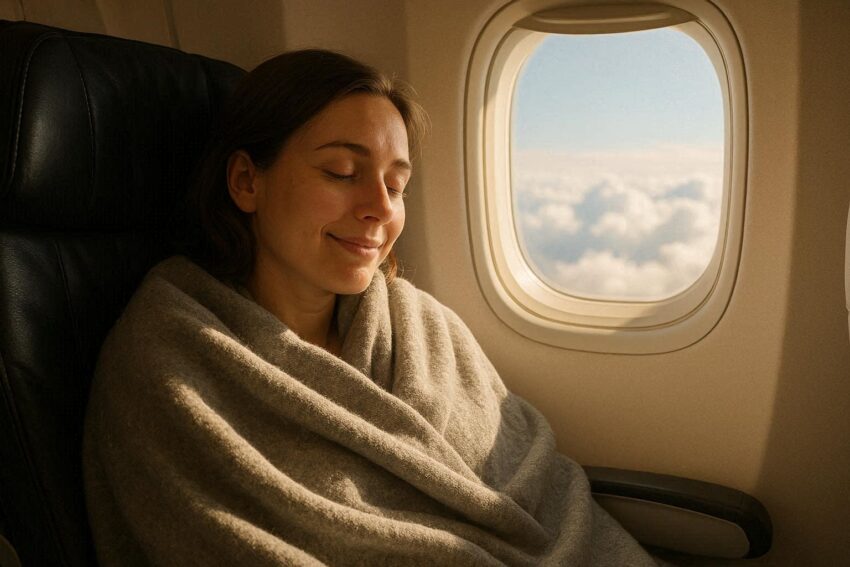
For those traveling on red-eye flights, it’s important to match sleep durations with what’s typically needed for a good night’s rest. Sleeping too much during the flight can lead to grogginess upon arrival, so sticking to a regular sleep schedule is essential. Passengers should also consider requesting an extra blanket from the crew to ensure added comfort, particularly on overnight services where cabin temperatures may fluctuate.
Enhancing In-Flight Comfort
In addition to seat selection and sleep preparation, maintaining comfort is key to getting quality rest during long flights. Cabin temperature fluctuations can often affect how well passengers sleep, with some areas of the aircraft feeling cooler than others. Asking the crew for an extra blanket can help regulate body temperature and prevent discomfort during the flight.
To minimize discomfort caused by stiff backs and legs, passengers should also make an effort to stretch periodically during the flight. Small movements and stretches, such as rotating ankles and stretching arms, help maintain circulation and avoid stiffness, ensuring better sleep comfort.
Final Thoughts on Improving Sleep on Long-Haul Flights
For passengers flying from the UK, USA, or Australia, planning ahead can make a world of difference in achieving restful sleep on long-haul flights. Understanding the importance of seat placement, cabin dynamics, and noise management are all crucial steps in preparing for a more peaceful journey. Whether it’s choosing wing seats for minimal turbulence, avoiding high-traffic zones, or carrying essential sleep aids, these expert tips will help transform any flight into a more comfortable and restful experience.
Passengers who follow these simple, yet effective tips will undoubtedly notice an improvement in their sleep quality, making long-haul flights more enjoyable and less exhausting. With just a little preparation and the right seat selection, anyone can make their next flight a far more comfortable and restful experience.
The post UK, USA, and Australia Travelers: Expert Tips for Better Sleep on Long-Haul Flights appeared first on Travel And Tour World.
Source: travelandtourworld.com


Sorry, the comment form is closed at this time.