


Baguio City Welcomes a New Era of Sustainable Travel: The Philippines Unveils the 2026–2031 Strategic Action Plan for Farm Tourism
Baguio City Welcomes a New Era of Sustainable Travel: The Philippines Unveils the 2026–2031 Strategic Action Plan for Farm Tourism
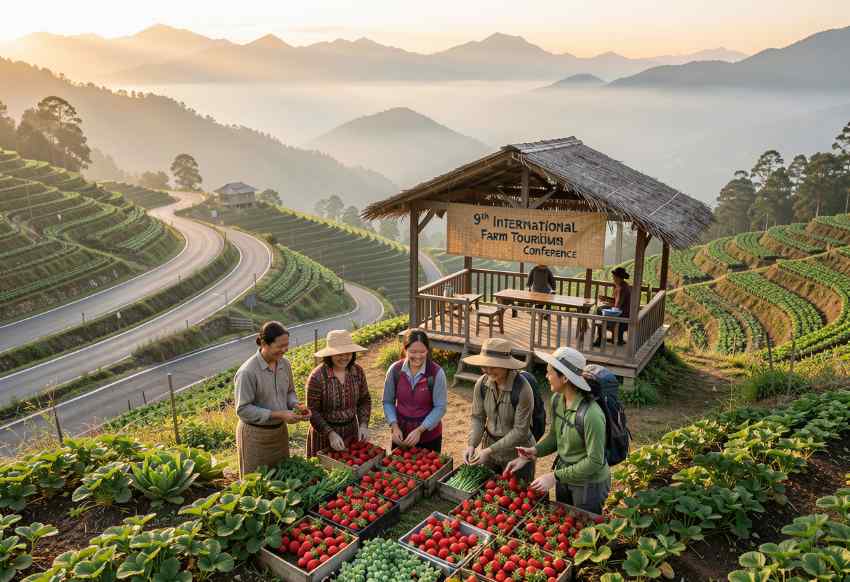
The misty heights of Baguio City recently served as the setting for a watershed moment in Southeast Asian tourism. The 9th International Farm Tourism Conference, attended by a large number of farm operators, tourism executives, policymakers, and development partners, began Wednesday. This gathering was more than just a meeting of minds; it was a celebration of the Filipino countryside, where the intrinsic connections between the land, the food it produces, and the travellers seeking authentic experiences were highlighted with renewed vigour.
A New Roadmap for Rural Prosperity
The trajectory of rural travel in the Philippines is being fundamentally reshaped by the newly introduced Farm Tourism Strategic Action Plan (FTSAP) 2026–2031. This ambitious roadmap was unveiled during the conference to provide a structured approach to enhancing farm-based destinations. Orchestrated by the International School of Sustainable Tourism (ISST), the event was designed to facilitate the sharing of global best practices and to chart the next phase of the sector’s evolution. Through this plan, a vision is established where rural landscapes are no longer just sites of production but are transformed into vibrant hubs of cultural exchange and economic activity.
The Synergy of Agriculture and Gastronomy
A profound connection between the culinary arts and the agricultural sector is being championed by national tourism leaders. It is recognized that every authentic Filipino dish is rooted in the labour of local farms and fisheries. By fostering farm tourism, the resilience of supply chains is bolstered, and direct sourcing from rural producers is actively encouraged. This integration ensures that the economic benefits of the tourism industry are distributed more equitably, allowing rural communities to be woven directly into the national tourism tapestry. The movement from “farm to table” is thus elevated to “farm to traveller”, providing guests with a deeper understanding of the origins of their meals.
Tourism as a Pillar of National Growth
The economic significance of the travel sector in the Philippines cannot be overstated. According to recent data from the World Travel and Tourism Council, the industry’s contribution to the national economy has reached a staggering USD 91.8 billion, representing nearly 20 per cent of the Gross Domestic Product. With over 11 million jobs supported by this sector, the momentum of tourism is being utilized as a powerful engine for recovery. Through the lens of farm tourism, it is ensured that this massive economic growth does not remain concentrated in urban centres but instead flows into the heart of rural provinces, empowering the Filipino farmer.
Cultivating the Cordilleras: Culture and Resilience
In the highlands of the Cordilleras, where the conference was hosted, the bond between agriculture and indigenous culture is particularly indissoluble. Responsible agro-tourism initiatives are being prioritized in this region to strengthen the livelihoods of local farmers while simultaneously protecting the majestic landscapes that define the area. Beyond economic gain, these initiatives are being leveraged to enhance climate resilience, ensuring that the natural beauty of the highlands is preserved for future generations. The thematic focus of the conference, “Highland Harvest”, underscored this commitment to cultivating a sustainable balance between human activity and environmental stewardship.
Strategic Investments and Infrastructure
The translation of high-level strategy into tangible local benefits is being facilitated by significant financial and logistical support. The alignment of tourism development with agricultural needs is being realized through the construction of farm-to-market roads, the improvement of irrigation systems, and the establishment of cold chain logistics. Furthermore, the Tourism Champions Challenge has seen the allocation of substantial funding—amounting to Php 255 million in its initial cycle and nearly Php 400 million in the second—to support transformative projects. These funds are being directed toward rural and farm-based destinations, providing the necessary capital to turn visionary ideas into operational realities.
A Sustainable Vision for the Future
Running from March 4 to 6 at the Hotel Supreme Mall and Events Center, the conference served as a clarion call for sustainable growth. It is argued that true progress in the sector requires consistent investment in human capital and the support of local enterprises. The protection of natural landscapes is viewed not as a barrier to growth, but as a prerequisite for it. By focusing on community prosperity, the development of farm tourism is intended to strengthen the very fabric of rural life, making the Philippines a global leader in sustainable, community-based travel.
Exploring the Filipino Countryside
For the modern traveller, this shift represents an invitation to venture beyond traditional beach resorts. Visitors are encouraged to participate in the “Highland Harvest”, where they can experience the daily rhythms of farm life, learn about traditional weaving or coffee cultivation, and help preserve local heritage. As the 2026-2031 action plan takes root, the Philippine countryside is poised to become a top destination for those seeking meaning, sustainability, and a genuine connection to the land.
The post Baguio City Welcomes a New Era of Sustainable Travel: The Philippines Unveils the 2026–2031 Strategic Action Plan for Farm Tourism appeared first on Travel And Tour World.
Source: travelandtourworld.com



Sorry, the comment form is closed at this time.