


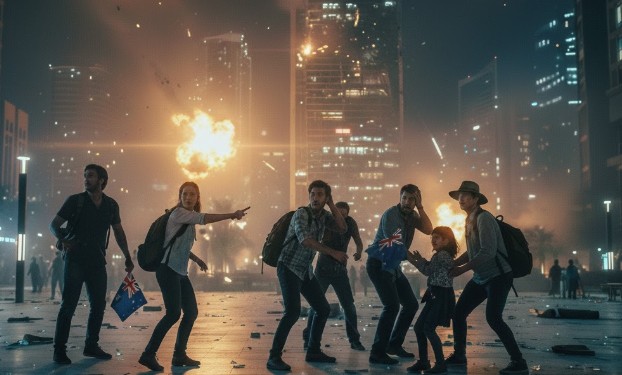
Australia and New Zealand Issued Travel Advisories Amidst Missile Terror of Gulf Sent Shiver Down the Spine with Unprecedented Chaos Conquering the Tourism: New Updates You Need to Know
Australia and New Zealand Issued Travel Advisories Amidst Missile Terror of Gulf Sent Shiver Down the Spine with Unprecedented Chaos Conquering the Tourism: New Updates You Need to Know
On 6 March 2026 travel for people from Australia and New Zealand was disrupted by the war in the Middle East, creating a chaotic environment. Officials reported unprecedented airspace closures, flight cancellations and unpredictability at hubs. People were urged to avoid high‑risk destinations. Advisories emphasised that travellers should register with consular services for updates. Emergency plans were activated and defence forces put on standby. Scenes of confusion were reported at airports as travellers learned of cancelled itineraries. Airlines faced rerouted journeys around closed airspace, leading to longer travel times and higher costs. Officials warned that disruptions could last for weeks and might worsen. Advisories covered not only conflict zones but also neighbouring countries at risk of spill‑over. The impact on travellers highlighted the fragility of global transport networks. Focusing solely on statements from ministries, defence forces and prime ministers, this account offers a clear overview for those seeking to understand the travel implications. Travellers and policymakers are presented as reacting to rapidly changing conditions. With thousands of citizens abroad, governments faced pressure to respond. The communications highlight the severity of the crisis and the measures taken. The article summarises those responses and provides context for travellers. The conflict has shocked communities and led to unprecedented cooperation between civil aviation authorities. Understanding these dynamics helps travellers prepare and stay safe.
Escalation of war and civil aviation impact
Widespread airstrikes and reprisal attacks in the Middle East have shut down swaths of airspace. Airlines were forced to cancel or divert flights, and passengers were left waiting at airports or rerouted through hubs. New Zealand officials noted that aviation authorities across the region have closed or restricted airspace to civilian flights[1]. Australian warnings said flights bound for Dubai and Abu Dhabi were turned back when airports became inaccessible[2]. With Russian and Ukrainian airspace closed, carriers faced detours and rising costs[3]. These cascading closures turned the skies into a maze of danger and uncertainty.
Do Not Travel advisories
Governments responded with serious travel warnings. The Australian prime minister advised that Australians should not travel to Iran and to leave immediately when safe[4]. Travel advice for Israel, Lebanon, Bahrain, Kuwait, Qatar and the Arab Emirates was upgraded to Do Not Travel[5]. New Zealand’s SafeTravel portal issued similar warnings, adding Iraq, Syria, Yemen and the Occupied Palestinian Territories[6]. People already in these locations were told to depart when possible or to shelter until conditions improved[7]. These advisories signalled the extreme threat posed by the conflict and the potential for sudden violence.
Emergency responses and crisis centres
In both countries emergency mechanisms were activated to assist stranded citizens. Australia’s Department of Foreign Affairs and Trade opened a registration portal for travellers seeking help to leave Israel and Iran[8]. New Zealand’s Ministry of Foreign Affairs and Trade quickly assembled consular surge teams and fully pre‑deployed aircraft for evacuations[9]. Crisis centres staffed by diplomats and defence personnel began operating to monitor the situation and communicate with registrants[10]. While these measures offered hope, officials cautioned that assistance could not be guaranteed in every location due to security constraints and logistical challenges.
Defence deployments and evacuation operations
The decision to deploy defence assets underscored the seriousness and urgency of the crisis. New Zealand announced that two air force planes and support teams were being positioned in the region to carry out evacuations when safe[9]. Officials emphasised that these aircraft would not fly directly to New Zealand and that evacuees would need to arrange onward travel from a regional hub[11]. Preparations were expected to take several days, and departures could not be guaranteed for all locations[12]. This cautious approach reflected the unpredictable security environment and the complexities of operating in contested airspace.
Registration and travel documentation
Accurate documentation is vital for consular support. New Zealand urged citizens to ensure their passports and visas were valid and that details were correctly recorded in the SafeTravel system[13]. Registered travellers receive important updates and potential evacuation notices[14]. Australian officials similarly advised people abroad to register with the Smartraveller portal to obtain up‑to‑date travel advice[15]. Without registration consular officials may be unable to locate individuals in a crisis[8]. Travellers were encouraged to carry physical copies of identification and to update contact details promptly. This practice enabled rapid emergency contact response.
Flight cancellations and airport status
Airports in the region experienced chaotic and uneven reopenings. On 4 March New Zealand reported that 74 flights had departed or were scheduled from Dubai, but only one Dubai–Sydney service operated that day[16]. All Dubai–Auckland flights remained cancelled[17]. Fourteen flights departed or were due to depart from Abu Dhabi[18]. Israel’s Ben Gurion Airport reopened on 2 March for limited services operated by Israeli carriers[19]. Passengers were told not to go to the airport without confirmation from their airline[20]. These uneven resumptions left travellers uncertain about next steps.
Airspace closures and alternative routes
With most Middle Eastern airspace closed to civilian flights, airlines rerouted journeys over longer paths. New Zealand authorities noted that the closures extended beyond the immediate conflict zone because Russian and Ukrainian airspace was also closed to many carriers[3]. These dual restrictions left limited corridors for flights between Europe and Asia[21]. Even when a flight was scheduled it could be cancelled if security conditions deteriorated or if an airport closed suddenly[22]. Passengers were advised to remain flexible and to explore alternative routes through unaffected regions, though such options involved lengthy detours and higher costs.
Preparation and shelter‑in‑place guidance
Officials acknowledged that many people could not leave immediately. Travellers in affected areas were advised to be ready to shelter in place[23]. New Zealand’s guidance suggested stocking food, water, torches, batteries and essential medicines[24]. Road borders and reopened airspace could close again at short notice[22]. Travellers were urged to monitor local news, follow directions from authorities and avoid unnecessary movements[25]. The Australian government echoed this advice and encouraged people to prioritise safety and adhere to local instructions[26]. Such preparation could make the difference between safety and peril, officials said.
Safety measures and travel insurance
Travel safety begins with planning. New Zealand’s advice recommends that all travellers obtain comprehensive insurance and carefully review policy exclusions related to conflict zones[27]. Before departure travellers should verify flight status with airlines and research the security situation in each destination[28]. While abroad people should remain alert to threats, monitor local news and follow instructions from authorities[29]. Registration with SafeTravel or Smartraveller helps ensure that urgent alerts are received[30][15]. This simple combination of insurance, research, awareness and registration forms the backbone of personal safety and preparedness during a crisis.
Avoidance of high‑risk locations
Avoiding danger zones is critical. New Zealand warns against visiting government buildings, military sites, energy infrastructure like oil facilities and United States embassies and consulates because these could be targeted in reprisal attacks[31]. Travellers are also urged to steer clear of large gatherings and public demonstrations where violence could erupt[29]. Australian advisories align with this guidance and emphasise staying away from sensitive locations[26]. By remaining aware of surroundings and avoiding high‑risk sites, travellers can minimise exposure to potential harm in an unpredictable conflict. These warnings serve to reduce casualties and prevent further tragedies.
Category‑wise summary of incidents
The following table summarises the main incident categories described by official sources. It groups the key travel disruptions and advisories into concise categories for quick reference.
CategorySummaryAirspace & flightsClosed Middle Eastern airspace, Russian and Ukrainian closures, rerouted routes[32][21]Travel bansDo Not Travel advisories for Iran, Israel, Lebanon, Bahrain, Kuwait, Qatar, UAE and others[5][6]EvacuationsConsular surge teams and NZDF aircraft pre‑deployed; DFAT registration portal activated[9][8]Shelter & safetyShelter‑in‑place guidance, supply preparations, avoidance of high‑risk sites and crowds[33][31]
Communication channels and alerts
Communication is essential in a crisis. New Zealand’s SafeTravel platform urges citizens to register so officials can send urgent updates by email or text[14]. The Ministry’s Emergency Crisis Centre also shares information via its official Facebook page[34]. Australian travellers are reminded to consult the Smartraveller website regularly for new advisories[15]. Press conferences and government statements, such as the prime minister’s address on 1 March 2026, provide situational updates and reinforce key messages[35]. By relying on verified channels travellers avoid misinformation and receive timely guidance. These channels should be trusted.
Consular contact numbers
Governments have provided dedicated numbers for citizens requiring immediate assistance. Australians can call the Consular Emergency Centre on 1300 555 135 from within Australia or +61 2 6261 3305 from overseas[36]. Officials stress that the ability to help in Iran is limited[37]. New Zealanders can reach their 24/7 consular emergency line on +64 99 20 20 20[38][39]. Travellers are encouraged to keep these numbers accessible and to contact local embassies during business hours for non‑urgent matters. Proper use of these contacts ensures resources are allocated efficiently during crises and responsibly.
Political context and security rationale
The travel advisories stem from a serious security assessment. Australia’s prime minister condemned the Iranian regime for its ballistic missile and nuclear programmes, support for armed proxies and attacks on Australian soil[40]. He said the regime threatened international peace and security and that Australia supported United States efforts to prevent Iran acquiring a nuclear weapon[41]. Both governments called for the protection of civilians and expressed concern about regional escalation[42]. Understanding this political context helps explain why officials have issued such strong travel warnings and prepared for potential evacuations despite diplomatic efforts quietly continuing.
Impact on citizens abroad
Citizens from Australia and New Zealand have endured obstacles. Thousands of Australians have loved ones in the Middle East, and their safety is the top priority[43]. Flights to Dubai and Abu Dhabi were turned back when airports closed[2], and officials monitor the situation hourly[44]. Many New Zealanders remain where departure is not yet safe[45]. Journeys are longer and more expensive because hubs remain closed[46]. MFAT’s crisis centre explores options to support those affected[47]. Citizens are urged always to stay registered and in contact with airlines[48].
Recommendations and future outlook
Travellers are urged to take steps and remain adaptable. Avoid non‑essential travel to high‑risk countries and leave conflict zones when safe[49][50]. Register travel plans with government portals and keep passports and visas current[14][13]. Purchase travel insurance and review coverage for war‑related disruptions[27]. Verify flight status before going to the airport and research alternative routes[20][51]. Prepare supplies to shelter in place if necessary[33] and avoid sensitive locations[31]. The situation remains fluid and advisories may change, so vigilance is paramount today. These crises highlight the fragility of global mobility and the need for resilience among travellers. Emotional stress and financial strain accompany disruptions. Friends and families at home are encouraged to support loved ones abroad by sharing verified updates. Ultimately, following official bulletins, maintaining awareness and preparing for medical needs will help travellers navigate uncertain journeys. Mental resilience can be strengthened through community support activities.
Sources:
[1] [3] [6] [7] [14] [16] [17] [18] [19] [20] [21] [22] [23] [24] [25] [27] [28] [29] [30] [31] [32] [33] [38] [45] [46] [48] [50] [51] Middle East security situation
https://www.safetravel.govt.nz/news/middle-east-security-situation
[2] [4] [5] [8] [15] [26] [35] [36] [37] [40] [41] [42] [43] [44] [49] Press conference – Sydney | Prime Minister of Australia
https://www.pm.gov.au/media/press-conference-sydney-28
[9] [11] [12] [13] [34] [39] [47] NZDF-Assisted Civilian Evacuation Operation
https://www.safetravel.govt.nz/news/nzdf-operated-evacuation-flights-out-of-the-middle-east
[10] Statement on Iran | Prime Minister of Australia
https://www.pm.gov.au/media/statement-iran
The post Australia and New Zealand Issued Travel Advisories Amidst Missile Terror of Gulf Sent Shiver Down the Spine with Unprecedented Chaos Conquering the Tourism: New Updates You Need to Know appeared first on Travel And Tour World.
Source: travelandtourworld.com



Sorry, the comment form is closed at this time.