


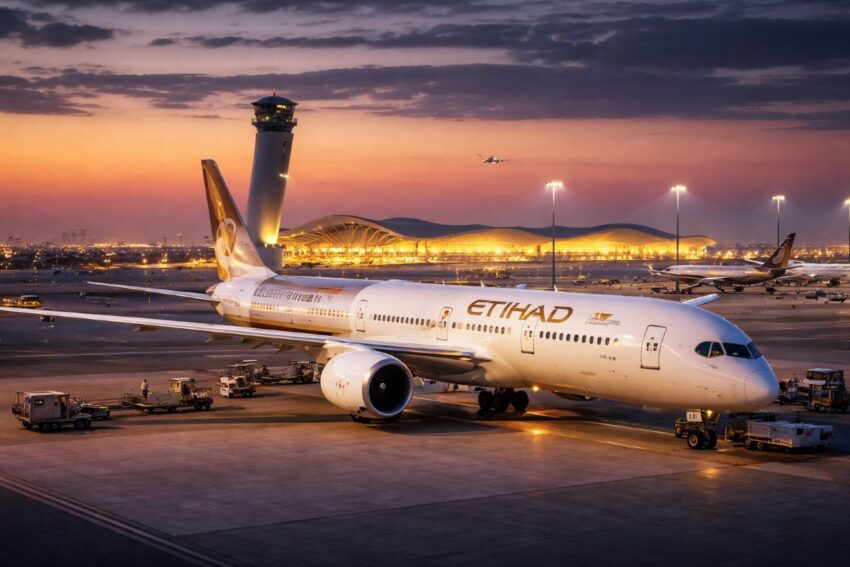
Etihad Airways Resumes Limited Flights from Abu Dhabi Amid Ongoing West Asia Airspace Crisis
Etihad Airways Resumes Limited Flights from Abu Dhabi Amid Ongoing West Asia Airspace Crisis
Key points in the headline
Etihad launches a restricted commercial schedule from Abu Dhabi
UAE authorities reopen airspace in a phased and controlled manner
India’s civil aviation ministry confirms 281 domestic flight cancellations in one day
Passengers are urged to travel only with confirmed, updated bookings
UAE Partially Reopens Airspace, Allowing Limited Etihad Operations
Following several days of regional airspace disruption, aviation authorities in the United Arab Emirates have approved a controlled and gradual reopening of flight corridors over the country. The UAE General Civil Aviation Authority, working with security agencies and international partners, has cleared specific routes for civilian use to support essential traffic and repatriation movements.
Abu Dhabi’s main airport has confirmed that partial operations have resumed under this framework, with airlines instructed to operate only those flights that meet strict safety and regulatory conditions set by national authorities. Capacity through UAE airspace remains significantly below normal levels, and a full restoration of network operations will depend on how the security situation in West Asia evolves.
Etihad Airways: From Suspension to a Reduced Commercial Schedule
Etihad Airways initially suspended regular flights to and from Abu Dhabi in response to regional airspace closures and related security assessments. In its latest operational updates, the airline states that all scheduled services to Abu Dhabi were halted until the early hours of 6 March, with only a small number of repatriation, repositioning and cargo flights allowed during that period.
According to the airline’s official communication channels, the carrier will now operate a limited commercial schedule from 6 March 2026, linking Abu Dhabi with a set of key international destinations. These flights are designed primarily to carry customers who were already booked to travel and who were affected when services were suspended, while also restoring a basic level of connectivity across Etihad’s network.
The airline emphasises that this is not a full restart of its usual timetable but a restricted programme aligned with airspace constraints and regulatory approvals. Many routes remain suspended or subject to change at short notice depending on how the broader regional situation develops.
Passenger Guidance: Travel Only With Confirmed, Updated Bookings
Etihad has issued clear instructions for travellers who wish to use its services during this reduced-operations period. The airline’s advisory stresses that passengers and members of the public should not go to the airport unless they have been contacted directly by Etihad or hold a confirmed booking on one of the newly scheduled flights.
Guests with existing reservations that were disrupted will be re-accommodated on available services as soon as possible, with priority based on booking date, travel urgency and operational feasibility. At the same time, some seats on these limited flights are being offered for sale through the airline’s official website, reflecting the gradual restoration of capacity on approved routes.
Etihad urges customers to monitor their flight status through its digital platforms rather than relying on third‑party information, as timings, routings and seat availability may change quickly in response to evolving regulatory guidance. The airline continues to coordinate with national aviation authorities and other bodies to ensure that every flight adheres to high safety and security standards before departure.
How UAE Authorities Are Managing the Airspace Reopening
The decision to reopen parts of UAE airspace follows a comprehensive security and risk review led by the national aviation regulator alongside domestic and international partners. Authorities have authorised specially designated corridors for commercial flights, with strict limitations on routes that traverse more sensitive airspace in neighbouring states.
Because of rerouting requirements and limited corridors, airlines report longer flight times on some sectors, with additional pressure on aircraft utilisation and crew scheduling. The regulator has indicated that capacity may gradually increase if conditions improve, but has cautioned that safety considerations will remain paramount in all decisions related to flight approvals.
Passengers using UAE hubs are therefore advised to allow extra time for connections, remain flexible with their travel plans, and rely on official airline and government channels for the latest information.
India’s Civil Aviation Ministry Confirms Major Disruption
The impact of the West Asia crisis is not limited to Gulf hubs; India’s aviation network has also experienced significant disruption. The Ministry of Civil Aviation has confirmed that 281 flights operated by Indian domestic carriers were cancelled on 5 March 2026 as a direct result of regional airspace restrictions and associated operational challenges.
In its official update, the ministry advises passengers to regularly check their flight status and to pay attention to alerts shared via registered contact details by their airlines. It emphasises that airlines are adjusting schedules dynamically in response to route closures, longer flight times and fleet rotation issues caused by the situation in West Asia.
To support affected travellers, the ministry has activated a 24‑hour Passenger Assistance Control Room and is using digital platforms, social media and dedicated helpline numbers to coordinate responses with airlines and airports. Thousands of passenger grievances have already been processed through these channels, indicating the scale of the disruption and the government’s focus on providing timely assistance.
Official Advice for Travellers During the Crisis
Both UAE authorities and the Indian civil aviation regulator are urging travellers to follow official guidance closely when planning or taking journeys that might involve West Asia airspace.
Key points for passengers include:
Travel only with a confirmed, up‑to‑date booking and avoid reaching the airport without explicit airline confirmation.
Check flight status frequently through official airline websites, apps or customer service channels, as schedules may shift at short notice.
Use government‑run assistance platforms and helplines for support with grievances, rebooking and information.
Factor in potential delays and longer routings due to airspace restrictions and mandatory detours approved by aviation regulators.
In both the UAE and India, authorities continue to coordinate closely with carriers, airports and international partners to restore connectivity as conditions allow, while reiterating that passenger safety remains the overriding priority in all operational decisionsThe West Asia crisis continues to disrupt air travel, with significant consequences for international connectivity. Etihad Airways, alongside other airlines, is working under limited operational capacity to help move passengers and restore essential connectivity. While the UAE has cautiously reopened airspace, the situation remains unpredictable, and passengers should stay flexible and vigilant. By following official guidance from airlines and government authorities, travellers can better navigate the challenges posed by the ongoing conflict and airspace disruptions.
The post Etihad Airways Resumes Limited Flights from Abu Dhabi Amid Ongoing West Asia Airspace Crisis appeared first on Travel And Tour World.
Source: travelandtourworld.com



Sorry, the comment form is closed at this time.