


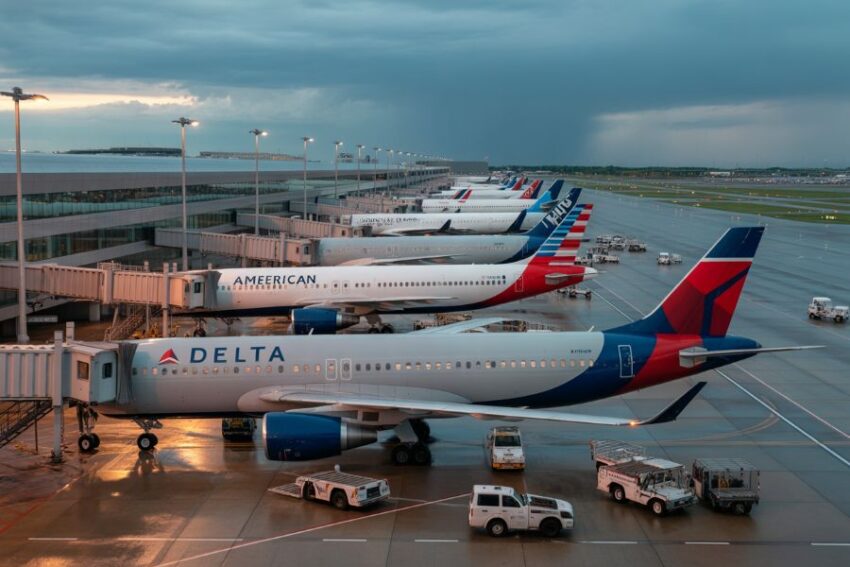
United States Airlines Brace for Financial Strain as Jet Fuel Prices Surge Amid Iran Conflict, Leading to Cancelled Flights and Stranded Passengers: Everything You Need to Know
United States Airlines Brace for Financial Strain as Jet Fuel Prices Surge Amid Iran Conflict, Leading to Cancelled Flights and Stranded Passengers: Everything You Need to Know
U.S.-Israel Strikes Have Reached Iran, and the U.S. Airline Industry Sees a New Problem Because Costs of Jet Fuel Are Rising, Hurting Airline Profits. In the last week, prices for jet fuel have risen 15 percent, which adds to the problems of 20,000 plus flights being canceled, leaving thousands of paying passengers stranded.
Rising Fuel Costs Affect U.S. Airlines the Most
After labor costs, fuel costs are the second most expensive costs for airlines. With the events occurring in the Middle East, fuel prices have risen to an average of $2.83 a gallon. Fuel prices have reached $4.12 a gallon at the U.S. Gulf Coast, which is the highest price that fuel has been since June of 2022. U.S. airlines are worried about these prices as most have stopped the practice of fuel hedging.
In previous years, airlines would hedge contracts to mitigate fuel price risks. The contracts offered protection from sudden price increases; however, they posed risks when fuel prices dropped, causing buyers to lose money. This is why most U.S. airlines, including Southwest Airlines, have ceased fuel price hedging after 2025, as they consider it to be too unreliable and costly.
Financial Strain and the Projected Impact on Margins
Because airlines cannot hedge fuel prices, they remain exposed to the risk of extended periods of high fuel prices. Fuel price risks remain high due to the ongoing geopolitical tensions between the U.S. and Iran. For instance, Delta Air Lines estimates an increase of just one cent per gallon could increase their fuel costs by $40 million annually. Financial losses due to fuel price increases are not only anticipated by Delta, but also by Southwest Airlines and American Airlines, where losses are projected to be $50 million.
If fuel prices remain the same, the four major U.S. airlines, American Airlines, Southwest, Delta, and United Airlines, will collectively incur fuel costs of $5.8 billion by the end of the year. This fuel cost increase is especially problematic for the major U.S. airlines given the previous years of declining costs.
Impact of Rising Fuel Prices and Response by Airlines
Fuel prices especially impact airlines such as Alaska Air and JetBlue, who operate domestically and have a sizeable proportion of their revenues coming from premium fares. For these airlines, and especially for JetBlue, absorbing additional costs from fuel increases is likely unsustainable, given their inability to bear the cost increase. In contrast, Delta stands to benefit from some cost protections as the owner of a refinery in Pennsylvania (having recently acquired one of the Delta refineries) that produces about 190,000 barrels of fuel a day. Because of this, Delta Refinery will avoid some of the refining costs that third-party refineries charge. However, Delta Refinery will still be exposed to the full impact of rising prices of crude oil (which increased to over $81 a barrel last Thursday).
Airlines might shift their costs by increasing ticket prices, notably on routes where premium passengers are prevalent. This will be necessitated if the war continues or if fuel prices stay high.
U.S. Airlines Face Tough Choices
U.S. airlines will need to make tough business decisions based on how long the war lasts and how quickly they learn to cope with high fuel costs. Airlines running routes with high corporate passenger counts, premium cabins, and high-value tickets will be more able to raise prices than economically oriented airlines. For American Airlines, which is short-haul oriented and therefore fuel inefficient, this will be a more difficult challenge.
While other airlines are able to manage their exposure to fuel price volatility, U.S. airlines remain vulnerable. The airlines are able to respond the fastest to changes in fuel prices, and because the airlines are able to anticipate changes in prices, they will continue to be vulnerable.
Conclusion
The U.S.-Iran conflict has caused an increase in economic challenges for airlines in the U.S. The airline sector is fragile due to a recent increase in jet fuel prices. Adaptive measures are needed for airlines to cope with the economic challenges. Travelers will soon face the impact of airlines shifting their costs to travelers. The economic challenges for airlines will make the upcoming year difficult due to increased fuel prices.
The post United States Airlines Brace for Financial Strain as Jet Fuel Prices Surge Amid Iran Conflict, Leading to Cancelled Flights and Stranded Passengers: Everything You Need to Know appeared first on Travel And Tour World.
Source: travelandtourworld.com



Sorry, the comment form is closed at this time.