


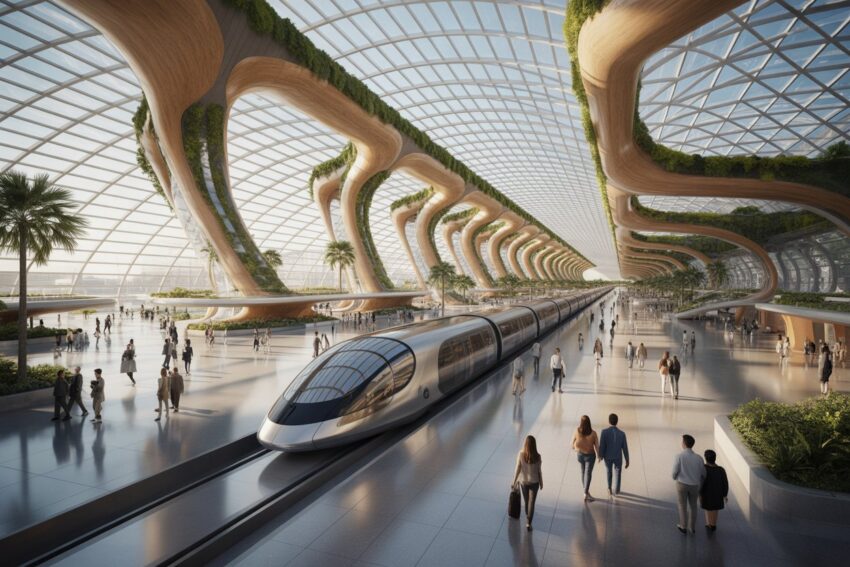
The $12.5 Trillion Future: How G20 Investment is Redefining Global Travel by 2035
The $12.5 Trillion Future: How G20 Investment is Redefining Global Travel by 2035
The world of travel is on the cusp of a monumental transformation. According to the latest report from the World Travel & Tourism Council (WTTC), titled Bridging the Gap: Travel & Tourism Capital Investment and Demand Growth Across the G20, a staggering US$12.5 trillion in capital investment is projected to flow into the sector by 2035.
Presented this week at ITB Berlin 2026, the report—developed in partnership with Oxford Economics—outlines a future where strategic infrastructure, connectivity, and sustainability are the primary currencies of national competitiveness. For travelers and industry leaders alike, the message is clear: the next decade will determine which destinations thrive and which struggle under the weight of their own popularity.
The Investment Paradox: Fast Demand, Faster Spending
The report highlights a fascinating “two-speed” growth model. Global travel demand across G20 nations (and Spain) is expected to grow at a steady 3.3% annually through 2035. However, capital investment is forecast to outpace this, rising at 4.6% per year.+1
While this sounds like a surplus, there is a catch. In the immediate term, demand is recovering from recent global disruptions much faster than new hotels can be built or airports expanded. This “strategic gap” carries the risk of localized overcrowding and strained infrastructure. The real shift is expected to occur around 2033, when the cumulative effects of this $12.5 trillion investment finally catch up, creating a more resilient and spacious travel environment.+1
Case Studies in Foresight: Germany and Spain
Not all nations are moving at the same pace. The WTTC identifies several “Strategic Modernizers”—countries that are spending now to ensure they remain top-tier destinations in 2035.
Germany: With a planned investment of US$543 billion, Germany is betting big on quality. Its investment-to-demand growth ratio stands at 1.39, meaning it is expanding its infrastructure nearly 40% faster than the expected rise in visitor numbers. The focus? Seamless connectivity and high-tech, resilient transport networks.+1
Spain: Long a tourism titan, Spain is committing US$349 billion to modernize its offering. Its investment rate is a staggering 1.46 times faster than demand, a move designed to diversify its tourism product beyond the traditional “sun and sea” and into sustainable, year-round luxury.+1
Unlocking Economic Potential through Sustainability
Gloria Guevara, President and CEO of WTTC, emphasized that this is not just about building more; it is about building better. “Travel & Tourism is entering a decisive decade,” Guevara stated. “Countries that successfully align investment with future demand will strengthen their economic resilience and secure long-term growth.”
The report stresses three core pillars for the $12.5 trillion spend:
Transport Connectivity: Streamlining the journey from door to destination.
Sustainable Upgrades: Transitioning to green energy for hotels and carbon-neutral aviation fuels.
Digital Integration: Using AI and biometrics to remove “friction” from the travel experience.
The Human Side of the Numbers
Beyond the trillions of dollars and compound annual growth rates lies a more human story. This investment represents millions of new jobs in the hospitality and construction sectors. It means a future where a traveler from Tokyo can visit a rural village in Germany with the same ease as visiting Berlin, and where the natural beauty of Spain’s coastlines is protected by smarter, less invasive infrastructure.
For the everyday traveler, this means that by 2035, the “overtourism” headlines of today could be a thing of the past, replaced by a global system designed to handle volume with grace.
The Call to Action
The WTTC is calling for unprecedented collaboration between governments and the private sector. Without a unified strategy, the $12.5 trillion could be misallocated, leading to “white elephant” projects that don’t meet actual traveler needs. As the G20 nations look toward the next ten years, the race for competitiveness is no longer just about who has the most famous landmarks, but who has the smartest plan to host the world.
The post The $12.5 Trillion Future: How G20 Investment is Redefining Global Travel by 2035 appeared first on Travel And Tour World.
Source: travelandtourworld.com



Sorry, the comment form is closed at this time.