


Aeroméxico, American Airlines, Delta Air Lines & United Rock US, Canada, UK and Mexico Travel Plans as Marriott, Hilton & Hyatt Face Booking Chaos Amid Cancún and Mexico City Airport Meltdown – Hundreds Stranded in Peak Season Shocker
Aeroméxico, American Airlines, Delta Air Lines & United Rock US, Canada, UK and Mexico Travel Plans as Marriott, Hilton & Hyatt Face Booking Chaos Amid Cancún and Mexico City Airport Meltdown – Hundreds Stranded in Peak Season Shocker
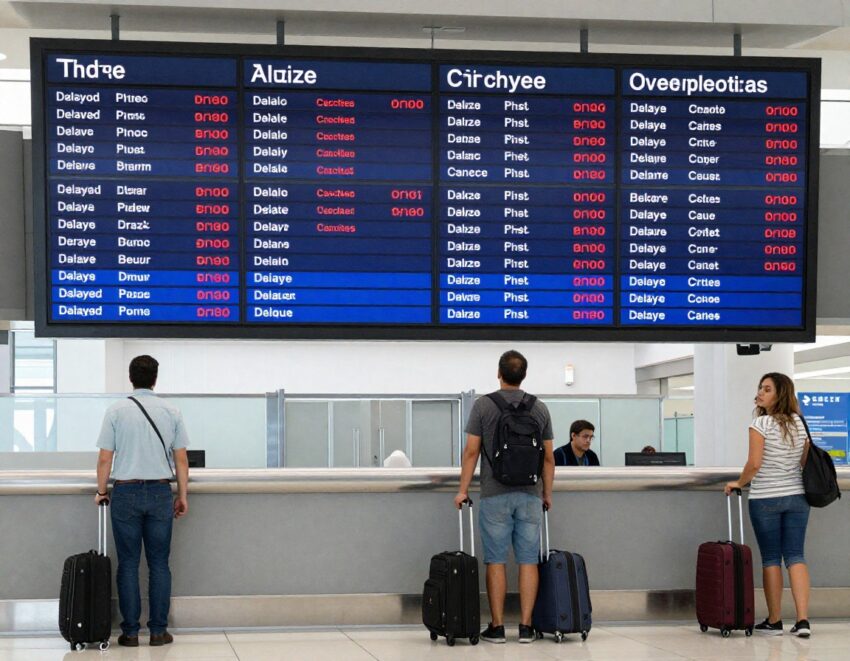
Aeroméxico, American Airlines and Delta Air Lines are at the center of a fast-moving travel disruption that has rippled across the United States, Canada, the United Kingdom and Mexico, as widespread delays and cancellations at Cancún International Airport and Benito Juárez International Airport in Mexico City collide with peak winter demand. During one of the busiest travel windows of the year, confirmed reports show dozens of delayed and canceled flights across the two major hubs, with Cancún — Mexico’s largest international tourism gateway — absorbing the heaviest operational strain. In January 2026 alone, Cancún handled more than 2.7 million passengers, nearly two million of them international travelers, underscoring how even limited schedule irregularities can quickly affect thousands. With U.S. travelers accounting for roughly 36 percent of arrivals to Quintana Roo and Canadians representing more than 10 percent, the disruption has immediate implications for airlines, hotels and tour operators as hundreds of passengers face extended waits, missed connections and last-minute rebookings. As aircraft rotations tighten and high load factors leave little margin for error, what began as airport delays has evolved into a broader aviation and hospitality stress test during one of Mexico’s most critical tourism seasons.
Aeroméxico, American Airlines, Delta Air Lines & United Rock US, Canada, UK and Mexico Routes as Cancún International Airport and Benito Juárez International Airport Face Peak-Season Disruption
Peak travel demand collided with operational disruption this week as Cancún International Airport and Benito Juárez International Airport in Mexico City recorded widespread delays and cancellations, disrupting hundreds of passengers at one of the busiest times of the year. Confirmed figures show dozens of delayed and canceled flights across both airports, with Cancún absorbing the heaviest operational strain. The timing could not be worse. February remains a high season for North American winter travelers, especially from the United States and Canada, who rely heavily on Cancún as Mexico’s largest international tourism gateway.
Airlines including Aeroméxico, American Airlines, Delta Air Lines, United Airlines and Volaris were among carriers managing schedule disruptions. While operations continued, passengers faced extended wait times, missed connections and last-minute rebooking challenges. Cancún alone handles more than 2.7 million passengers in a typical January, with nearly two million of those international travelers. Even limited schedule irregularities can quickly escalate due to aircraft rotations and crew scheduling constraints.
Marriott, Hilton & Hyatt Brace for Booking Disruptions as Hundreds of US, Canadian and UK Travelers Face Extended Airport Waits
The ripple effect extended beyond airlines. Major hospitality brands such as Marriott, Hilton and Hyatt operate dozens of properties across Cancún, the Riviera Maya and Mexico City. With U.S. travelers accounting for roughly 36–37 percent of Quintana Roo’s inbound market and Canadians representing more than 10 percent, hotel operators depend heavily on seamless air connectivity.
When flights are delayed or canceled, hotels see immediate consequences. Late arrivals mean empty rooms for a night. Early departures compress average length of stay. Tour operators and transfer providers must rework airport pickups. Resort-based activities face sudden cancellations. During peak season, occupancy in Cancún and Riviera Maya regularly exceeds 70 percent, leaving little room for flexible reallocation.
Front desks reported extended coordination with airline customer service teams, while all-inclusive properties worked to adjust dining reservations and excursion bookings. Travel advisors in the U.S., UK and Canada fielded calls from stranded passengers seeking alternative routes or revised check-in dates.
Why Cancún International Airport Matters to North American Travel
Cancún is not just another beach airport. It is Mexico’s largest international air gateway and one of Latin America’s most significant leisure hubs. In early 2026 alone, monthly passenger volumes have exceeded 2.7 million. Nearly two-thirds of that traffic is international. The majority originates from the United States and Canada, with additional long-haul services from the United Kingdom and select South American markets.
Major U.S. carriers operate multiple daily frequencies from hubs such as Dallas–Fort Worth, Atlanta, Houston, Chicago, New York and Los Angeles. Delta Air Lines maintains strong connectivity from Atlanta and New York. American Airlines operates extensive services from Texas and Florida. United connects from Houston, Newark and Chicago. Aeroméxico and Volaris serve both domestic and cross-border routes. This dense network magnifies disruption impact.
Benito Juárez International Airport in Mexico City Adds Complexity to Airline Operations
Mexico City’s Benito Juárez International Airport plays a different but equally critical role. It is the country’s primary business gateway and a major domestic connection point. Even when Cancún disruptions originate locally, aircraft rotations from Mexico City can amplify scheduling pressure.
Mexico City recorded more than 40 million annual passengers in recent years. Its high slot utilization means limited flexibility when irregular operations occur. When aircraft are delayed departing Cancún, they may miss onward rotations from Mexico City, creating cascading delays across domestic and international networks.
Airline Impact: Aircraft Rotations, Crew Limits and Passenger Reaccommodation
For airlines, disruption during high demand is costly. Aircraft must be repositioned. Crew duty-time rules limit how long pilots and cabin crew can remain on duty. When flights exceed those limits, cancellations may follow.
Under Mexican aviation passenger-rights regulations, travelers facing cancellations are typically entitled to rebooking or refunds and, in certain cases, compensation. This increases operational costs for carriers managing peak-season irregularities. Airlines also face accommodation expenses when overnight delays occur.
U.S. and Canadian carriers often deploy widebody or high-density narrowbody aircraft to Cancún during winter peaks. When one aircraft falls out of sequence, hundreds of seats may be affected in a single cancellation.
How US, Canada and UK Travelers Are Most Exposed
Recent tourism data shows the United States as the dominant international source market for Quintana Roo, accounting for approximately 36.8 percent of arrivals. Canada follows at around 10.5 percent. The United Kingdom represents roughly 2–3 percent, but long-haul British visitors often book extended stays, magnifying economic impact when itineraries shift.
In the first quarter of 2025, nearly four million U.S. residents arrived in Mexico by air, with Cancún among the top entry points. Over one million Canadians entered during the same period, many through Cancún. These volumes explain why even modest airport disruptions generate headlines across North America.
Hospitality Industry Scrambles to Protect Peak-Season Revenue
Marriott, Hilton and Hyatt operate premium beachfront resorts, business hotels and all-inclusive properties across Cancún and Mexico City. February and March are traditionally strong revenue months due to winter holidays, school breaks and business travel.
When air connectivity falters, revenue management teams must adjust pricing dynamically. Group bookings may be postponed. Event planners may rework conference agendas. Some properties offer flexible cancellation windows during force majeure situations. Others coordinate directly with airline vacation packages to align arrival dates.
Independent boutique hotels also feel the shock. Smaller properties lack the global rebooking systems of international chains, making real-time communication critical.
Travel Insurance and Passenger Rights Gain Attention
Disruption often highlights the value of travel insurance. Policies covering trip interruption can reimburse additional hotel nights or meal expenses. Airlines typically provide reaccommodation, but ancillary costs may fall on passengers without coverage.
Mexico’s consumer protection framework provides baseline protections, but enforcement depends on circumstances. Travelers are advised to document delays, retain boarding passes and communicate directly with airline representatives.
Flight Details and Connectivity Patterns During Peak Season
During winter high season, daily seat capacity between the United States and Cancún can exceed tens of thousands of seats. Routes from Dallas–Fort Worth, Houston and Atlanta often operate multiple times per day. Canadian cities such as Toronto, Montreal and Calgary also maintain strong frequency.
Mexico City serves as a feeder hub for domestic travelers heading to beach destinations. Aeroméxico’s network connects regional Mexican cities to Cancún via Mexico City. When Benito Juárez experiences congestion, these feeder flights may be delayed, further pressuring resort arrivals.
Operational Pressures Beyond Airlines
Ground handling, immigration counters and baggage systems also feel strain during disruption waves. Long queues at passport control or security screening can compound delay effects. Extended tarmac waits may occur when gate availability tightens.
Airport operators must coordinate with airlines to reassign gates and manage aircraft parking positions. Cancún’s multiple terminals handle both international and domestic flows, requiring precise coordination.
What Travelers Should Do Right Now
Passengers planning travel through Cancún or Mexico City should check flight status before departing for the airport. Airline mobile applications provide real-time updates. Arriving at the airport early allows time for rebooking if needed.
Travelers should confirm hotel cancellation policies and maintain flexible arrival windows. Keeping digital copies of booking confirmations helps expedite check-in adjustments. Those with connecting flights should allow additional buffer time where possible.
Why Peak Season Magnifies Every Disruption
February represents one of the busiest months for Mexico’s Caribbean coast. Winter travelers from cold-weather regions seek beach escapes. Conferences and destination weddings increase occupancy. High load factors reduce operational slack.
In January 2026 alone, Cancún processed over 2.7 million passengers. Even a small percentage of delayed flights translates into thousands of impacted travelers. That scale explains the swift visibility of recent disruptions.
Broader Tourism Implications for Mexico
Mexico welcomed nearly 48 million international tourists in 2025, reflecting sustained demand. Beach destinations remain the primary draw. Sustained air connectivity is central to maintaining that growth trajectory.
Short-term disruptions rarely dent long-term demand. However, repeated irregular operations can influence traveler perception. Airline reliability and airport efficiency remain critical competitive factors in the global leisure market.
Looking Ahead: Stabilization and Resilience
Airlines typically restore schedules quickly once operational constraints ease. Aircraft rotations are recalibrated overnight. Crews are reassigned. Hotels accommodate revised arrivals.
The hospitality sector has developed robust contingency planning since the pandemic years. Flexible policies, dynamic pricing tools and digital guest communication platforms enable faster response. Airlines also continue investing in fleet renewal and crew training to reduce disruption risk.
Final Takeaway for Tourists and Industry Stakeholders
Aeroméxico, American Airlines, Delta Air Lines and United operate some of the busiest international corridors into Mexico’s top leisure gateways. When Cancún International Airport or Benito Juárez International Airport experiences delays and cancellations, the effects ripple across the United States, Canada, the United Kingdom and Mexico itself.
Yet the fundamentals remain strong. Mexico’s tourism infrastructure is vast. Airlines maintain dense route networks. Major hospitality brands have the operational depth to adapt.
For travelers, awareness and preparation are key. Monitor flight updates. Maintain travel flexibility. Consider insurance coverage. Arrive early. Communicate with hotels proactively.
Aeroméxico, American Airlines and Delta Air Lines are facing peak-season turbulence as widespread delays and cancellations at Cancún International Airport and Benito Juárez International Airport in Mexico City disrupt travel across the United States, Canada and the United Kingdom. With Cancún handling more than 2.7 million passengers in January alone, even limited operational disruptions have left hundreds stranded and sent shockwaves through airlines, hotels and tour operators during one of Mexico’s busiest tourism periods.
For the airline and hospitality industries, the recent disruption underscores one truth: in peak season, reliability is everything.
The post Aeroméxico, American Airlines, Delta Air Lines & United Rock US, Canada, UK and Mexico Travel Plans as Marriott, Hilton & Hyatt Face Booking Chaos Amid Cancún and Mexico City Airport Meltdown – Hundreds Stranded in Peak Season Shocker appeared first on Travel And Tour World.
Source: travelandtourworld.com


Sorry, the comment form is closed at this time.