


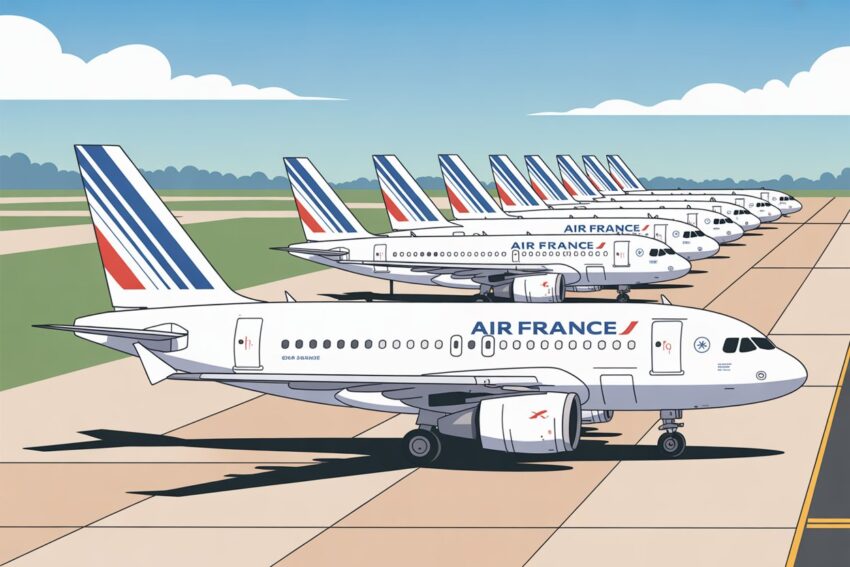
Air France Sells One of Last Airbus A318s to FTAI Aviation, Marking Fade‑Out of Smallest A320 Family Jet
Air France Sells One of Last Airbus A318s to FTAI Aviation, Marking Fade‑Out of Smallest A320 Family Jet
In early February 2026, Air France completed the sale of one of its remaining Airbus A318 “Baby Bus” aircraft under a multi‑aircraft transaction with FTAI Aviation Ltd., underscoring the French flag carrier’s ongoing fleet modernisation strategy and the declining role of the smallest A320‑family variant in mainstream airline service. The Airbus A318 is approaching the end of its commercial lifecycle as operators worldwide retire the type in favour of newer, more efficient jets, including the Airbus A220. This transaction reflects both broader aviation market dynamics and Air France’s strategic shift toward newer, lower‑emission aircraft. These developments affect travel experiences, airline operations, and route planning for passengers in France and across Europe.
Air France Offloads A318 and Other Narrowbody Jets to FTAI Aviation
The deal — finalised on 17 February 2026 — saw Air France sell seven Airbus narrowbody jets to FTAI Aviation Ltd., including one Airbus A318‑100, four A319‑100s, and two A321‑200s. The aircraft involved were off‑lease and are now part of fleet renewal and aftermarket support strategies. The sale supports Air France’s broader plan to modernise its short‑ and medium‑haul operations by phasing out older jets and replacing them with more efficient types such as the Airbus A220‑300.
The inclusion of an A318‑100 in the transaction is notable because this type has become increasingly rare in commercial service. Air France was historically the largest operator of the A318 — often dubbed the “Baby Bus” because of its compact size compared with other A320‑family jets — but as the airline’s fleet has evolved, the A318 has nearly disappeared from scheduled passenger networks.
What Is the Airbus A318 and Its Role in Air France’s Fleet
The Airbus A318 is the smallest member of the Airbus A320 family, designed primarily for short‑range operations. It shared type‑rating commonality with larger A320 family jets, allowing pilots to operate all variants with minimal additional training. However, its smaller capacity and less favourable economics relative to modern aircraft ultimately limited its appeal.
Air France previously operated several A318 aircraft across domestic and European routes. In lines with its fleet plan to improve efficiency, the carrier has been phasing out older A318s and A319s, replacing them with roughly two‑generation newer aircraft such as the A220‑300, which offers better fuel performance and lower emissions.
As of 2026, Air France’s fleet evolution reflects this transition: the A318 is being retired, while the newer A220 family strengthens the airline’s narrowbody network. The A318’s gradual disappearance signals a broader industry trend where very small jets are no longer cost‑competitive in mainstream operations.
Airline Strategy and Aviation Market Dynamics
For Air France, the sale of the A318 and other aircraft aligns with a fleet simplification strategy — terminating older, less efficient types while introducing advanced jets with lower fuel burn and operating costs. The airline’s investment in next‑generation aircraft supports sustainability goals and long‑term competitive positioning in both regional and international markets.
The purchasing party, FTAI Aviation, intends to leverage the acquired jets — including engines and modules — to support maintenance, repair, and exchange (MRE) activities and other aerospace products and power services. This end‑of‑life strategy allows FTAI to extract residual value from older aircraft and bolster spare parts and engine inventories for aftermarket operations.
What This Means for Travellers
From a travel and aviation perspective, the phasing out of the Airbus A318 and Air France’s fleet modernisation have several tangible effects for passengers, airlines and travel planning:
Advantages for Travellers
More Efficient Aircraft
Replacing older jets like the A318 with newer models such as the A220 means improved fuel efficiency, lower emissions and an enhanced travel experience on short‑haul routes due to quieter, more modern cabins.
Network Stability and Growth
Modern fleet renewal often supports more reliable schedules and can enable airlines to maintain or expand service to more destinations with greater operational flexibility.
Better Environmental Performance
New aircraft typically produce fewer emissions per seat, aligning with growing traveller preferences for sustainable travel options.
Disadvantages and Considerations
Loss of Unique Aircraft Experience
For aviation enthusiasts and travellers fond of legacy aircraft types, the retirement of unique jets like the Airbus A318 may represent the end of a distinctive era in flying.
Fleet Transition Complexity
Retiring older aircraft and integrating new types requires significant planning, pilot training and infrastructure adaptation, which can temporarily affect scheduling and aircraft availability.
Travel Costs and Capacity Shifts
Newer aircraft may offer different seating capacity and configurations, which can impact pricing structures, seat availability and route frequencies in the short term.
Wider Aviation Implications
The dwindling number of Airbus A318s in commercial service highlights a broader market shift toward aircraft that are more fuel‑efficient and better suited to contemporary passenger demand. As carriers worldwide simplify fleets and prioritise newer jets, very small mainline aircraft like the A318 have become less relevant for scheduled airline operations. This change reflects evolving airline strategies shaped by fuel costs, emissions targets and competitive pressures.
For Air France, continuing to replace older jets with modern alternatives supports its operational goals and service quality, while partnerships with companies like FTAI facilitate efficient lifecycle management of retired aircraft components.
Conclusion
Air France’s sale of one of its last Airbus A318 aircraft as part of a multi‑aircraft transaction with FTAI Aviation in February 2026 underscores the end of a distinctive chapter in aviation history. As the “Baby Bus” nears full retirement, the French carrier accelerates its fleet renewal toward more efficient and environmentally preferable aircraft, reshaping passenger experiences and airline operations across its network. For travellers, this shift brings enhanced comfort and sustainability while marking the close of an era for one of the rarest jets in commercial passenger service.
The post Air France Sells One of Last Airbus A318s to FTAI Aviation, Marking Fade‑Out of Smallest A320 Family Jet appeared first on Travel And Tour World.
Source: travelandtourworld.com



Sorry, the comment form is closed at this time.