


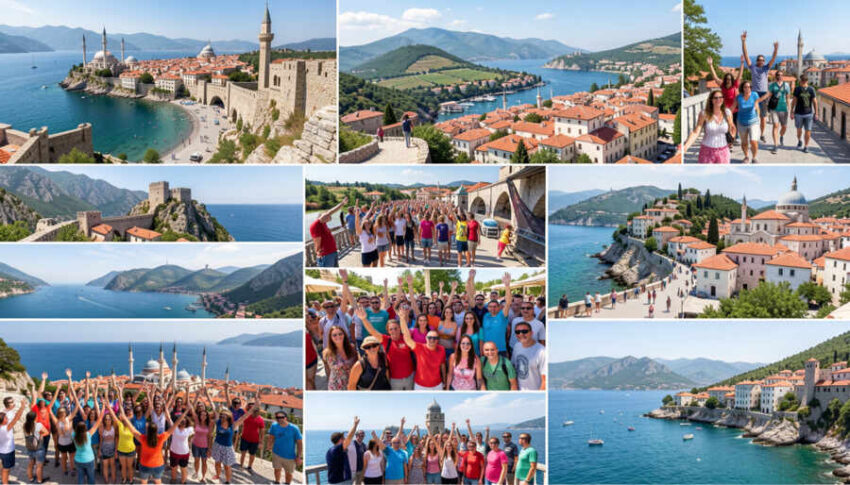
Albania Joins Bulgaria, Croatia, Montenegro, North Macedonia, Kosovo, Serbia, Slovenia, Romania, and Bosnia and Herzegovina to Position the Balkans as Europe’s Most Dynamic Emerging Travel Destination
Albania Joins Bulgaria, Croatia, Montenegro, North Macedonia, Kosovo, Serbia, Slovenia, Romania, and Bosnia and Herzegovina to Position the Balkans as Europe’s Most Dynamic Emerging Travel Destination
Albania has officially joined Bulgaria, Croatia, Montenegro, North Macedonia, Kosovo, Serbia, Slovenia, Romania, and Bosnia and Herzegovina in reinforcing Europe’s rapidly expanding Balkan tourism network. This strategic alliance marks a significant step towards a more unified approach to promoting the diverse and captivating attractions of the Balkan Peninsula. For years, Europe’s tourism spotlight has been dominated by iconic cities like Paris, Rome, and Barcelona, while the Balkans remained largely overlooked. But as travelers seek new and unique experiences, this collaboration aims to position the region as a vibrant, must-visit destination. With rich cultural histories, stunning landscapes, and untapped potential, the Balkans are set to become a central player in Europe’s tourism landscape.
The Balkans are experiencing a tourism revival. Croatia’s Adriatic beaches draw increasing numbers of visitors each year, Albania is gaining fame as a hub for digital nomads, and Bosnia and Herzegovina is offering travelers a rich and nuanced glimpse into Europe’s layered history. Modern Balkan tourism combines natural wonders, centuries-old architecture, and cultural diversity, creating experiences that rival Europe’s better-known destinations.
Defining the Balkans
The Balkan Peninsula occupies the southeastern corner of Europe, bordered by the Adriatic, Black, Ionian, and Aegean Seas. While Greece and parts of Turkey fall geographically within this area, the term “Balkan” is more often applied to cultural and historical identity rather than precise borders. The region has a complex history shaped by centuries of Ottoman and Austro-Hungarian influence, a mix of Slavic, Greek, and Mediterranean traditions, and recent conflicts that continue to shape perceptions. Today, the Balkans are emerging as a fascinating and diverse travel destination, offering a mix of landscapes, architecture, and cultural experiences unmatched elsewhere in Europe.
Croatia
Croatia is perhaps the most internationally recognized Balkan country, famed for its Adriatic coastline, dotted with over a thousand islands, and its vibrant cities. Dubrovnik, often called the “Pearl of the Adriatic,” is known for its terracotta roofs, Roman-era fortifications, and historic streets. Its prominence as a filming location for a popular television series has added to its global appeal.
Split, Croatia’s second-largest city, blends historical charm with a modern vibe, particularly around the Diocletian Palace. Zagreb, the capital, offers a more relaxed experience, rich in culture and affordable for travelers seeking museums, galleries, and street life. Croatia’s tourism has nearly doubled over the past decade, reaching almost 27 million visitors in 2024. Its Schengen Area membership and adoption of the euro have further simplified travel, though the term “Balkan” can be sensitive locally.
Montenegro
Montenegro is small but extraordinary in scope. Its coastline meets towering mountains, creating some of Europe’s most dramatic scenery. The Bay of Kotor, a fjord-like inlet, is the country’s crown jewel. The town of Kotor, with its Venetian-style architecture, offers a quieter alternative to Dubrovnik, while nearby mountains conceal historic fortresses and hiking paths, including the challenging Ladder of Kotor with 72 switchbacks.
Podgorica, Montenegro’s capital, contrasts its coastal neighbors with its Brutalist architecture, riverbank promenades, and access to Lake Skadar’s vineyards. Northward, Durmitor National Park and the Tara River Canyon showcase rugged alpine terrain, providing opportunities for rafting, hiking, and skiing. Montenegro’s compact size allows travelers to experience a dramatic transition from seaside leisure to mountain adventure in just a few hours.
Bosnia and Herzegovina
Bosnia and Herzegovina carries the weight of its 1990s conflict, yet the country is transforming into a compelling European destination. Sarajevo, the capital, blends Ottoman-era bazaars, historic streets, and museums that provide insight into its complex past, including the site where World War I began.
Mostar, in the south, is famous for Stari Most, a 16th-century bridge rebuilt after its destruction in 1993. Locals and visitors often dive into the river below, combining daring tradition with centuries of history. The cobbled streets, local cuisine, and veteran-led tours make Bosnia a deeply immersive experience. The country’s mountains, rivers, and resilient culture further solidify its position as a Balkan gem.
Albania
Once isolated from the world, Albania has rapidly emerged as a tourist destination. Tirana, the capital, is vibrant, filled with cafés, museums, and dynamic street art. Gjirokaster, with its stone architecture and castle, is a perfect example of Albania’s historic charm.
The Albanian Riviera rivals Greece with pristine beaches, modern resorts, and ancient archaeological sites, including Roman and Greek amphitheaters and the UNESCO-listed ruins of Butrint. Historical remnants, such as the country’s thousands of bunkers and sites around Lake Ohrid, tell the story of Albania’s complex past while highlighting its forward-looking energy.
North Macedonia
North Macedonia remains underexplored, even among Balkan travelers. Skopje, the capital, is known for its eclectic urban renovation, featuring hundreds of statues, including the enormous “Warrior on a Horse.” The city is lively, with Ottoman bazaars, leafy neighborhoods, and a unique blend of Slavic, Greek, and Turkish cuisine.
Lake Ohrid, a UNESCO World Heritage site, is a major attraction, with cobbled streets, centuries-old churches, and hidden Greek ruins. In the summer, visitors enjoy beaches, boat excursions, and lakeside dining. North Macedonia provides a relaxed pace, historic charm, and authentic Balkan culture.
Serbia
Serbia is at the crossroads of civilizations, offering a mix of urban energy, historical sites, and natural beauty. Belgrade, the capital, displays Ottoman mosques, Orthodox churches, Art Nouveau architecture, and Soviet-era structures. The city’s nightlife, including floating clubs on rivers, and its museums make it a dynamic destination.
Outside the capital, Novi Sad and Petrovaradin Fortress offer historical and cultural experiences. Wine towns like Sremski Karlovci showcase Serbia’s culinary heritage. With its combination of landscapes, vibrant cities, and historical depth, Serbia is a vital Balkan destination.
Slovenia
Slovenia is a Balkan overachiever. Lake Bled, with its emerald waters, island church, and hilltop castle, is one of Europe’s most picturesque destinations. Ljubljana, the capital, combines historical streets, riverside cafés, and a youthful vibe. Brda, the “Tuscany of Slovenia,” offers rolling vineyards and gastronomic experiences. Slovenia blends natural beauty, culture, and accessibility, making it a standout in the region.
Bulgaria
Bulgaria has long been overlooked, yet it offers beaches, mountains, and centuries of history. Sofia, the capital, features Roman ruins, golden-domed cathedrals, and Soviet-era architecture. Plovdiv, Europe’s oldest continuously inhabited city, blends Ottoman houses, cobbled streets, and a Roman amphitheater still used today. The Black Sea coast, including towns like Nessebar, combines beach leisure with historic exploration, offering an affordable, diverse travel experience.
Romania
Romania is more than Dracula. Bucharest, the capital, has Art Nouveau architecture, thriving cafés, and landmarks like the Palace of Parliament. Medieval towns such as Brasov and Viscri, as well as Bran Castle, offer historic charm, while the Carpathian Mountains provide tranquil escapes. Romania balances folklore, history, and contemporary culture, giving travelers a uniquely rich Balkan experience.
Kosovo
Kosovo, Europe’s youngest country, declared independence in 2008. Pristina is dynamic, showcasing youthful energy, cafés, and restaurants. Prizren’s Ottoman-era bridge, alpine trails in the Rugova Mountains, and cross-border connections with Albania and Montenegro highlight Kosovo’s adventurous side. The country’s modern vibrancy and complex past make it one of the Balkans’ most compelling destinations.
Methodology
This guide focuses on countries considered both geographically and culturally Balkan. Insights were drawn from historical sources, contemporary tourism data, and firsthand exploration to create a comprehensive picture of the region. From ancient architecture and pristine coastlines to mountains and hidden villages, the Balkans combine natural beauty, history, and cultural diversity, earning their place as Europe’s most underrated travel destination.
The post Albania Joins Bulgaria, Croatia, Montenegro, North Macedonia, Kosovo, Serbia, Slovenia, Romania, and Bosnia and Herzegovina to Position the Balkans as Europe’s Most Dynamic Emerging Travel Destination appeared first on Travel And Tour World.
Source: travelandtourworld.com


Sorry, the comment form is closed at this time.