


America’s Best Kept Academic Hideaways Are Being Ranked Among the Most Enchanting Small Town Escapes in the Country
America’s Best Kept Academic Hideaways Are Being Ranked Among the Most Enchanting Small Town Escapes in the Country
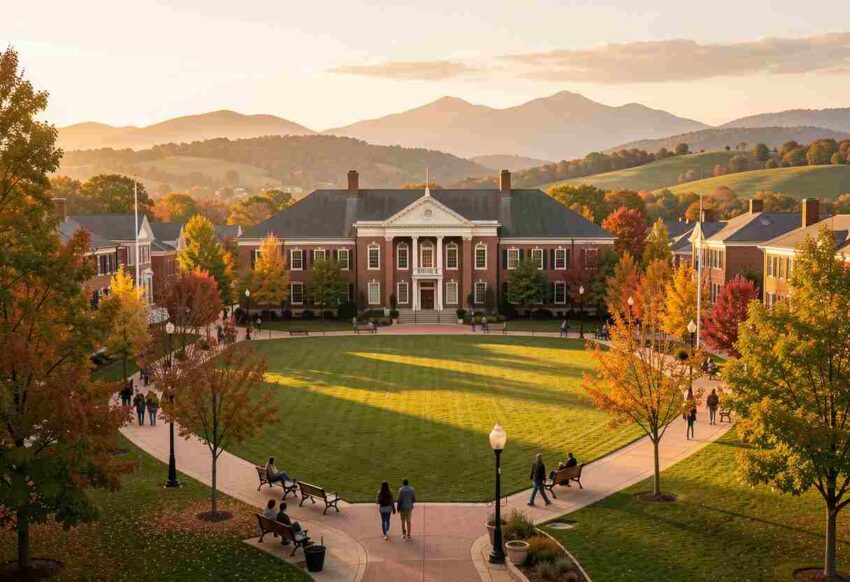
Across the United States, certain small towns are shaped almost entirely by the presence of a historic university or college campus. In these places, daily life is influenced by academic rhythms, tree‑lined quads, and a steady flow of students and visitors. Streets are usually walkable, buildings carry architectural significance, and nearby natural areas invite leisurely walks and scenic drives.
In this context, towns such as Charlottesville in Virginia, Princeton in New Jersey, Ithaca in New York, Clemson in South Carolina, and Sewanee in Tennessee can be observed as prime examples of college communities where history, landscape, and education are woven together. Each destination is distinguished by a specific blend of campus design, local character, and surrounding nature, yet all share a similar sense of intimacy and charm that is often sought by travelers.
Charlottesville, Virginia – Academic Heritage in a Historic Setting
In Charlottesville, Virginia, the identity of the town is strongly anchored by the University of Virginia. The institution was founded by Thomas Jefferson in 1819, and its design has long been regarded as a landmark of American academic architecture. The Rotunda and the Lawn, together with Monticello, hold recognition as a UNESCO World Heritage Site, and this status reflects both their architectural importance and their role in the cultural history of the country.
Around the university, a compact historic downtown has developed, where red‑brick facades, shaded sidewalks, and carefully maintained gardens are encountered. Heritage architecture is present not only on campus but also throughout the surrounding streets, where a sense of continuity with the past is felt. Cafes, bookstores, and galleries are supported by the academic community, and a calm yet lively atmosphere is created.
From Charlottesville, access is provided to scenic routes that lead toward Jamestown and Yorktown, including drives along the Colonial Parkway corridor. Through these routes, connections are made to early American sites and landscapes, and the region’s wider narrative is experienced. As a result, Charlottesville offers more than a university visit; it provides a broader journey through history, architecture, and countryside that appeals to those who appreciate both learning and leisure.
Princeton, New Jersey – Classic Campus in a Green Town Core
In Princeton, New Jersey, the town’s layout is largely defined by the presence of Princeton University. The university was founded in 1746, and its age is reflected in the variety of Georgian and Collegiate Gothic buildings that line the campus. Towers, courtyards, and stone facades give a sense of gravitas, while expansive lawns and walkways invite unhurried exploration.
The town core around the campus has been kept compact and highly walkable. Streets are lined with shops, cafes, and small businesses that serve both residents and visiting students or families. Lush landscaped grounds extend from campus into adjacent neighborhoods, where mature trees and gardens provide shade and color throughout much of the year. The impression of a seamless transition between university grounds and town streets is therefore created.
Nearby parks and green spaces offer opportunities for light hiking and leisurely walks. Visitors may move from historic lecture halls to quiet footpaths within a short distance, echoing the way exploration is carried out in other classic college towns. In this setting, academic life is supported by a calm physical environment that encourages reflection, casual conversation, and informal discovery.
Ithaca, New York – Gorges, Waterfalls, and Campus Energy
In Ithaca, New York, the combination of educational institutions and natural scenery is especially striking. The town is home to Cornell University and Ithaca College, and their campuses contribute significantly to the local skyline and street life. The Finger Lakes region provides a dramatic setting, with rolling hills, deep ravines, and lake views framing the built environment.
At the heart of Ithaca, a compact pedestrian district known as Ithaca Commons has been established. This area functions as an outdoor living room for the community, where shops, restaurants, and public art are brought together in a car‑free zone. Close by, DeWitt Park carries the town’s historic layers, with older structures and civic spaces helping to tell the story of earlier eras.
Beyond the streets and quads, Ithaca is surrounded by gorges, waterfalls, and lakeside trails. State parks and local preserves allow visitors to follow paths through forested ravines, cross footbridges above rushing streams, and stand at viewpoints overlooking dramatic cascades. This proximity to both campus life and rugged natural settings creates a balance that feels similar to that experienced in other small college towns where a short walk can lead from lecture hall to overlook.
Clemson, South Carolina – Lakeside Learning at the Edge of the Mountains
In Clemson, South Carolina, a small town setting is observed between Lake Hartwell and the Blue Ridge Mountains. The presence of Clemson University shapes the community’s overall character, with academic buildings, student residences, and athletic facilities forming a clear core. The combination of water and mountains provides a scenic backdrop that is appreciated by residents and visitors alike.
The Clemson University Experimental Forest extends around the town as a large outdoor resource. In this forest, trails have been created for horseback riding, mountain biking, and hiking, and the landscape is characterized by wooded areas, streams, and open clearings. Through these trails, opportunities for exercise, nature study, and quiet reflection are offered within a short distance of classrooms and laboratories.
On or near the campus, the South Carolina Botanical Garden and the Campbell Geology Museum provide additional points of interest. Gardens, interpretive displays, and educational exhibits allow the region’s plants, rocks, and natural history to be understood in accessible ways. Together, the lake, forest, and academic institutions create an environment in which learning is supported by constant contact with the outdoors, and where the town’s small scale enhances the feeling of connection between people and place.
Sewanee, Tennessee – A Mountaintop Campus in the Cumberland Plateau
In Sewanee, Tennessee, a distinct sense of place is created by the mountaintop setting of the University of the South. The town is situated on the Cumberland Plateau, and the campus’s Gothic‑style architecture stands out prominently against the wooded surroundings. Stone buildings, arches, and towers contribute to a cohesive visual identity that is recognized by visitors as soon as they arrive.
Walks across the campus bring visitors past chapels, quads, and memorials, including the Cross, which serves as a notable landmark and point of reflection. From various spots on the plateau, expansive views of the valleys and hills below are revealed, reinforcing the feeling of being in a retreat above the surrounding landscape. The overall environment encourages slow movement, contemplation, and appreciation of both architecture and nature.
The nearby Mountain Goat Trail and sections of South Cumberland State Park further extend the town’s appeal to hikers and outdoor enthusiasts. Trails lead through forests, along ridges, and toward overlooks that showcase rock formations and wide vistas. In this way, Sewanee offers a combination of academic focus and rugged scenery similar to that found in other hill and mountain college towns, where learning and landscape are closely intertwined.
Conclusion: Academic Towns as Calm Gateways to Culture and Nature
Across these five destinations, a consistent pattern can be observed. In each town, a major university or college serves as the organizing feature of the community, while history, architecture, and natural surroundings provide additional layers of interest. Streets are typically walkable, campuses are open and inviting, and nearby parks or preserved areas offer convenient access to trails and scenic viewpoints.
By visiting Charlottesville, Princeton, Ithaca, Clemson, or Sewanee, travelers are introduced not only to academic institutions but also to thoughtfully designed spaces where culture and environment are allowed to work together. In these towns, the pace of life remains measured, and the focus on learning is complemented by the quiet pleasures of gardens, rivers, lakes, forests, and hills that wait just beyond the college gates.
The post America’s Best Kept Academic Hideaways Are Being Ranked Among the Most Enchanting Small Town Escapes in the Country appeared first on Travel And Tour World.
Source: travelandtourworld.com



Sorry, the comment form is closed at this time.