


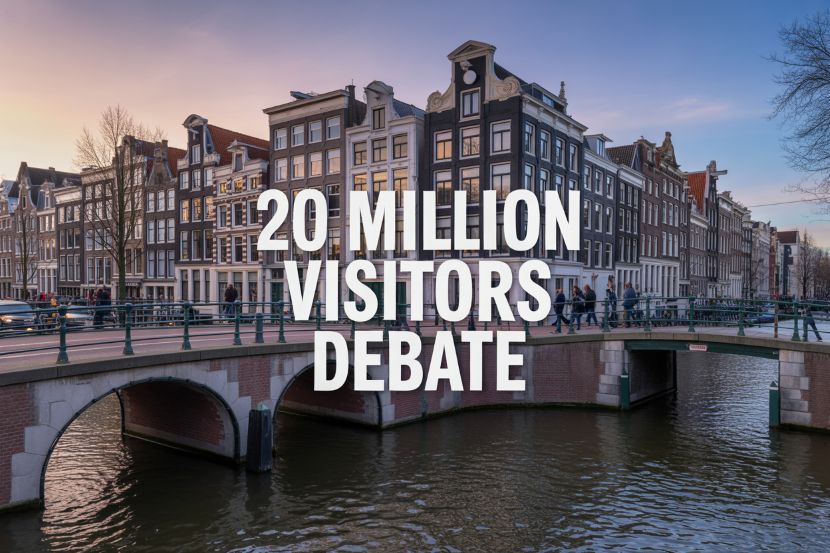
Amsterdam’s Twenty Million Overnight Stay Debate Sparks Tourism Tensions In The Netherlands As Jordaan And Dam Square Feel The Pressure — What This Means For Travelers Exploring Europe’s Most Visited Cities
Amsterdam’s Twenty Million Overnight Stay Debate Sparks Tourism Tensions In The Netherlands As Jordaan And Dam Square Feel The Pressure — What This Means For Travelers Exploring Europe’s Most Visited Cities
Amsterdam in the Netherlands has once again found itself at the center of Europe’s debate over overtourism, as city authorities clarified in court that the widely cited 20 million overnight stay benchmark is a policy objective rather than a legally binding ceiling. The clarification emerged during a civil case filed by local residents who argue that tourism volumes in Amsterdam have surpassed acceptable levels since the pandemic recovery and should be reduced below the agreed threshold by 2028.
The dispute has drawn attention not only across the Netherlands but also among European destinations such as Barcelona, Venice, and Paris, where similar tensions between residents and tourism-driven economies are unfolding. For travelers, the legal interpretation of the 20 million figure matters, as it could shape future visitor policies, accommodation rules, and taxes in one of Europe’s most iconic canal cities.
Policy Target Or Legal Limit? Courtroom Debate Over Tourism Numbers
The current case revolves around a tourism management framework adopted in 2020 after more than 30,000 residents signed a petition urging stricter control over visitor flows. At that time, city authorities pledged to aim for a maximum of 20 million overnight stays annually in Amsterdam.
However, in written submissions presented to the civil court, municipal officials have argued that this figure functions as a strategic guideline rather than an enforceable cap. The documents reportedly state that the tourism measures form part of internal policy planning and therefore do not grant individual residents the right to demand strict compliance in court.
A residents’ coalition operating under the name Amsterdam Heeft Een Keuze has requested that overnight stays be brought below the 20 million mark by 2028, and that the city publish clearer assessments of the effectiveness of its tourism control measures. The legal proceedings are currently focused on procedural matters, and no timeline has yet been confirmed for substantive hearings.
Why The 20 Million Figure Became So Controversial
The benchmark was introduced amid growing frustration about overcrowding in popular districts such as the Red Light District, Jordaan, and areas surrounding Dam Square. Before the pandemic, Amsterdam had experienced record-breaking tourism growth, with visitor numbers steadily climbing year after year.
Following COVID-19 restrictions, travel demand rebounded sharply across Europe. Amsterdam, known for its canals, museums, and nightlife, saw overnight stays once again exceed the 20 million reference point. For residents concerned about noise, congestion, housing pressure, and short-term rentals, this return to high visitor numbers revived longstanding concerns.
At the same time, tourism remains a critical contributor to the city’s economy. According to official municipal data, the sector supports thousands of jobs in hospitality, cultural institutions, transportation, and retail. Balancing economic vitality with residential livability has therefore become one of the most complex policy challenges facing the Dutch capital.
Measures Already Taken To Manage Visitor Impact
Amsterdam has not remained passive in the face of overtourism concerns. Several policy tools have been introduced in recent years:
Restrictions on holiday rentals, including caps on the number of days properties can be rented short-term.
Increases in the tourist tax, making Amsterdam one of the highest-taxed city destinations in Europe for overnight stays.
A targeted “stay away” campaign aimed at discouraging disruptive behavior linked to party tourism and drug-related activities.
Adjustments to cruise ship docking policies to limit congestion in central areas.
City tourism leadership has previously acknowledged public dissatisfaction and emphasized that reducing excessive tourism would require sustained, long-term action rather than immediate change.
What This Means For Travelers Planning A Trip To Amsterdam
For international visitors from countries such as the United States, Germany, France, and the United Kingdom, the legal debate does not immediately alter entry rules or booking conditions. Flights to Amsterdam Schiphol Airport continue to operate at standard capacity, and hotels remain open under existing regulations.
However, travelers should be aware of:
Higher accommodation taxes compared to other European capitals.
Strict rules governing short-term rentals.
Increased enforcement against disruptive nightlife behavior.
Potential future limits if court rulings or policy revisions tighten controls.
Smart Travel Strategies For Visiting Amsterdam Responsibly
Visitors can contribute positively to the city by:
Staying in licensed hotels or approved rental properties.
Exploring neighborhoods beyond the central canal belt to reduce congestion.
Respecting local regulations regarding public behavior.
Traveling during shoulder seasons to ease peak pressure.
These steps not only enhance the visitor experience but also align with the city’s sustainable tourism ambitions.
Amsterdam Within The Broader European Overtourism Conversation
Amsterdam is not alone in facing these pressures. Cities such as Venice in Italy, Barcelona in Spain, and Dubrovnik in Croatia have introduced tourist entry systems, visitor caps, or additional levies to manage surging demand. Across the European Union, debates about sustainable tourism governance are intensifying as international arrivals approach pre-pandemic highs.
The Dutch case highlights an important distinction: setting policy targets versus creating legally enforceable visitor ceilings. Should the court eventually determine that residents cannot compel enforcement of the 20 million figure, municipalities across Europe may revisit how they frame tourism benchmarks in future planning documents.
Economic Stakes Versus Residential Quality Of Life
Tourism contributes billions of euros annually to the Dutch economy, with Amsterdam serving as the primary gateway. Cultural landmarks such as the Rijksmuseum, Anne Frank House, and the Van Gogh Museum rely heavily on international visitors.
At the same time, housing shortages and rising property prices have been partially linked to the expansion of short-term rentals. Local advocacy groups argue that unchecked tourism growth exacerbates these pressures, while city officials maintain that tourism policy must balance multiple economic and social priorities.
The outcome of this legal dispute could influence how Amsterdam positions itself globally: either as a destination willing to impose stricter limits, or as one that manages tourism through adaptive policy rather than binding caps.
Looking Ahead: A City At A Crossroads
As Amsterdam navigates the courtroom challenge, the broader question remains whether sustainable tourism can be effectively governed through policy targets alone. The coming months will determine whether the 20 million benchmark remains symbolic or evolves into a more structured regulatory tool.
For now, the city continues to welcome millions of visitors each year while refining strategies designed to protect its historic canals, residential communities, and cultural identity. Travelers planning a trip to the Netherlands should monitor developments, as policy shifts in Amsterdam often influence tourism approaches across Europe.
The post Amsterdam’s Twenty Million Overnight Stay Debate Sparks Tourism Tensions In The Netherlands As Jordaan And Dam Square Feel The Pressure — What This Means For Travelers Exploring Europe’s Most Visited Cities appeared first on Travel And Tour World.
Source: travelandtourworld.com



Sorry, the comment form is closed at this time.