


Are Winter Storms in 2026 Causing the Worst Travel Disruptions in Europe? Find Out Now!
Are Winter Storms in 2026 Causing the Worst Travel Disruptions in Europe? Find Out Now!
The 2025–26 winter season has been marked by a series of intense winter storms sweeping across Europe, continuing to cause widespread disruptions in air travel well into early 2026. These storms bring with them a combination of heavy snow, freezing rain, high winds, and low visibility, creating significant challenges for airports, airlines, and passengers. The effects on airport operations, flight schedules, and passenger experiences have been severe, with major delays and cancellations recorded across some of the continent’s busiest hubs.
As the winter storms persist through early 2026, their impact on aviation infrastructure continues to be felt. Here, we take a comprehensive look at how these weather events have affected flight operations and passenger travel throughout Europe.
The Severe Weather Impact on Airport Operations
Flight Disruptions Across Europe: January 2026
Winter storms in January 2026 had a profound impact on Europe’s air travel systems. During the first week of January, Amsterdam Schiphol Airport experienced a significant weather-related disruption. As snow and icy conditions made runways unsafe for flight take-offs and landings, more than 3,200 flights were cancelled. Some reports also highlighted that over 2,000 flights were cancelled within just a week due to the storm, leaving approximately 300,000 passengers stranded. The situation was further compounded by high winds and freezing temperatures, which caused delays for many scheduled flights. Schiphol, one of Europe’s busiest airports, saw its operations severely limited, with thousands of passengers stuck on planes or in terminals.
In late January 2026, another storm system rolled through Europe, causing 1,028 delays and 35 cancellations in one day alone. The Frankfurt, Munich, and Berlin airports were among those hardest hit. As winter storms continued to batter Europe, the ripple effects disrupted other major airports such as Paris Charles de Gaulle, London Heathrow, and Barcelona El Prat, with 357 delays and 31 cancellations recorded.
In February 2026, the worst of the winter conditions moved through Berlin Brandenburg Airport (BER), where freezing rain and black ice caused a complete halt to flight operations. For several days, hundreds of flights were cancelled, and airport authorities were forced to issue widespread warnings for passengers to check their flight statuses frequently. This caused considerable frustration and logistical chaos as many passengers remained uncertain about their travel schedules.
How Winter Storms Affect Runway Safety and Aircraft Operations
The most direct operational challenges posed by winter weather come from the buildup of snow and ice on runways, taxiways, and aircraft. Reduced traction caused by snow and ice makes runways unsafe for take-off and landing, leading to temporary closures and flight halts until the airport can safely clear the runway. Snow clearing teams are tasked with working around the clock to ensure that snow and ice are removed to keep the airport running.
However, snow removal is a time-consuming and costly process, often resulting in delays and further disruptions. Additionally, aircraft de‑icing is another critical part of the operations. Planes must be completely cleared of snow and ice before departing, which adds additional layers of time delays and further operational costs. Snow and ice can accumulate quickly, and de‑icing fluid must be applied shortly before takeoff to ensure that the aircraft is fit for safe flight.
At airports like Schiphol in early 2026, snow clearance and de‑icing delays led to significant bottlenecks. Planes were held on the ground for hours as ground crews worked to clear the snow and ice. This snow removal also reduced runway capacity, leaving many planes waiting in long queues, and forcing airports to cancel or delay flights to maintain safety standards.
The Ongoing Disruption: February 2026 and the Latest Updates
As of February 2026, Berlin Brandenburg Airport (BER) remains one of the worst-affected by winter storms in Europe. On 5–6 February 2026, the airport was forced to stop flight operations entirely due to freezing rain and black ice. While the airport authorities worked to clear the runways, flight cancellations continued to mount, and hundreds of passengers were left stranded in terminals. Airlines independently cancelled a significant number of flights during the operational closure, urging passengers to check their flight statuses repeatedly.
This winter storm follows the earlier disruptions at Schiphol Airport, where a combination of snow and icy conditions had already caused significant delays and cancellations earlier in January 2026. Storm Goretti, which swept across parts of Germany, France, and the Netherlands, was one of the largest weather events to disrupt air travel during this period, further exacerbating the situation.
Broader Operational Impact
The impact of freezing rain, snow accumulation, and low visibility continues to be felt across European airports, forcing multiple hubs to adjust their operations. The widespread disruptions have not only affected scheduled flight times but also caused a domino effect on other flights and airlines, as aircraft and crews are delayed, causing a chain reaction of further cancellations and delays.
The operational stress continues for airports as snow removal and de‑icing operations become more critical than ever. This disrupts passenger movements and slows the overall pace of air travel. Additionally, the availability of staff to maintain normal operations has been another challenge, as many airport and airline personnel struggle to manage the growing workload during high-traffic periods.
Passenger Experience During Winter Storm Disruptions
1. Increased Waiting Times and Crowded Terminals
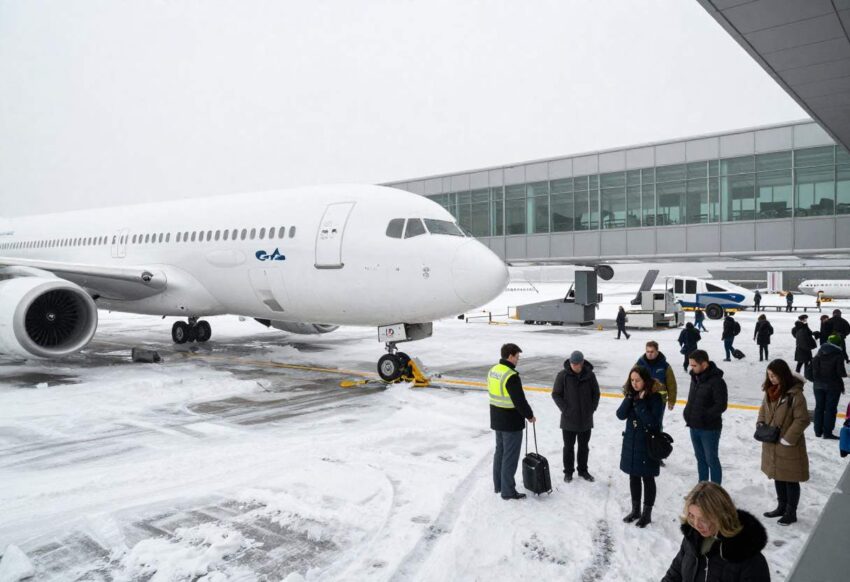
The direct effects of these winter storms on passengers have been severe. In January and February 2026, passengers faced lengthy delays in check-in, security, and boarding due to the slow ground handling and extended snow clearance. Many passengers were stuck onboard aircraft or in crowded terminals for hours as weather conditions rendered it impossible for planes to depart.
During severe storms like those at Schiphol and Berlin, terminals became increasingly crowded as passengers sought food, shelter, and updates about their flight status. This situation led to heightened stress and discomfort for passengers, particularly during the peak travel periods. The uncertainty and lack of seating compounded the problems faced by travellers stuck at the airports.
2. Stranded Passengers and Missed Connections
When flights are delayed or cancelled, missed connections become inevitable. Passengers who were unable to reach their final destinations in time faced even longer delays and additional accommodation costs. For example, in extreme cold regions like Kittilä Airport in Finland, passengers were stranded for several days as sub‑40°C temperatures prevented flights from departing. The stranded tourists were forced to rebook flights, find alternate transport, or stay overnight unexpectedly, which added to the emotional and financial strain that already stressed passengers had to endure.
3. Secondary Transport Delays: Increasing Safety Risks
The impact of winter storms extends beyond airports and into secondary transport infrastructure, such as road networks and rail services. The slippery roads and low visibility caused by snowstorms and icy conditions increased the risk of accidents on the way to or from airports. Train services and public transport faced delays or cancellations, compounding the disruption for arriving and departing passengers. These additional transport delays significantly amplified the operational difficulties faced by airports, making it harder for passengers to reach their flights or return home.
Broader Impacts on the Travel and Tourism Industry
1. Reduced Tourist Mobility and Confidence
The immediate impact of winter storms on the tourism sector is that travellers are more likely to delay, shorten, or cancel their trips when they know severe weather is expected. When major hubs like Amsterdam, Berlin, and Paris experience weather-related disruptions, passengers are more inclined to reconsider their travel plans, resulting in lower hotel occupancy, cancelled tour bookings, and business travel postponements.
Tourism-dependent regions like ski resorts also face specific delays, affecting the overall satisfaction of tourists and potentially reducing tourism revenue during peak periods.
2. Economic Losses for the Tourism Sector
Winter disruption has led to significant economic losses for both the aviation industry and the broader tourism sector. Airlines incurred extra fuel and staffing costs, and many were forced to pay compensation or cover hotel costs for delayed passengers. Similarly, airports had to spend more on snow removal and de‑icing equipment, further increasing operational costs.
Tourist hotspots, including hotels and attractions, also faced cancellations and shortened stays, reducing their seasonal income. The economic consequences of these delays are wide-reaching, with entire sectors feeling the pinch from the disruption caused by winter storms.
3. The Shift in Seasonal Planning and Travel Behaviour
Frequent winter disruptions are causing many regions to rethink their tourism strategies. Tourists are more likely to avoid destinations known for unpredictable winter weather, and tour operators are adjusting schedules and pricing to account for the anticipated delays. In response, many regions are investing in improved infrastructure, including better de‑icing facilities and better handling procedures to prevent further disruption in the future.
Summary of Effects
Impact AreaEffects from Winter StormsAirport OperationsRunway closures, prolonged de‑icing, reduced capacityFlight SchedulesDelays, cancellations, network knock‑on effectsPassengersLonger wait times, missed connections, increased stressTransport NetworkRoad/train disruption compounding delaysTourism SectorTravel cancellations, economic losses, reduced tourist confidence
Winter storms in 2026 continue to challenge both the aviation industry and the tourism sector, with airports and airlines scrambling to manage disruptions. These storms highlight the need for improved infrastructure and better preparedness to mitigate such large-scale disruptions in the future.
The post Are Winter Storms in 2026 Causing the Worst Travel Disruptions in Europe? Find Out Now! appeared first on Travel And Tour World.
Source: travelandtourworld.com



Sorry, the comment form is closed at this time.