


Argentina Joins US, France, Spain, Germany and More in Driving Massive Surge of 300,000 Foreign Visitors to Brazil Carnival 2026, Generating Nearly US$186 Million in Tourism Revenue – You Need to Know
Argentina Joins US, France, Spain, Germany and More in Driving Massive Surge of 300,000 Foreign Visitors to Brazil Carnival 2026, Generating Nearly US$186 Million in Tourism Revenue – You Need to Know
Brazil Carnival 2026 witnessed a powerful international surge as travelers from Argentina, the US, France, Spain, Germany and dozens of other countries poured into the country, pushing foreign arrivals to 300,000 in just one week. The sharp rise was fueled by expanded charter flights, stronger cruise traffic, and aggressive global promotion, helping generate nearly US$186 million in tourism revenue nationwide.
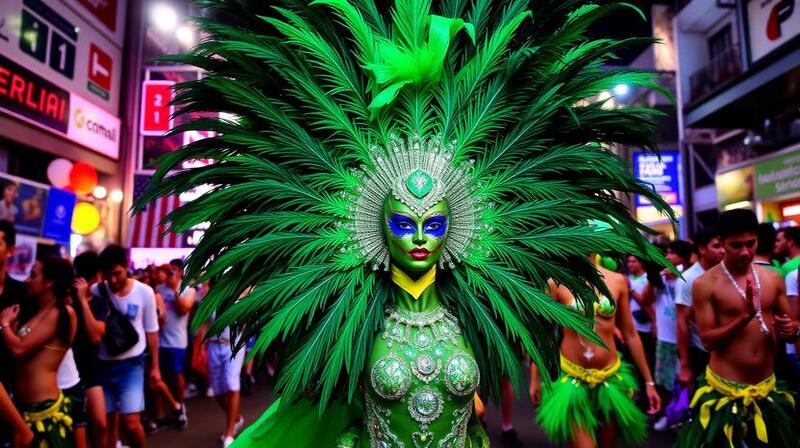
Brazil’s Carnival has once again proven that it is far more than a festival. It is a national symbol, a powerful economic driver, and a global magnet for travelers seeking color, rhythm, and an experience unlike any other. In 2026, the celebration did more than fill streets with music and movement — it delivered record-breaking tourism numbers and reinforced Brazil’s standing as one of the world’s most sought-after destinations.
During the seven-day Carnival period, Brazil welcomed 300,000 international visitors, marking a 17 percent increase compared to 2025. What makes the figure even more striking is its concentration: nearly 30 percent of the country’s typical monthly international arrivals occurred within just one week. For Brazil’s tourism sector, it was an extraordinary surge that highlighted the event’s global appeal.
The economic impact followed the same upward trend. International tourists generated close to US$186 million in revenue during Carnival 2026. Hotels, restaurants, airlines, cruise operators, local vendors, and entertainment businesses all felt the boost. From major urban centers to smaller cultural hubs, the celebration fueled a wave of spending that rippled across the country.
Travelers arrived from 80 different nations, underscoring Carnival’s international draw. Argentina led the list of source markets, followed by France, Spain, Germany, and the United States. Improved air connectivity played a major role in this growth. Additional charter flights increased seat capacity, while expanded cruise ship berths — particularly in Salvador — brought more sea-based visitors into Brazil’s coastal cities. Overall international arrivals rose 12 percent year-on-year, supported by these expanded transport options.
Rio de Janeiro remained the undeniable centerpiece of the festivities. The city welcomed 110,000 foreign tourists during Carnival, accounting for 36 percent of all international arrivals. In practical terms, nearly four out of every ten foreign visitors who came to Brazil for Carnival chose Rio as their primary destination.
The city’s global reputation for its iconic samba parades, beachfront celebrations, and vibrant street parties continues to resonate strongly with international audiences. Compared to 2025, Rio recorded a 9 percent increase in foreign arrivals during Carnival, further cementing its position as the country’s main international gateway during the festival. Spending by foreign tourists in Rio alone generated approximately US$67 million, a significant contribution to the local economy in just one week.
While Rio dominated the spotlight, other regions also benefited from the international surge. São Paulo ranked second, attracting roughly 23.5 percent of foreign Carnival travelers. The city’s diverse cultural programming and large-scale street celebrations have steadily elevated its profile among global visitors.
Bahia, long celebrated for its Afro-Brazilian heritage and energetic coastal festivities, welcomed about 7.5 percent of international tourists. Pernambuco, known for its unique rhythms and historic atmosphere, accounted for 4.9 percent of arrivals. Minas Gerais drew 1.5 percent of foreign visitors, while 26.6 percent of tourists explored a range of other destinations across the country, reflecting the geographic and cultural diversity of Brazil’s Carnival traditions.
This distribution of visitors reveals a broader trend. While Rio remains the headline act, international travelers are increasingly exploring multiple regions, seeking different interpretations of Carnival’s spirit. From massive sambadrome performances to intimate neighborhood blocos, each state offers its own rhythm, costume style, and local flavor.
Behind the numbers lies a clear message: Brazil’s international tourism strategy is gaining traction. By promoting the country’s cultural diversity and natural beauty as core attractions, tourism authorities have strengthened Brazil’s image abroad. Carnival, already a powerful symbol of national identity, has become an even more strategic platform for showcasing the country on the world stage.
The combination of expanded air routes, cruise infrastructure improvements, and targeted international marketing campaigns has helped position Carnival not just as a party, but as a premium travel experience. The 2026 results suggest that global demand for immersive cultural events continues to grow, particularly when supported by strong logistics and international outreach.
Beyond revenue figures, the festival’s impact also extends to employment and small businesses. Temporary jobs in hospitality, security, transportation, and event production multiplied during the Carnival period. Street vendors, costume makers, musicians, and performers benefited from heightened demand, reinforcing Carnival’s role as both a cultural and economic engine.
For many international visitors, Carnival represents their first encounter with Brazil. The scale, organization, and warmth experienced during the celebration can shape long-term travel perceptions and encourage repeat visits. In this way, the festival serves as both a showcase and a gateway, introducing travelers to the country’s broader tourism offerings — from rainforest adventures to culinary experiences and heritage tourism.
As global competition for tourism dollars intensifies, Brazil’s ability to convert a cultural celebration into measurable economic gains stands out. The 2026 Carnival demonstrated that when infrastructure, promotion, and authentic cultural expression align, the results can be transformative.
With international arrivals climbing, revenue reaching new heights, and diverse regions sharing in the spotlight, Carnival 2026 has set a strong benchmark for the years ahead. Brazil has not only celebrated its identity; it has also strengthened its position in the global travel market, proving once again that when the drums begin to play, the world is ready to follow.
The post Argentina Joins US, France, Spain, Germany and More in Driving Massive Surge of 300,000 Foreign Visitors to Brazil Carnival 2026, Generating Nearly US$186 Million in Tourism Revenue – You Need to Know appeared first on Travel And Tour World.
Source: travelandtourworld.com



Sorry, the comment form is closed at this time.