


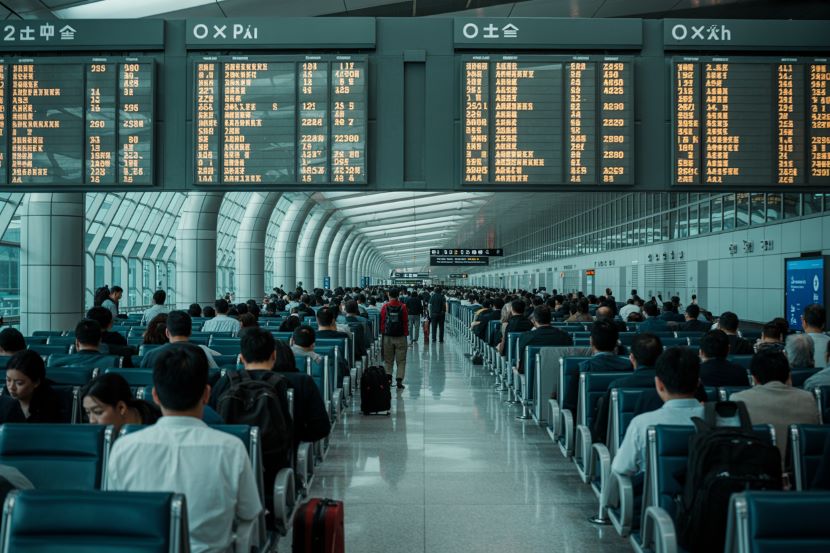
Asia Travel Chaos Deepens as China, Japan, Indonesia and More Ground 30 Flights and Delay 300 Across Jakarta, Tokyo, Beijing, and Beyond, Batik Air, Xiamen Air, Tianjin Airlines, All Nippon and Others Caught in the Turbulence — Here’s What Travelers Should Brace For
Asia Travel Chaos Deepens as China, Japan, Indonesia and More Ground 30 Flights and Delay 300 Across Jakarta, Tokyo, Beijing, and Beyond, Batik Air, Xiamen Air, Tianjin Airlines, All Nippon and Others Caught in the Turbulence — Here’s What Travelers Should Brace For
A significant wave of flight disruption has swept across key Asian aviation hubs, with 30 cancellations and 300 delays recorded across major airports in Indonesia, China, and Japan. The operational strain has impacted both domestic and international services, affecting leading regional carriers including Batik Air, Xiamen Air, Tianjin Airlines, All Nippon Airways (ANA), and several others operating within some of Asia’s busiest air corridors.
The disruption is concentrated across five major airports:
Jakarta Soekarno-Hatta International Airport: 16 cancellations, 63 delays
Sultan Hasanuddin International Airport (Makassar): 6 cancellations, 44 delays
Chongqing Jiangbei International Airport: 4 cancellations, 62 delays
Tokyo (Narita and Haneda combined): 3 cancellations, 60 delays
Beijing Capital International Airport: 1 cancellation, 71 delays
While cancellations remain relatively limited compared to severe weather shutdowns, the high number of delays — especially in Beijing, Chongqing, and Tokyo — suggests widespread congestion and aircraft rotation disruptions across interconnected regional networks.
Overview of the Disruption
Jakarta’s Soekarno-Hatta International Airport accounts for more than half of all cancellations, making it the epicenter of this disruption. As Indonesia’s largest international gateway, any operational strain here quickly affects both domestic connections and long-haul departures.
Makassar’s Sultan Hasanuddin Airport has experienced secondary ripple effects, primarily impacting domestic routes across eastern Indonesia. Meanwhile, Chongqing and Beijing have recorded high delay counts, indicating congestion within China’s domestic airspace and tight aircraft scheduling.
Tokyo’s delays, though accompanied by only three cancellations, are significant due to the city’s role as a global transit hub connecting Asia with North America and Europe. Even modest schedule changes in Tokyo can disrupt long-haul travel itineraries.
Major Reasons Behind the Cancellations and Delays
While airlines have not attributed the disruption to a single cause, several operational factors commonly drive such multi-airport disturbances:
1. Air Traffic Congestion
Asia’s aviation recovery has led to dense scheduling across major corridors. When airports operate near maximum capacity, even minor delays can snowball into larger disruptions.
2. Aircraft Rotation and Network Interdependence
Aircraft often operate multiple legs across countries in a single day. A late arrival in Jakarta, for example, may delay a departure to Beijing, which then impacts a connecting service onward to Tokyo.
3. Operational and Crew Scheduling Constraints
Airlines must adhere to strict crew duty-hour regulations. If earlier flights are delayed beyond a certain threshold, crew members may exceed allowable working hours, forcing cancellations.
4. Weather and Seasonal Factors
Localized weather conditions — such as heavy rainfall in Indonesia or winter airspace constraints in northern Asia — can slow runway operations and air traffic sequencing.
5. Airport Infrastructure Pressure
Major hubs like Beijing Capital and Soekarno-Hatta handle high passenger volumes daily. Gate congestion, runway sequencing limits, and ground handling bottlenecks can increase turnaround times.
Together, these factors create a cascading effect, particularly in tightly scheduled regional aviation systems.
Airlines Affected
The disruption involves multiple carriers operating across Southeast Asia and Northeast Asia, including:
Batik Air (Indonesia)
Xiamen Air (China)
Tianjin Airlines (China)
All Nippon Airways (Japan)
Other regional and domestic operators
Because many of these airlines operate connecting routes between Jakarta, Beijing, Chongqing, and Tokyo, the knock-on effect has extended beyond the initial cancellation points.
Passenger Impact
The most significant inconvenience for travelers stems from delays rather than cancellations. While canceled flights require rebooking, widespread delays create uncertainty, missed connections, and extended waiting times.
Passengers may experience:
Missed onward international connections
Rebooking onto later flights
Gate changes and last-minute schedule updates
Extended time spent in transit terminals
Increased congestion at airline service counters
Business travelers with tight layovers are particularly vulnerable to schedule changes, especially in Tokyo and Beijing where international transfers are frequent.
Passenger Tips: What Travelers Should Do Now
Travelers moving through affected airports should take proactive steps to minimize disruption:
Check Flight Status Frequently
Monitor airline apps or official airport websites for real-time updates before heading to the airport.
Arrive Earlier Than Usual
For international departures, allow additional buffer time in case of check-in counter congestion or gate changes.
Protect Tight Connections
If your layover is under two hours, consider speaking with airline staff early to explore alternative routing options.
Keep Essential Items in Carry-On
Delays can lead to unexpected overnight stays. Keep medication, chargers, and essential documents accessible.
Understand Rebooking Rights
Most airlines will rebook passengers on the next available service at no additional cost if a flight is canceled. For long delays, some carriers may provide meal vouchers or accommodation depending on local regulations and airline policy.
Consider Travel Insurance
Delay compensation clauses in travel insurance policies may help offset hotel or meal expenses caused by significant schedule disruptions.
A Regional Network Under Pressure
This latest wave of cancellations and delays underscores how interconnected Asia’s aviation system has become. Airports in Jakarta, Makassar, Chongqing, Tokyo, and Beijing are linked through dense route networks that rely on precise aircraft timing and rapid turnarounds.
While 30 cancellations may appear modest compared to major weather shutdowns, the 300 delays highlight operational fragility within high-volume air corridors. As passenger demand remains strong across Asia, airlines and airports continue to manage heavy traffic while maintaining safety and compliance standards.
For now, operations remain active across all affected airports, but passengers should prepare for continued schedule volatility until flight rotations stabilize.
In an era of tightly connected aviation networks, even limited cancellations can trigger widespread disruption. Travelers planning journeys across Indonesia, China, and Japan in the coming days should remain flexible, monitor updates closely, and allow extra time to navigate Asia’s currently congested skies.
Source: Different airports and FlightAware
The post Asia Travel Chaos Deepens as China, Japan, Indonesia and More Ground 30 Flights and Delay 300 Across Jakarta, Tokyo, Beijing, and Beyond, Batik Air, Xiamen Air, Tianjin Airlines, All Nippon and Others Caught in the Turbulence — Here’s What Travelers Should Brace For appeared first on Travel And Tour World.
Source: travelandtourworld.com



Sorry, the comment form is closed at this time.