


Australia and New Zealand Face Travel Interference as Airports of Melbourne, Sydney, Auckland, Wellington and more Witness over a Dozen Flight Cancellations and Hundreds of Delays by Qantas, Jetstar, Air New Zealand and others
Australia and New Zealand Face Travel Interference as Airports of Melbourne, Sydney, Auckland, Wellington and more Witness over a Dozen Flight Cancellations and Hundreds of Delays by Qantas, Jetstar, Air New Zealand and others
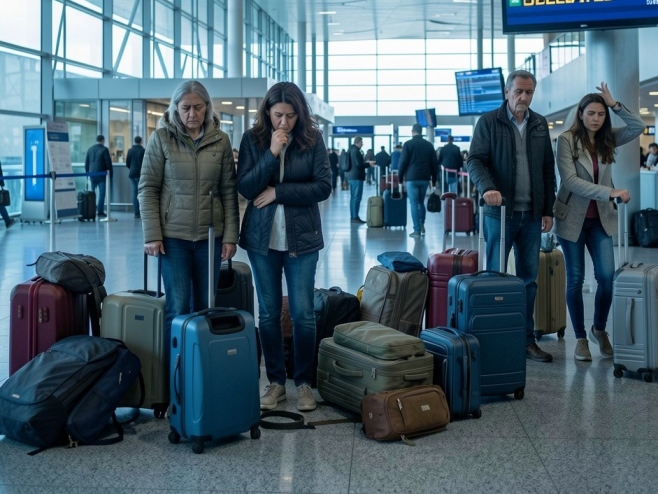
Travellers across Oceania are facing a challenging day as significant flight disruptions sweep through major aviation hubs. Both Australia and New Zealand are currently reporting a surge in scheduling interference. This wave of volatility affects primary gateways including Melbourne, Sydney and Brisbane. Across the Tasman, the impact remains equally visible in Auckland, Wellington and Christchurch. Operational data reveals that Qantas and its subsidiary are managing a high volume of delays on the Australian eastern seaboard. Meanwhile, Air New Zealand is navigating similar hurdles within the Kiwi domestic and international networks. These disruptions create a ripple effect, stalling itineraries for hundreds of passengers. Short-staffing, technical resets or heavy traffic flow often trigger such bottlenecks. There’s a total of 19 flight cancellations and 719 delays reported. Consequently, transit through Sydney and Auckland currently requires extra patience. Travellers should remain proactive by checking digital flight boards frequently. Staying informed is the best way to handle these evolving travel hurdles today.
Major Airports Affected
The logistical strain is being felt most acutely within the Australian borders, where the three largest hubs are reporting high numbers of impacted movements. In Melbourne Tullamarine, a total of 6 cancellations and 163 delays have been recorded. While the cancellation count remains in the single digits, the high volume of delayed flights suggests a significant bottleneck in ground operations or air traffic flow.
Further north, Sydney has emerged as the most heavily delayed hub in the region. A staggering 202 delays have been documented alongside 5 cancellations. As the primary international gateway for Australia, the ripple effects of these delays in Sydney are expected to be felt across the domestic network. Meanwhile, Brisbane has reported 3 cancellations and 133 delays, indicating that the disruption is consistent across the eastern seaboard.
Across the Tasman Sea, New Zealand is facing similar operational hurdles. Auckland Airport, the nation’s busiest terminal, has seen 2 cancellations and 123 delays. In the capital, Wellington Airport has reported 1 cancellation and 54 delays, while Christchurch Airport in the South Island has recorded 2 cancellations and 44 delays. The uniformity of these disruptions across Melbourne, Sydney, Brisbane, Auckland, Wellington and Christchurch points to a challenging day for the regional aviation sector.
Impacted Airlines
The burden of these cancellations and delays is being carried by the region’s largest carriers. In Australia, the Qantas Group—comprising both Qantas and QantasLink—is heavily represented in the disruption statistics. At Melbourne Tullamarine, QantasLink has seen 4 cancellations and 20 delays, while Qantas mainline has recorded 2 cancellations and 28 delays. In Sydney, the impact on the national carrier is even more pronounced. Qantas has been affected by 3 cancellations and 40 delays, while QantasLink has managed 1 cancellation and 28 delays.
Additionally, the low-cost sector has not been spared, with Jetstar reporting 1 cancellation and 44 delays in Sydney alone. In Brisbane, the trend continues with QantasLink seeing 2 cancellations and 28 delays and Qantas recording 1 cancellation and 29 delays.
For New Zealand, the disruptions are almost exclusively tied to the national flag carrier. Air New Zealand has been identified as the primary affected airline across all three major Kiwi hubs. In Auckland, 2 cancellations and 83 delays were attributed to the airline. In Wellington, 1 cancellation and 40 delays were reported, followed by 2 cancellations and 35 delays in Christchurch. The concentration of delays within Air New Zealand suggests a localized operational challenge affecting the connectivity between Australia and New Zealand.
Beyond these specific figures, delays were being experienced by several other Airlines, like Air China, Cebu Pacific Air, Cathay Pacific, Fiji Airways, Regional Express Airlines, Virgin Australia and more.
Probable Impact on Local Tourism
The concentration of flight interference in premier destinations like Melbourne, Sydney and Auckland might have a tangible impact on local tourism sectors. When over 700 flights are delayed across the region, the secondary effects are felt by hotels, tour operators and hospitality venues.
In Sydney and Melbourne, where international and domestic business travel is high, the hundreds of delayed arrivals likely result in missed connections and shortened hotel stays. Similarly, in Brisbane, the gateway to Queensland’s tourism hotspots, the 133 delays may interrupt the flow of holidaymakers heading toward the coast.
In New Zealand, the disruptions in Auckland, Wellington and Christchurch are particularly impactful given the reliance on air travel for regional connectivity. Tourists travelling between the North and South Islands via Wellington or Christchurch may find their itineraries condensed, leading to reduced spending in local economies. As Australia and New Zealand continue to promote themselves as seamless travel destinations, these “travel interference” events serve as a reminder of the fragility of tight flight schedules.
What Affected Passengers Can Do Now
For those currently situated in terminals at Melbourne, Sydney, Brisbane, Auckland, Wellington or Christchurch, several steps are recommended to mitigate the inconvenience. Passengers are being urged to monitor their airline’s mobile applications for real-time updates, as status changes are often pushed to digital platforms before being announced over airport public address systems.
Under the carriage conditions provided by Qantas, Jetstar and Air New Zealand, passengers on cancelled flights are typically entitled to rebooking on the next available service. Those experiencing significant delays in Sydney or Auckland should inquire at service desks regarding meal vouchers or accommodation if the delay extends overnight.
Furthermore, travellers are advised to check their travel insurance policies. Many comprehensive plans provide coverage for travel interference or travel delay once a certain hourly threshold is met. Documentation of the delay or cancellation should be requested from the airline at the gate to facilitate future claims. As the situation develops across the airports of Australia and New Zealand, patience and proactive communication with airline staff remain the most effective tools for the stranded traveller.
While the total number of cancellations remains relatively low at 19, the 700+ delays across Melbourne, Sydney, Brisbane, Auckland, Wellington and Christchurch represent a major logistical hurdle for the day. Consistent monitoring of flight boards is essential as carriers work to clear the backlog of passengers and restore the flight schedules to their standard operational status.
-The information provided is sourced from FlightAware.
The post Australia and New Zealand Face Travel Interference as Airports of Melbourne, Sydney, Auckland, Wellington and more Witness over a Dozen Flight Cancellations and Hundreds of Delays by Qantas, Jetstar, Air New Zealand and others appeared first on Travel And Tour World.
Source: travelandtourworld.com



Sorry, the comment form is closed at this time.