


Bangkok Emerges as a Stronger Gateway Between the Netherlands, New Zealand and Southeast Asia Amid Thai Airways’ Widebody Expansion — The Essential Update for Long-Haul Flyers
Bangkok Emerges as a Stronger Gateway Between the Netherlands, New Zealand and Southeast Asia Amid Thai Airways’ Widebody Expansion — The Essential Update for Long-Haul Flyers
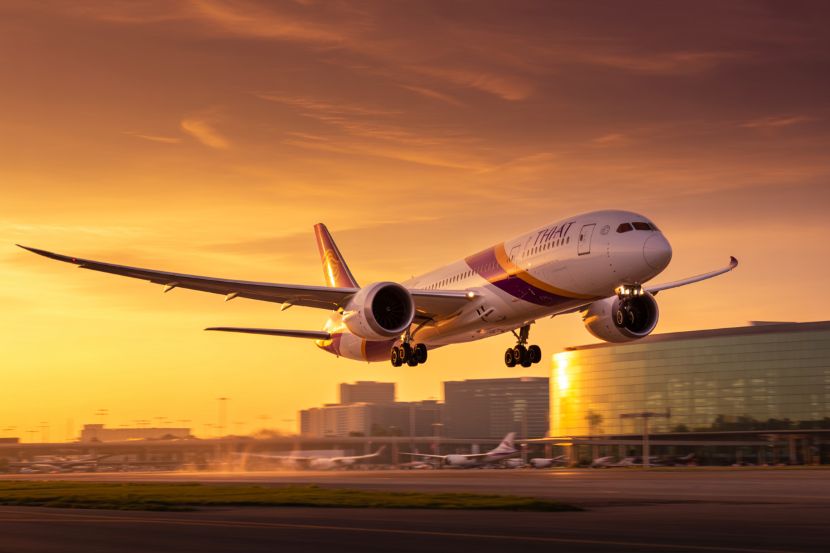
Thai Airways is entering a decisive new growth phase as it moves to lease 10 Boeing 787-8 Dreamliners, reinforcing its long-haul network from Bangkok to key global destinations including Amsterdam and Auckland. The fleet strategy signals more than aircraft replacement — it reflects Thailand’s broader aviation revival as international travel demand strengthens across Europe, Asia-Pacific, and Oceania. Deliveries of the additional 787-8s are scheduled to begin in June 2026, while the airline also prepares to receive four larger 787-9 variants and continues expanding its narrowbody fleet with Airbus A321neos. Following a return to profitability in 2025, Thai Airways is reshaping its capacity to balance passenger growth and cargo demand, positioning Thailand as a stronger aviation gateway just ahead of the European summer travel season.
A Strategic Dreamliner Expansion for Long-Haul Connectivity
Thai Airways International has confirmed plans to lease 10 Boeing 787-8 aircraft as part of a fleet modernization and replacement program. The Bangkok-based carrier already operates six 787-8s, and the new aircraft will gradually replace older jets that have been phased out.
Deliveries are expected to begin in June 2026, marking a pivotal step in rebuilding long-haul capacity. In addition to the leased 787-8s, the airline is set to receive four Boeing 787-9 aircraft this year, further strengthening its widebody fleet.
The Boeing 787 family is known for fuel efficiency, extended range capability, and improved cabin comfort. For travelers, this means quieter cabins, larger windows, better humidity levels, and more direct long-haul options from Bangkok to major global hubs. The Dreamliner’s economics also support route sustainability — critical for airlines rebuilding post-restructuring.
From a tourism perspective, the aircraft upgrade enhances Thailand’s appeal as a premium gateway to Southeast Asia, particularly for travelers from Europe and Oceania seeking seamless connections into Bangkok and beyond.
Europe Returns: Amsterdam Relaunch Timed for Peak Summer Travel
One of the most significant network developments is the resumption of flights between Bangkok and Amsterdam, scheduled to restart on 1 July 2026. The timing aligns strategically with Europe’s peak summer holiday season.
Amsterdam serves as a major gateway for travelers from the Netherlands and neighboring European markets, offering onward connectivity across Western Europe. The restored route is expected to support both leisure travelers heading to Thailand’s beaches and cultural hubs, and European visitors exploring Bangkok as part of wider Asia itineraries.
For tourists planning European summer travel, early booking is recommended as reinstated routes often experience strong initial demand. Flexible fare options and premium cabin availability may vary during the launch phase.
Daily Bangkok–Auckland Flights: Strengthening Asia–Oceania Links
Thai Airways has also confirmed that services to Auckland, New Zealand, will resume toward the end of 2026, with daily operations from Bangkok.
This move significantly strengthens connectivity between Southeast Asia and Oceania. New Zealand travelers gain improved access to Thailand’s tourism offerings, while Bangkok strengthens its position as a transit hub for onward travel across Asia.
For travelers, the Auckland relaunch offers opportunities for multi-destination itineraries — combining Thailand’s cultural attractions with regional extensions to destinations such as Singapore, Vietnam, or Japan via Bangkok.
Narrowbody Growth: A321neo Deliveries Continue Through 2028
While long-haul aircraft dominate headlines, Thai Airways is also expanding its short- and medium-haul capacity with Airbus A321neo deliveries. The airline aims to receive 14 A321neos in 2026, following the first delivery in December 2025. The full order of 32 aircraft is expected to be completed by 2028.
The A321neo supports higher-frequency regional routes across Asia, improving connectivity between Bangkok and secondary cities. For travelers, this translates into more flight options, competitive fares, and better timing flexibility for regional journeys.
In 2025, Thai Airways added two aircraft to its fleet — an Airbus A330-300 and a Boeing 787-9 — signaling consistent progress in rebuilding capacity.
Financial Turnaround Signals Confidence in Thailand’s Aviation Market
The fleet expansion follows a significant financial recovery. Thai Airways reported a net profit of Bt30.9 billion (approximately US$983 million) in 2025, supported by a 1.2% increase in annual revenue to Bt190.2 billion.
Passenger traffic rose by 8.3% year-on-year, surpassing the 7.7% increase in capacity, indicating strong load factors and sustained travel demand. The airline’s improved financial position provides a stable foundation for fleet investment and route expansion.
Thailand’s tourism sector has been steadily regaining momentum, supported by relaxed entry requirements, visa facilitation for key markets, and strong regional demand from Asia-Pacific and Europe.
Smart Travel Planning: What This Means for Visitors to Thailand
Choosing the Best Time to Fly
With the Amsterdam route restarting in July and Auckland returning later in the year, travelers should monitor fare releases and promotional campaigns tied to new or resumed services. Airlines often introduce competitive pricing during route relaunches.
Leveraging Bangkok as a Transit Hub
Bangkok’s Suvarnabhumi Airport remains one of Southeast Asia’s primary aviation gateways. Improved widebody capacity enhances connection opportunities for travelers heading to Phuket, Chiang Mai, Krabi, or onward to neighboring countries.
Cabin Comfort on Long-Haul Routes
The Boeing 787 Dreamliner’s cabin pressurization and humidity levels are designed to reduce jet lag effects. For travelers flying ultra-long-haul routes between Europe or Oceania and Thailand, this can significantly improve arrival comfort.
Cargo and Passenger Balance: A Dual-Focus Growth Strategy
Thai Airways has indicated that its operational approach is being optimized to balance passenger services with cargo operations. This hybrid strategy reflects broader global airline trends, where freight revenue provides additional resilience during demand fluctuations.
For tourism markets, this balanced model supports route stability — reducing the likelihood of abrupt service cuts during seasonal downturns.
Thailand’s Position in the Global Travel Landscape
As Thailand continues to reassert itself as one of Asia’s most visited destinations, enhanced air capacity plays a central role. The combination of fuel-efficient widebody aircraft, expanded regional connectivity, and restored intercontinental routes strengthens Bangkok’s competitive standing against other regional hubs such as Singapore and Kuala Lumpur.
The Dreamliner expansion and network restoration suggest that Thailand is preparing for sustained inbound tourism growth, especially from Europe and Oceania.
The Road Ahead for Thai Airways and Global Travelers
Thai Airways’ aircraft leasing strategy represents more than fleet replacement — it marks a calibrated return to long-haul prominence. By integrating new-generation aircraft with carefully timed route relaunches, the airline is positioning itself to capture rising global travel demand.
For international visitors, this means broader choices, improved comfort, and stronger connectivity through Bangkok — a development that could reshape travel flows between Europe, Asia-Pacific, and Oceania in the coming years.
The post Bangkok Emerges as a Stronger Gateway Between the Netherlands, New Zealand and Southeast Asia Amid Thai Airways’ Widebody Expansion — The Essential Update for Long-Haul Flyers appeared first on Travel And Tour World.
Source: travelandtourworld.com



Sorry, the comment form is closed at this time.