


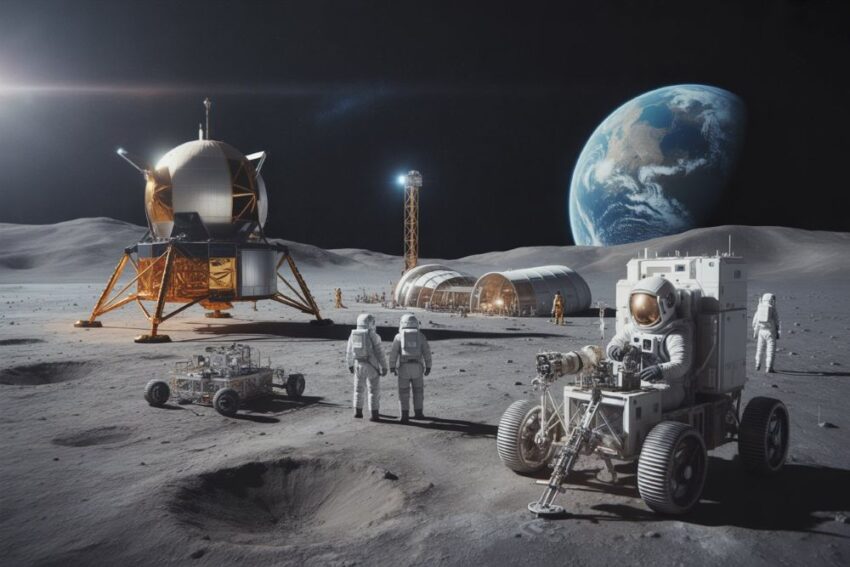
Blue Origin Now Joins NASA, SpaceX, Firefly Aerospace and Astrolab Under the Artemis, CLPS, LTVS Programmes, A Game-Changing Collaboration That Will Revolutionize the Future of Lunar Exploration and Space Travel!
Blue Origin Now Joins NASA, SpaceX, Firefly Aerospace and Astrolab Under the Artemis, CLPS, LTVS Programmes, A Game-Changing Collaboration That Will Revolutionize the Future of Lunar Exploration and Space Travel!
Blue Origin has officially joined NASA, SpaceX, Firefly Aerospace, and Astrolab in the groundbreaking efforts under the Artemis, CLPS, and LTVS programmes. This powerful collaboration marks a game-changing moment in the future of lunar exploration and space travel. As the Artemis programme sets the stage for humanity’s return to the Moon, these companies are at the forefront of the mission. NASA continues to lead, but with the support of SpaceX, Firefly Aerospace, and Astrolab, the vision is becoming a reality faster than ever. With Blue Origin’s involvement, the Moon is one step closer to becoming a sustainable base for future space exploration.
The United States is in the midst of a historic leap forward in space exploration, driven by both NASA’s Artemis programme and the growing involvement of private space companies. With the goal of landing humans on the Moon once more, creating a sustainable lunar presence, and preparing for missions to Mars, US companies are playing a key role in this exciting new space race.
Through the CLPS and LTVS initiatives, these companies are revolutionizing lunar exploration by providing advanced technology, payload delivery systems, and lunar landers. This collaboration will not only boost lunar missions but also transform how we explore space in the coming decades. This article delves into the ambitions of these companies, the technologies they are developing, and how they are accelerating NASA’s Moon missions in 2026 and beyond.
The Artemis Programme: A New Chapter in US Lunar Exploration
At the heart of the United States’ lunar ambitions is NASA’s Artemis programme. Named after the Greek goddess of the Moon, Artemis is the mission set to send astronauts back to the Moon for the first time since the Apollo missions in the 1960s and 1970s. This time, however, the mission aims to not only land on the lunar surface but also establish a sustainable human presence there.
The Artemis programme is being developed in phases. The first phase, Artemis I, saw the launch of the Orion spacecraft in an uncrewed test flight, marking a successful milestone for NASA’s return to lunar exploration. The subsequent mission, Artemis II, will be a crewed flight around the Moon, setting the stage for the historic Artemis III mission, which will land astronauts on the lunar surface.
However, unlike Apollo, Artemis isn’t just about landing astronauts and returning them to Earth. The programme is focused on creating long-term infrastructure on the Moon, such as habitats and lunar rovers, to support the development of lunar science, resource utilization, and further exploration of deep space.
Key Players in the US Lunar Space Race
The Artemis programme would not be possible without the cooperation of private space companies that are contributing innovative technologies. These companies are being contracted by NASA through various programmes like Commercial Lunar Payload Services (CLPS) and Human Landing Systems (HLS) to help deliver payloads, build lunar landers, and transport astronauts to the Moon. Let’s take a closer look at some of the leading companies involved in these lunar efforts.
SpaceX: Leading the Charge with Starship
One of the most well-known names in space exploration, SpaceX is playing a pivotal role in the Artemis programme, particularly with its Starship rocket. Starship is designed to be a fully reusable spacecraft capable of carrying both crew and cargo to the Moon and Mars. SpaceX won a contract with NASA to build the Human Landing System (HLS) for the Artemis III mission, which will deliver astronauts to the lunar surface.
Starship’s reusability is one of its most important features. The ability to launch, land, and relaunch spacecraft multiple times could significantly reduce the cost of space travel. SpaceX’s ambitious plans to return humans to the Moon with Starship highlight their commitment to transforming spaceflight. Despite facing delays, SpaceX’s vision for lunar exploration remains central to the future of NASA’s lunar missions.
Blue Origin: Aiming for Lunar Landings
Blue Origin, founded by Jeff Bezos, is another key player in the US Moon efforts. Blue Origin’s New Shepard rocket has made significant strides in space tourism by regularly taking suborbital spaceflights, but the company is now focusing on much more ambitious goals.
Blue Origin has been selected by NASA to develop the Blue Moon lunar lander as part of the Artemis programme. This partnership is a major step forward for the company, which has long expressed its desire to support human exploration of the Moon. Blue Origin’s lunar lander technology is designed to safely deliver cargo and astronauts to the Moon, with the ultimate goal of enabling sustained human presence on the lunar surface.
The Blue Moon lander has also been designed to transport scientific instruments, mining equipment, and other resources to the Moon. With this technology, Blue Origin aims to create an economically viable lunar presence, building infrastructure that could support future scientific experiments and the eventual colonisation of the Moon.
Firefly Aerospace: A New Player in the Lunar Race
While not as well-known as SpaceX or Blue Origin, Firefly Aerospace is carving out its space in the US lunar exploration scene. The company was awarded a contract by NASA under the Commercial Lunar Payload Services (CLPS) programme to deliver payloads to the Moon using its Blue Ghost lander. Firefly’s innovative approach to robotic lunar landing and payload delivery is opening up new possibilities for commercial companies to support NASA’s space missions.
Firefly’s contribution to the Artemis programme is primarily focused on robotic lunar landers that will carry out scientific experiments and demonstrate new technologies on the Moon’s surface. Firefly’s success with these landers could pave the way for future partnerships with NASA and other space agencies, as the company aims to contribute to the sustainability of lunar exploration.
Intuitive Machines: Delivering Payloads to the Moon
Another emerging company in the US lunar exploration scene is Intuitive Machines. This company is part of NASA’s CLPS programme and is tasked with developing its Nova‑C lunar lander, designed to carry scientific payloads and equipment to the lunar surface. The company’s mission focuses on transporting scientific instruments, which will help researchers better understand the Moon’s surface and resources.
Intuitive Machines’ lunar payload missions are expected to play a crucial role in NASA’s broader lunar exploration strategy. By leveraging commercial technologies, NASA is able to bring diverse expertise to lunar missions while keeping costs low and enabling more frequent missions.
Astrolab: Exploring Lunar Terrain with Rovers
As part of its ongoing efforts to create a sustainable presence on the Moon, NASA is also working with companies like Astrolab, which is developing lunar rovers capable of transporting astronauts and supplies across the Moon’s surface. The company’s FLEX rover will play a vital role in exploring and utilising lunar resources.
Rovers like the FLEX rover will be essential for supporting human missions on the Moon. They will allow astronauts to travel long distances, carry out research, and collect resources necessary for sustaining life. Astrolab’s rovers will also help with logistics, enabling the transport of supplies between lunar habitats, landing sites, and research stations.
NASA’s Commercial Lunar Payload Services (CLPS)
A critical part of NASA’s strategy for lunar exploration is its Commercial Lunar Payload Services (CLPS) programme. CLPS aims to partner with commercial companies to deliver scientific payloads to the Moon, including tools and equipment for lunar mining and resource extraction. This programme is one of NASA’s most innovative approaches to encouraging private companies to contribute to lunar exploration.
Through CLPS, NASA has awarded contracts to several commercial companies, such as Firefly Aerospace, Intuitive Machines, and Astrobotic Technology, to develop technologies that will support NASA’s science goals. These partnerships are helping to drive forward the pace of lunar exploration and making space more accessible for commercial enterprises.
The Future of Lunar Exploration: What’s Next?
The lunar race between the US and its commercial space companies is far from over. As NASA’s Artemis programme gains momentum, the private companies involved are pushing the boundaries of space travel and technology. With SpaceX’s Starship, Blue Origin’s Blue Moon, and other companies developing lunar infrastructure, the next decade promises to bring new and exciting opportunities for exploration, scientific discovery, and resource development.
NASA’s collaboration with the private sector is accelerating the pace of space exploration, with companies like SpaceX, Blue Origin, Firefly Aerospace, and Intuitive Machines developing cutting-edge technologies. These partnerships are also helping to build sustainable infrastructure on the Moon, a necessary step for long-term exploration and future missions to Mars.
While the road ahead is still challenging, the vision for a permanent human presence on the Moon is becoming more achievable with each passing year. The US lunar efforts are not just about returning to the Moon; they are about creating a new era of space exploration, one that involves the commercial sector, international collaboration, and the search for resources that could help humanity thrive beyond Earth.
In conclusion, the US companies driving the moon missions are setting the stage for the future of space exploration. With NASA’s Artemis programme guiding the way and private companies providing the technological advancements, the Moon is becoming the next frontier in humanity’s quest for knowledge, resources, and sustainable space travel. Keep an eye on this exciting space race as it unfolds. The lunar legacy is being built right now, and the future of space exploration looks brighter than ever.
The post Blue Origin Now Joins NASA, SpaceX, Firefly Aerospace and Astrolab Under the Artemis, CLPS, LTVS Programmes, A Game-Changing Collaboration That Will Revolutionize the Future of Lunar Exploration and Space Travel! appeared first on Travel And Tour World.
Source: travelandtourworld.com



Sorry, the comment form is closed at this time.