


Bolivia Joins Mexico, Dominican Republic, and Colombia in Building the Future of Urban Mobility and Expanding Cultural Tourism with Advanced Cable Car Networks: Everything You Need to Know
Bolivia Joins Mexico, Dominican Republic, and Colombia in Building the Future of Urban Mobility and Expanding Cultural Tourism with Advanced Cable Car Networks: Everything You Need to Know
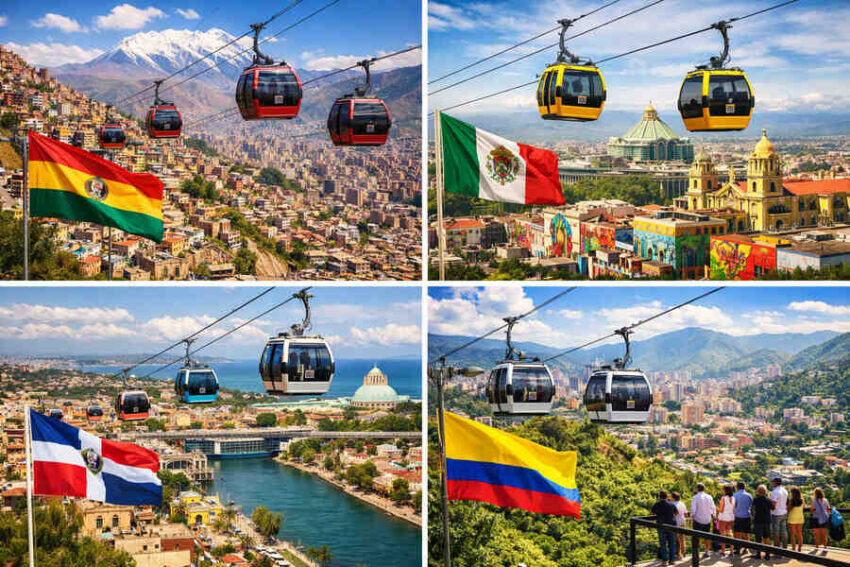
Bolivia is making its mark alongside Mexico, the Dominican Republic, and Colombia in the revolution of urban mobility, with the introduction of advanced cable car networks that are reshaping the way people navigate cities. Amid the challenges of La Paz’s steep altitudes and rugged terrains, cable cars have proven to be an ideal solution for connecting distant neighborhoods while easing the daily commute. These aerial transport systems not only solve transportation issues but also provide tourists with an unforgettable way to view the region’s stunning landscapes. As Bolivia rolls out Mi Teleférico, joining the ranks of its Latin American counterparts, it highlights a pivotal moment in the region’s urban development. This article takes a closer look at how Bolivia, alongside Mexico, Colombia, and the Dominican Republic, is enhancing both urban mobility and cultural tourism through these cutting-edge cable car networks.
Originally linked to mountain tourism, cable cars have become a game-changer in densely populated and hilly areas, providing practical solutions for daily commuting and offering a fresh perspective on the city. These systems not only improve mobility but also serve as tourist attractions, offering stunning aerial views of cities and their surroundings.
Here, we explore some of the key cable car networks in Latin America that are transforming urban transportation while driving tourism growth.
Mi Teleférico – La Paz, Bolivia
La Paz, Bolivia, located at one of the highest altitudes in the world, has faced particular challenges in providing transportation due to its steep geography. The Mi Teleférico system, launched in 2014, offers an efficient and cost-effective solution. Spanning over 30 kilometers, it holds the title of the longest cable car network in the world.
The system transports over 200,000 passengers daily, connecting La Paz with the neighboring city of El Alto. While primarily serving as an urban transport solution, Mi Teleférico has also become a popular tourist attraction, offering unrivaled views of the Andean mountains and cityscapes. It provides a unique way for visitors to experience Bolivia’s high-altitude capital.
Mexicable – Ecatepec, Mexico
Located in the State of Mexico, Ecatepec was in dire need of improved transportation due to its high population density and traffic congestion. The Mexicable system, inaugurated in 2016, has provided an efficient solution, drastically reducing commuting times from over an hour to just 17 minutes, making it a game-changer for local mobility.
Serving 5.5 million passengers annually, Mexicable benefits both residents and tourists. The cable car provides breathtaking views of the Sierra de Guadalupe and murals created by the local community, attracting more visitors each year. This network has helped integrate isolated neighborhoods with the rest of the city, improving the daily lives of locals and boosting tourism in the area.
Teleférico de Santo Domingo – Dominican Republic
In the Dominican Republic, the capital city of Santo Domingo has struggled with severe traffic congestion and limited mobility. To address these challenges, the government launched the Teleférico de Santo Domingo in 2018. The cable car network spans neighborhoods along the Isabela and Ozama rivers, providing much-needed relief while connecting previously isolated communities.
The system serves more than 287,000 people and transports 2.1 million passengers annually. Beyond its practical role, the cable car offers stunning aerial views of the Dominican capital, making it a significant tourist attraction. As one of the newest cable car networks in Latin America, the Teleférico de Santo Domingo has quickly become an essential part of the city’s transportation infrastructure.
Metrocable – Medellín, Colombia
Medellín, once infamous for its violence and poverty, has undergone a remarkable transformation in recent decades. A key part of this transformation has been the creation of the Metrocable system, which began operations in 2004 to connect isolated hillside communities to the rest of the city. The Metrocable has played a crucial role in improving urban mobility and reducing inequality in Medellín.
The success of the Metrocable lies in its social focus, helping integrate marginalized areas like Comuna 13, which has become one of the city’s most vibrant cultural hubs. With an estimated 14.3 million passengers annually, Metrocable is also a major tourist attraction, drawing visitors to Medellín for its breathtaking views and innovative approach to urban development. The system also provides access to Arví Park, a popular destination for nature lovers.
Cablebus – Mexico City, Mexico
As one of the largest cities in the world, Mexico City faces significant transportation challenges. The introduction of the Cablebus system in 2021 has alleviated some of these issues, providing an efficient mode of transport connecting key cultural and historical sites around Bosque de Chapultepec, one of the city’s main parks.
The Cablebus system has significantly reduced commute times, from 40 minutes to just 21 minutes, and connects passengers to major tourist attractions such as the National Cineteca and the National Art Bodega. With over 22 million passengers annually, the Cablebus serves not only locals but also visitors looking to explore Mexico City from a unique aerial perspective.
Conclusion: The Future of Urban Mobility in Latin America
Cable cars have become a crucial part of urban infrastructure in Latin America, offering a reliable, cost-effective means of transportation while providing stunning views for tourists. These networks represent a shift toward more sustainable and inclusive urban planning. By connecting isolated neighborhoods and reducing traffic congestion, cable car systems are reshaping Latin American cities and enhancing the quality of life for residents.
As tourism continues to grow in the region, these cable car networks offer new ways for visitors to explore cities from an elevated vantage point, boosting local economies and providing unforgettable experiences. As urbanization continues to spread, cable cars will likely play an even more significant role in shaping the future of Latin American cities, solving mobility challenges and contributing to the region’s tourism boom.
The post Bolivia Joins Mexico, Dominican Republic, and Colombia in Building the Future of Urban Mobility and Expanding Cultural Tourism with Advanced Cable Car Networks: Everything You Need to Know appeared first on Travel And Tour World.
Source: travelandtourworld.com



Sorry, the comment form is closed at this time.