


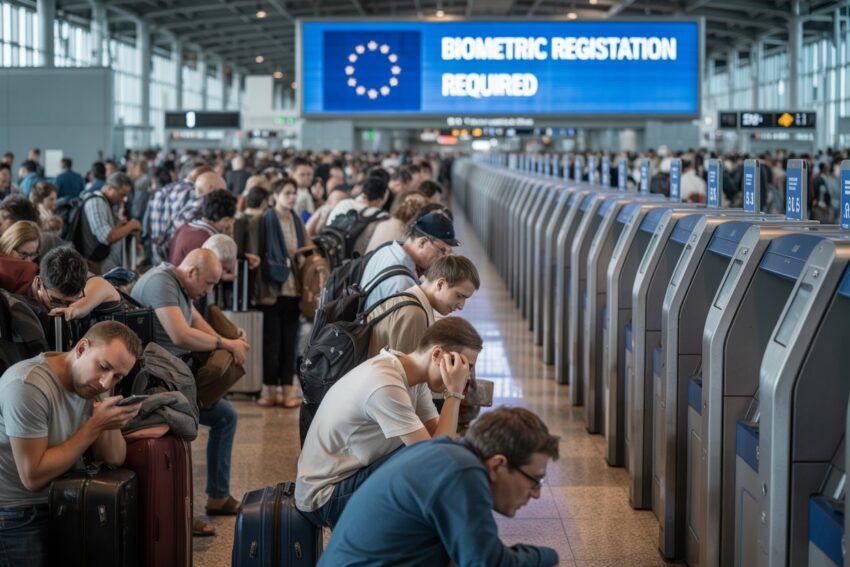
Border Chaos and 4-Hour Queues: The 2026 ‘Nightmare’ Facing British Tourists in the EU
Border Chaos and 4-Hour Queues: The 2026 ‘Nightmare’ Facing British Tourists in the EU
For generations of British holidaymakers, the “hop across the Channel” was the ultimate symbol of a stress-free getaway. But as we move into 2026, that ease is being replaced by what industry insiders are calling a logistical “nightmare.”
Following the full-scale implementation of the European Union’s new Entry/Exit System (EES) in April 2026, the traditional passport stamp is officially dead. In its place is a high-tech, biometric barrier that is already causing “chaotic” scenes at major European gateways. If you’re planning a trip to Spain, France, or Italy this year, the message from travel experts is clear: pack your patience along with your sunscreen.
The 4-Hour Warning: What’s Happening at the Border?
The core of the issue lies in the new biometric requirements. Every non-EU traveller—including those from the UK—must now have their fingerprints scanned and a facial image captured upon their first entry into the Schengen Area.
While the European Commission initially promised a “seamless” transition, the reality on the ground has been anything but. Aviation industry leaders, including ACI Europe and IATA, have issued a stark warning: without significant changes to staffing and technology, waiting times at border control could soar to four hours or more during the peak summer months of July and August.
Reports from the first quarter of 2026 have highlighted “chronic understaffing” and “teeting technology” at popular hubs like Geneva, Paris Charles de Gaulle, and Madrid. In some instances, airports have had to “partially suspend” the digital checks just to prevent terminals from reaching dangerous capacity levels.
Beyond the Kiosks: The “90-Day” Trap
It’s not just the physical queues that are causing headaches. The EES is a highly efficient, automated tracker of the 90/180-day rule. Previously, overstaying a few days in a holiday home in Portugal or France might have gone unnoticed by a busy border official with a rubber stamp.
In 2026, the computer says “no.” The moment your biometric data is scanned on exit, the system calculates your stay to the second. Those found in breach of the 90-day limit are facing immediate fines, deportation, and—most significantly—potential entry bans that could last for years. For the thousands of Brits who own second homes in the EU, the “carefree” era of extended stays has come to an abrupt, digital end.
The Financial Sting: Tourist Taxes and Passport Fees
If the border delays don’t dampen your spirits, the rising cost of a European holiday might. 2026 has seen a coordinated hike in “tourist taxes” across the continent:
Greece: Has increased its climate crisis resilience fee to up to €15 per night for high-end stays.
Venice: Now requires a pre-paid “entry fee” on nearly 60 peak days throughout the year.
Spain: Popular regions like the Canary Islands have introduced new levies to combat local frustrations over “mass tourism.”
Coupled with the 7% increase in UK passport fees that took effect last year, the “cheap European break” is becoming an increasingly expensive luxury.
Humanizing the Chaos: The “Holiday Anxiety”
Behind the statistics of “2-hour delays” and “biometric scans” are the real stories of British families. Imagine a family of four arriving at a humid airport in Tenerife after a 4-hour flight, only to be told they must wait another three hours in a non-moving queue because the biometric kiosks are offline.
“It’s the uncertainty that kills the holiday mood,” says Sarah Jenkins, a travel consultant based in London. “People are used to the 2-hour airport rule. Now, we’re telling them to arrive at least four hours early for return flights from the EU, and to expect ‘doubled’ processing times on arrival. It’s turning a quick break into a marathon of endurance.”
How to Navigate the 2026 Travel Nightmare
While the situation is challenging, you don’t have to cancel your plans. Here is how to minimize the “EES effect”:
Register Early (When Possible): Keep an eye on the Frontex pre-registration app. While adoption has been slow, using the app to upload your details before you reach the kiosk can save precious minutes.
Choose Your Hub Wisely: Smaller, secondary airports often have shorter biometric queues than major hubs like Amsterdam Schiphol or Paris CDG.
Audit Your Days: Use a “Schengen Calculator” app to track your 90-day limit religiously. The new system is unforgiving.
Carry a GHIC: Ensure your Global Health Insurance Card is valid. With the end of reciprocal healthcare, a medical emergency without one can be a financial disaster.
Looking Ahead: ETIAS is Coming
As if EES wasn’t enough, the EU is preparing for the final quarter of 2026, when the ETIAS (European Travel Information and Authorisation System) is set to launch. This will require Brits to pay a €7 fee for a digital permit to enter the EU—similar to the US ESTA.
The “Travel Nightmare” of 2026 is likely just the beginning of a new, more regulated era of European travel. The days of spontaneity may be fading, but with the right preparation, the beauty of the Mediterranean and the charm of the Alps are still within reach—you just might have to wait a little longer to see them.
The post Border Chaos and 4-Hour Queues: The 2026 ‘Nightmare’ Facing British Tourists in the EU appeared first on Travel And Tour World.
Source: travelandtourworld.com



Sorry, the comment form is closed at this time.