


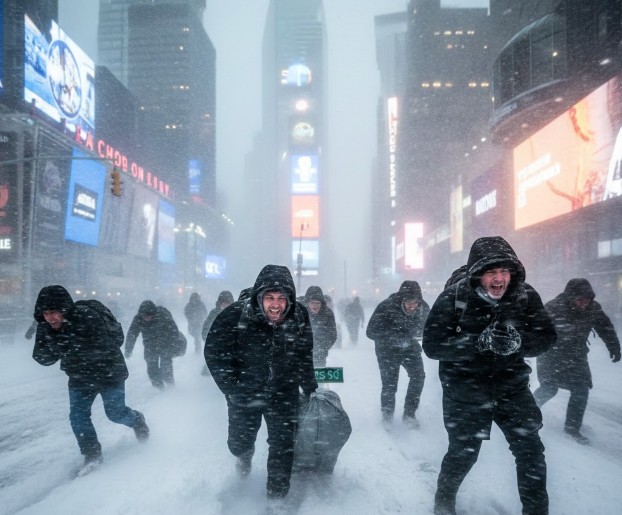
Breaking: New York Joins Massachusetts, Rhode Island, and Connecticut with Record Winter Storm Hernando Unleashing Travel Chaos with Blizzard Leading to Bans, Flight Cancellations and Tourism Freeze as New Update Reveals Shocking Details
Breaking: New York Joins Massachusetts, Rhode Island, and Connecticut with Record Winter Storm Hernando Unleashing Travel Chaos with Blizzard Leading to Bans, Flight Cancellations and Tourism Freeze as New Update Reveals Shocking Details
The Blizzard of 2026, also known as Winter Storm Hernando, struck the Northeast and Mid-Atlantic of the United States on Tuesday, 24 February 2026, causing widespread travel disruptions and emergency declarations. States like Massachusetts, New York, New Jersey, Rhode Island, and Connecticut issued travel bans and statewide emergencies due to heavy snow, winds, and blizzard conditions. The storm brought over 30 inches of snow in some areas, with wind gusts reaching 98 mph, causing power outages and paralyzing public transit. JFK, LaGuardia, Newark, and Boston Logan airports experienced nearly 90% flight cancellations, while NJ Transit suspended all bus, light rail, and commuter services. Schools and offices across major cities, including Boston, were closed for the day. The National Guard was mobilized to assist with snow removal, rescue efforts, and emergency services, while state governments coordinated to manage the storm’s impact on infrastructure, economies, and residents’ safety.
Storm ferocity and naming
It was reported that the blizzard was named Winter Storm Hernando by meteorologists. This intense blizzard over the United States of America was described as unprecedented and crippling. Heavy snow and biting wind swept across the Northeast and Mid‑Atlantic. People nationwide followed updates as the storm hammered communities. The intensity of the snowfall made roads impassable and daily activities impossible. This portion of the article sets the stage by describing the scale, power and danger of the storm. The storm’s name became synonymous with chaos and fear. The region was stunned by the storm’s unmatched scope.
State of emergency declarations
Governors across several states declared states of emergency to mobilize resources and protect residents. Massachusetts, New York, New Jersey, Connecticut, Rhode Island and Pennsylvania activated emergency protocols. These declarations allowed coordination among agencies and were used to impose travel bans. Officials urged citizens to stay home and avoid the treacherous roads. Shelters were opened and emergency crews were dispatched. By formalizing these emergency declarations, the states could access federal assistance and call up National Guard units. These steps were meant to save lives and minimize property damage. The declarations were broadcast widely to emphasize the seriousness.
Massachusetts travel bans[1]
The Commonwealth of Massachusetts imposed strict travel bans in several counties. A nonessential travel ban was issued for Bristol, Plymouth and Barnstable counties due to intense snowfall and high winds. Officials reduced the speed limit on the Massachusetts Turnpike and urged drivers to stay off roads[1]. Essential vehicles like police, firefighters and utility crews were exempt. The travel ban allowed plows to clear roads and first responders to reach people in distress. These restrictions reflected the state’s urgent need to keep highways clear. The public largely complied, staying home to avoid danger. Compliance levels remained high statewide.
New York restrictions[2]
New York State implemented vehicle restrictions on Interstate 84 and roads south of that route. Empty tractor‑trailers and tandem trucks were banned from the Thruway and other major highways[2]. A state of emergency was declared by Governor Kathy Hochul. Officials emphasized that only essential vehicles should be on the roads. Storm conditions were severe, with blowing snow reducing visibility. These measures aimed to prevent jackknifed trucks from blocking roads and allowed plows to operate efficiently. The public was told to monitor official channels for updates. The governor’s office coordinated closely with local officials and state police agencies.
New York City emergency[3]
In New York City a local state of emergency was declared. A citywide travel ban went into effect from late Sunday until midday Monday. Empty tractor‑trailers and tandem trucks were prohibited on major bridges including the RFK and Verrazzano‑Narrows[3]. The subway system was modified to protect outdoor lines, with express trains running on local tracks. Officials urged New Yorkers to avoid unnecessary trips. City agencies coordinated snow removal and emergency responses. These actions were taken to keep the metropolis functional amid the devastating blizzard. Emergency shelters were opened, and warming centers offered safety and heat overnight.
New Jersey mandatory restrictions[4]
The State of New Jersey enacted a mandatory travel restriction during the height of the storm. From Sunday night to early Monday non‑exempt vehicles were prohibited from operating on state, county and municipal roads[4]. The New Jersey Turnpike was exempt, but roads were off limits. The restrictions exempted emergency services, utility crews, public transit, government employees and vehicles delivering essential supplies. Governor Mikie Sherrill also declared a state of emergency earlier that day. Law enforcement agencies enforced the travel ban to ensure safety. Residents were told that staying home would protect them and support snow‑clearing operations.
Connecticut highway closure[5]
Connecticut Governor Ned Lamont declared a state of emergency and issued an executive order banning commercial vehicles from all limited‑access highways[5]. The order took effect on Sunday at five p.m. and remained in place until conditions improved. Essential services like emergency vehicles, public safety trucks and some medical transport were allowed. Officials warned that whiteout conditions could make travel dangerous. The goal was to reduce accidents and keep highways clear for plows. Residents were advised to stay off roads, stock up on supplies and check on neighbours. The state communicated regularly through official channels. Crews stood ready.
Pennsylvania disaster measures[6][7]
Pennsylvania Governor Josh Shapiro signed a disaster emergency declaration as the blizzard approached[6][7]. Tier 1 vehicle restrictions were imposed on eastern parts of the state, banning certain commercial vehicles from interstates and the Turnpike. National Guard units were mobilized to assist with rescues and support local agencies. Citizens were urged to stay off the roads and monitor weather updates. The state worked closely with neighbouring jurisdictions to coordinate responses. Emergency shelters were opened for those without power or heat. These preparations reflected the serious threat posed by the winter storm. Weather updates were constantly broadcast on TV.
Rhode Island travel ban[8][9]
In Rhode Island a statewide travel ban on commercial vehicles began at five p.m. and escalated to a ban on all traffic at seven p.m.[8]. Governor Dan McKee had declared a state of emergency and the ban remained in effect until four thirty p.m. Monday[9]. Essential workers and emergency vehicles were exempt from the ban. A parking ban remained through early Tuesday. Residents were instructed to remain indoors and off streets. Authorities broadcast warnings on television, radio and social media. The small state prepared as the blizzard threatened to bury communities under snow. Messages urged caution.
Airport shutdown chaos[10]
The aviation sector was severely impacted by the blizzard. The Federal Aviation Administration reported that Winter Storm Hernando caused delays and cancellations in Boston, New York and Philadelphia[10]. More than five thousand flights were cancelled on Monday and over one thousand three hundred were cancelled on Tuesday. Major hubs like JFK, LaGuardia, Newark and Boston Logan saw nearly ninety percent of outgoing flights grounded. Passengers were stranded as airports shut down runways due to snow and wind. Airlines coordinated rebookings and offered waivers. The air travel gridlock underscored the storm’s severity. Ticket counters sat empty and silent.
Public transit turmoil[11][12]
Public transit systems struggled under the weight of the blizzard. New Jersey Transit rail, bus and Access Link services were suspended until conditions improved. NYC subways ran express trains on local tracks to protect vulnerable outdoor lines[11]. NJ Transit’s Newark Light Rail and River Line faced major suspensions. Boston public schools remained closed and some government offices closed as well[12]. Commuters were advised to avoid travel and check for updates before venturing out. Transit authorities coordinated with state agencies to restore services as quickly as possible. Service disruptions frustrated commuters and hindered access to workplaces and clinics.
Snowfall totals and extremes[13][14][15]
Snowfall from the blizzard reached extraordinary levels. In Massachusetts the National Weather Service reported thirty one inches in Acushnet and twenty seven inches near Hanover[13]. Rhode Island saw twenty eight point two inches in Portsmouth and twenty six inches near North Smithfield and North Kingstown[14]. In New Jersey snow totals reached twenty seven point nine inches in Carlstadt[15]. These heavy accumulations caused roofs to collapse and obstructed emergency services. Snow drifts buried vehicles and trapped residents in their homes. The historic snow totals will be remembered for years. Emergency crews dug through drifts that blocked roads.
Wind gust challenges[16][17]
While snowfall captured headlines the storm’s winds were also dangerous. The National Weather Service reported sustained winds of twenty four to thirty six miles per hour with gusts up to forty miles per hour in Connecticut and Massachusetts[16][17]. These winds created whiteout conditions and drove snow into drifts. Trees and power lines were toppled, causing widespread outages. Travel became impossible as strong gusts rocked vehicles. The combination of heavy snow and fierce winds defined the blizzard’s brutality. This section underscores the importance of respecting wind warnings. Ice shards flew in the air, slicing visibility and stinging faces.
Power outage concerns
As the blizzard intensified, power outages became widespread. Heavy snow weighed down tree branches and knocked them onto power lines. Utility companies mobilized crews to restore electricity under dangerous conditions. The high winds made repairs difficult and slowed response times. Shelters were opened to provide warmth and charging stations for affected residents. Governments urged people to conserve energy to prevent further strain on the grid. This crisis highlighted the fragility of infrastructure and the urgent need for resilience planning. Generators were deployed to critical facilities to keep lights on and maintain life support systems during the emergency.
School and city closures[12]
Cities and towns closed schools and government offices to protect students and workers. Boston public schools remained closed due to fifteen inches of snow and additional forecast accumulation[12]. Officials prioritized clearing sidewalks and main roads while keeping children at home. Many city facilities such as libraries and senior centers opened only for limited hours. These closures were necessary to prevent injuries and accidents. Parents adjusted to remote work while caring for children. The community’s resilience was tested as everyday routines were disrupted by the blizzard. Sports events were cancelled and concerts postponed until further notice indefinitely.
Logistical supply disruptions
The blizzard disrupted supply chains across the Northeast. Truck bans on highways delayed deliveries of food, fuel and medical supplies. Grocery stores faced shortages as panic buying occurred before the storm. Ports and rail terminals paused operations due to safety concerns. Emergency supplies were rerouted via alternative routes where possible. Authorities coordinated with private companies to prioritize essential goods. This section illustrates how a major storm can ripple through the economy and affect daily life. Fuel depots limited deliveries, while farm shipments were rerouted to prevent spoilage. Pharmacies reported delays in obtaining vital prescriptions for patients statewide.
Military and National Guard roles
National Guard units were activated in multiple states to assist with storm response. Guard members helped with rescuing stranded motorists and transporting medical personnel. They delivered fuel, food and water to isolated communities. Heavy equipment was used to clear roads and support utility restoration efforts. In Pennsylvania the Guard worked with local authorities to enforce vehicle restrictions. The military’s involvement underscored the scale of the emergency. Their presence reassured residents that the government was prepared to respond to the blizzard. Helicopters were used to rescue stranded motorists from highways and deliver medical supplies to hospitals.
Emergency management coordination
Coordination among federal, state and local agencies was vital during the blizzard. Emergency operations centers were activated to monitor conditions and allocate resources. Officials from transportation, public safety, health and utilities participated in regular briefings. Public information officers issued warnings and updates through multiple channels. This collaborative effort minimized duplication and ensured that critical needs were addressed. Real‑time communication allowed rapid responses to emerging problems. The storm became a test of the nation’s disaster management infrastructure. Joint information centers handled media inquiries and prevented misinformation. Interagency liaisons ensured cooperation among departments and volunteer groups at all levels.
Citizen response and resilience
Residents across affected states displayed remarkable resilience. Many heeded warnings and stayed off roads, reducing pressure on emergency services. Neighbors checked on the elderly and shared supplies when stores closed. Community volunteers assisted with shoveling snow and distributing sandbags. People used social media to share information and encourage compliance with travel bans. The human spirit shone through as individuals adapted to the blizzard with determination. These actions demonstrated that solidarity can help communities weather storms. Snow angels were drawn by children, bringing joy amid hardship. Pet owners braved drifts to walk dogs and feed birds outside.
Media coverage and hype
News outlets delivered continuous coverage of the blizzard, often using dramatic language. Footage of buried cars and snow‑covered streets dominated screens. Some reports exaggerated the dangers to capture attention. Social media buzzed with hashtags linking the storm to earlier disasters. While sensationalism can mislead, it also ensured that people took the storm seriously. The constant focus on the crisis might have contributed to panic buying and fear. This section examines the relationship between media hype and public perception during extreme weather. Sensational headlines labeled it a monster and apocalypse, while experts urged calm rational responses nationwide.
National Weather Service warnings[13][14]
The National Weather Service issued blizzard warnings and detailed forecasts days before the storm. Advisories described expected snowfall amounts, wind speeds and timing[13][14]. Officials used these warnings to decide when to impose travel bans and close schools. Meteorologists emphasized the danger of whiteout conditions and low visibility. These predictions proved accurate and helped prevent loss of life. Regular updates allowed emergency managers to adjust their plans. The importance of timely warnings was highlighted by this blizzard. Bulletins were issued through NOAA weather radios, smartphone alerts, television crawls and highway message signs to reach everyone promptly effectively.
Comparisons to past blizzards
Observers compared Winter Storm Hernando to previous historic storms. The Blizzard of 1978 and the 2015 blizzard were referenced frequently. While those storms were devastating, the current blizzard’s combination of snowfall and wind was considered more disruptive. Advances in forecasting and emergency response improved outcomes, but the storm still overwhelmed infrastructure. Comparisons provided context and reminded residents of past hardships. Historical parallels also emphasized the need for continued investment in resilience. This analysis shows that memory of earlier storms shapes current expectations. Photographs circulated online to remind residents of past hardships and community resilience shared widely.
Infrastructure vulnerabilities exposed
The blizzard exposed weaknesses in the region’s infrastructure. Aging power grids and outdated rail systems struggled under heavy snow and wind. Roads deteriorated rapidly under the weight of plows and salt. Communication networks were stressed as more users went online. These failures illustrated the need for modernization and hardening of critical systems. Investments in resilient infrastructure could reduce the impact of future storms. The storm served as a wake‑up call for policymakers and the public. Seawalls were overtopped in coastal areas, while inland bridges suffered structural stress under heavy snow loads and salt corrosion requiring urgent repairs.
Environmental and climatic context
This blizzard raised questions about climate variability and extreme weather. Scientists noted that warmer oceans can increase moisture available for storms. Some experts cautioned against attributing a single storm to climate change. However, trends indicate that intense storms may become more frequent. The interplay between natural variability and human influence was discussed widely. Understanding these factors can improve preparedness and adaptation. This section explores the environmental context of Winter Storm Hernando without making definitive claims. Meteorologists explained that La Niña patterns can influence storm tracks and intensity. Citizens learned about jet streams and atmospheric rivers too.
Tourism and economic impact
Tourism and business activities were severely disrupted by the blizzard. Hotels saw cancellations as travelers stayed away. Restaurants and shops closed early or did not open. Events and conferences were postponed or moved online. Snow removal costs strained municipal budgets. Workers lost wages due to closures and transportation problems. The storm’s economic ripple effects will be felt long after the snow melts. Ski resorts closed lifts. Museums announced closures. Delivery drivers lost income. Conference venues faced penalties for cancellation. Florists discarded fresh arrangements. The economic toll spread far beyond the tourist sector into manufacturing and services.
Legal implications and liability
Extreme weather events raise legal questions about liability and responsibility. Residents may wonder who is liable for accidents during a blizzard. State laws often shield governments from certain claims when emergencies are declared. Business owners must consider their duty to clear sidewalks and parking lots. Insurance policies may limit coverage for storm damage. These legal nuances remind people to review their insurance and follow local ordinances. Understanding these issues can help individuals navigate post‑storm disputes. Government immunity may apply when emergency declarations are in effect. Lawyers recommend documenting damages and following official guidance when filing claims.
Healthcare and emergency services
Healthcare providers faced significant challenges during the blizzard. Hospitals activated emergency plans to ensure staffing and supply continuity. Ambulances encountered delays due to road closures and snow drifts. Medical staff slept at facilities to remain available. Pharmacies remained open for limited hours to dispense critical medications. Telehealth services increased as patients sought remote consultations. These experiences highlight the resilience of healthcare systems when faced with severe weather. Snowplows escorted ambulances to ensure safe passage. Veterinary clinics cared for animals displaced by the storm. Mental health hotlines were staffed to help residents cope with anxiety and stress.
Preparation tips and guidance
The blizzard underscored the importance of preparation. Officials recommended stocking emergency kits with food, water and medicine. Residents were advised to keep vehicles fueled and to carry blankets and shovels. Homeowners were told to clear gutters and inspect heating systems before winter. By following official guidance, people can reduce risks during extreme storms. This section provides practical steps that anyone can follow to stay safe. Preparedness is a shared responsibility that saves lives. Officials encouraged stocking batteries, flashlights and radios. Pet owners were advised to keep animals indoors. Clear hydrants to help firefighters. Follow evacuation orders.
Outlook and future planning
As the snow clears, attention turns to recovery and lessons learned. Officials will review the response to identify successes and shortcomings. Investments in infrastructure and emergency management will be considered. Residents will rebuild and reflect on their experiences. Though painful, the blizzard will lead to improved readiness for future storms. Communities have demonstrated resilience and solidarity. This final section looks ahead with cautious optimism. Communities will analyze failures and successes. Construction codes may be revised to withstand heavy snow. Emergency funds will be allocated for rebuilding. Officials will update continuity plans. Public forums will solicit ideas.
Summary of incidents by category
CategoryKey incidents and measuresSourcesTravel Advisories & RestrictionsMassachusetts banned nonessential travel in Bristol, Plymouth and Barnstable counties, reducing speed limits[1]; New York restricted empty and tandem trucks on I‑84 and major highways[2]; New York City enforced a citywide travel ban and prohibited certain trucks on bridges[3]; New Jersey instituted a mandatory travel restriction on state, county and municipal roads[4]; Connecticut banned commercial vehicles from limited‑access highways[5]; Pennsylvania imposed Tier 1 restrictions on commercial vehicles[6]; Rhode Island issued statewide travel bans on commercial vehicles and later all traffic[8][9]State and city government press releases[1][2][3][4][5][6][8]Aviation & Transit DisruptionsFAA reported thousands of flight cancellations at Boston, New York and Philadelphia airports[10]; NJ Transit suspended rail and bus services; NYC subways ran express trains on local tracks[11]; Newark Light Rail and River Line services suspended; Boston schools and some government offices closed[12]FAA daily air traffic report and transit agency advisories[10][11][12]Storm Hazards & ImpactSnowfall totals: 31 inches in Acushnet MA and 27 inches near Hanover[13]; 28.2 inches in Portsmouth RI and 26 inches near North Smithfield[14]; 27.9 inches in Carlstadt NJ[15]; Winds 24–36 mph with gusts up to 40 mph[16][17]; Power outages and infrastructure stress describedNational Weather Service public information statements and local storm reports[13][14][15][16][17]
Sources:
[1] Governor Healey Issues Travel Ban for South Coast of Massachusetts Effective Immediately | Mass.gov
https://www.mass.gov/news/governor-healey-issues-travel-ban-for-south-coast-of-massachusetts-effective-immediately
[2] Governor Hochul Updates New Yorkers on State Preparations Ahead of Severe Winter Storm | Governor Kathy Hochul
https://www.governor.ny.gov/news/governor-hochul-updates-new-yorkers-state-preparations-ahead-severe-winter-storm
[3] Mayor Mamdani Declares Local State of Emergency, Snow Day for NYC Public Schools to Keep New Yorkers Safe – NYC Mayor’s Office
https://www.nyc.gov/mayors-office/news/2026/02/mayor-mamdani-declares-local-state-of-emergency–snow-day-for-ny
[4] ICYMI: New Jersey State Police Issue Travel Restriction
https://www.nj.gov/governor/news/2026/20260222d.shtml
[5] Governor Lamont Declares State of Emergency Due to Major Winter Storm, Prohibits Commercial Vehicle Travel Starting at 5PM Sunday
https://portal.ct.gov/governor/news/press-releases/2026/02-2026/governor-lamont-declares-state-of-emergency-prohibits-commercial-vehicle-travel
[6] [7] Gov Shapiro Signs Proclamation of Disaster Emergency to Prepare for Winter Storm | Commonwealth of Pennsylvania
https://www.pa.gov/governor/newsroom/2026-press-releases/gov-shapiro-signs-proclamation-of-disaster-emergency-to-prepare-
[8] [9] Weather Alert: URI Offices Closed, Classes Canceled for Monday, Feb. 23 – Rhody Today
https://www.uri.edu/news/2026/02/uri-offices-closed-classes-canceled-for-monday-feb-23/
[10] FAA Daily Air Traffic Report | Federal Aviation Administration
https://www.faa.gov/newsroom/faa-daily-air-traffic-report
[11] Winter storm MTA service changes: February 2026
https://www.mta.info/article/winter-storm-service-changes-february-2026
[12] Mayor Wu Shares Storm Update; Boston Public Schools Closed Tuesday, February 24 | Boston.gov
https://www.boston.gov/news/mayor-wu-shares-storm-update-boston-public-schools-closed-tuesday-february-24
[13] [14] tgftp.nws.noaa.gov
https://tgftp.nws.noaa.gov/data/raw/no/nous41.kbox.pns.box.txt
[15] tgftp.nws.noaa.gov
https://tgftp.nws.noaa.gov/data/raw/no/nous41.kokx.pns.okx.txt
[16] [17] LSR from KBOX
https://kamala.cod.edu/ma/latest.nwus51.KBOX.html
The post Breaking: New York Joins Massachusetts, Rhode Island, and Connecticut with Record Winter Storm Hernando Unleashing Travel Chaos with Blizzard Leading to Bans, Flight Cancellations and Tourism Freeze as New Update Reveals Shocking Details appeared first on Travel And Tour World.
Source: travelandtourworld.com



Sorry, the comment form is closed at this time.