


Breaking the Departure Barrier: Why Senator Villanueva is Pushing to Abolish the Philippine Travel Tax
Breaking the Departure Barrier: Why Senator Villanueva is Pushing to Abolish the Philippine Travel Tax
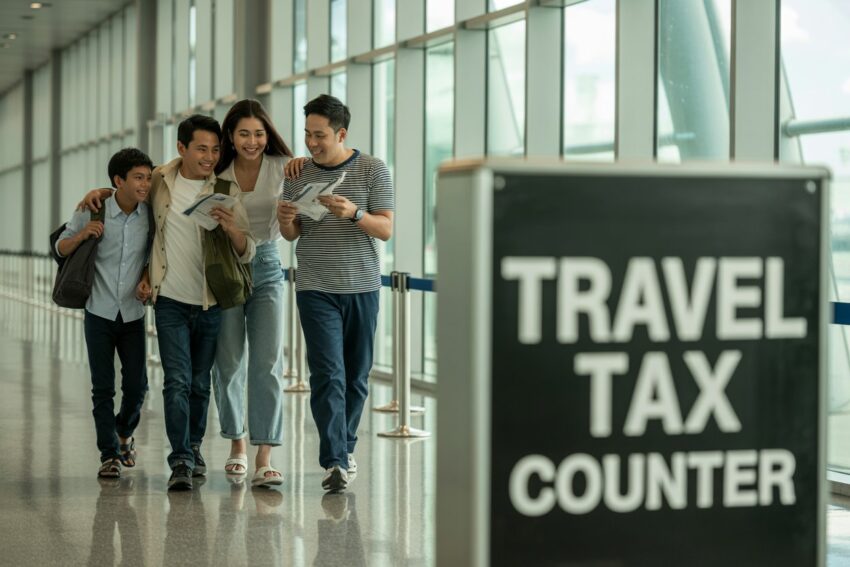
Imagine a family of four heading to the airport for a long-awaited vacation or a relative’s wedding overseas. Before they even clear immigration, they are hit with a combined bill of P6,480 just for the right to leave. For many Filipino households, this is not just a fee; it is a significant financial hurdle that could have been spent on food, education, or local investments.
This is the reality Senator Joel Villanueva is determined to change. Supporting a legislative push initiated by Rep. Sandro Marcos, Villanueva has labeled the current travel tax system as “regressive” and “outdated,” arguing that the policy—created in a different economic era—no longer serves the modern Filipino.
From Luxury to Necessity
The travel tax was originally established during an era when international travel was reserved for the social and economic elite. At the time, it served as a “luxury tax,” with the proceeds intended to fund tourism-related projects via the Tourism Infrastructure and Enterprise Zone Authority (TIEZA).
“The travel tax was created at a time when international travel was a luxury,” Villanueva explained. “Today, travel is a necessity for work, education, and trade. We can fund tourism projects without penalizing travelers at the airport.”
In 2026, the profile of the “Filipino traveler” has shifted. It includes students pursuing global degrees, entrepreneurs expanding their businesses, and Overseas Filipino Workers (OFWs) visiting family. For these individuals, the P1,620 (for economy class) is an unnecessary friction point in an increasingly connected world.
The ASEAN Obligation
A major pillar of Villanueva’s argument is the ASEAN Tourism Agreement of 2002. As a signatory, the Philippines committed to phasing out travel levies and taxes on nationals of fellow ASEAN member-states. By continuing to collect this tax, Villanueva argues that the country is failing to fulfill its regional obligations.
Under his earlier filing, Senate Bill No. 1529, the Senator sought a phased approach, starting with the removal of travel tax for Filipinos traveling within the ASEAN bloc. Now, with the policy included in the administration’s list of priority bills at the Legislative-Executive Development Advisory Council (LEDAC) meeting, the goal has shifted toward total abolition.
The Economic Ripple Effect
Opponents of the abolition often point to the loss of revenue for tourism infrastructure. However, Villanueva counters this with a broader economic perspective. He argues that lowering the cost of travel actually stimulates demand, which in turn:
Creates Jobs: More travelers mean more demand for airlines, travel agencies, and luggage manufacturers.
Expands the Tax Base: The economic activity generated by increased mobility often results in higher VAT and corporate tax collections, offsetting the loss of the direct travel tax.
Encourages Reinvestment: The money saved by families (like the P6,480 for a family of four) is typically spent back into the local economy or used for essential needs.
“Public policy must evolve with economic reality,” Villanueva stated. “The time is ripe for the removal of the travel tax because it positions our country as an open and connected economy in the region.”
A Human-Centric Policy
Beyond the numbers, Villanueva’s push is deeply human. He highlights the “regressive” nature of the tax, noting that while P1,620 might be negligible for a billionaire, it is a “significant amount” for lower- and middle-income households.
By removing this barrier, the government isn’t just cutting a fee; it is validating the right of every Filipino to explore, learn, and connect with the world without being penalized for their financial capacity.
What Happens Next?
The momentum for the abolition of the travel tax is higher than it has been in decades. With the President’s inclusion of the bill in the priority list and a rare consensus between the House and the Senate, the “airport tax sigh” may soon be a thing of the past.
For the millions of Filipinos who pass through NAIA, Clark, and Cebu every year, this policy shift represents a long-overdue victory for mobility and fairness.
The post Breaking the Departure Barrier: Why Senator Villanueva is Pushing to Abolish the Philippine Travel Tax appeared first on Travel And Tour World.
Source: travelandtourworld.com



Sorry, the comment form is closed at this time.