


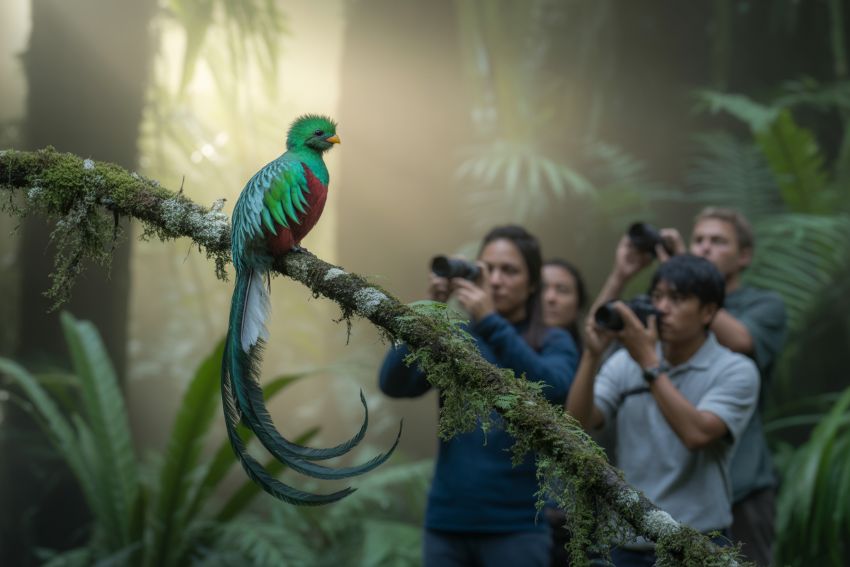
Central America Big Day 2026: The Ultimate Guide to the Region’s Premier Birdwatching and Conservation Event
Central America Big Day 2026: The Ultimate Guide to the Region’s Premier Birdwatching and Conservation Event
Central America’s lush landscapes are gearing up for a transformative environmental milestone. In a significant move for the regional tourism and nature sectors, a coordinated birdwatching and recording initiative has been launched. This event, which will take place simultaneously in participating countries on March 14, 2026, was announced at a hybrid conference held in Guatemala. National authorities and specialised conservationists gathered to coordinate their strategies for what is being dubbed the “Central America Big Day”.
The primary goal of this initiative is to promote avian species conservation and the protection of their fragile ecosystems. A sustainability-driven approach is being prioritised, with citizen observation and digital recording used to collect critical environmental data. This collaborative effort is expected to strengthen local capacities while also highlighting the intrinsic value of the region’s natural heritage to a global audience.
Unified Leadership and Strategic Cooperation
The significance of regional synergy was underscored by high-level representatives during the launch event. Leadership from the Guatemalan Tourism Institute (INGUAT) and the Guatemalan Chamber of Tourism (CAMTUR) was joined by ministerial voices from Honduras and the Central American Tourism Promotion Agency (CATA). Throughout the discussions, the necessity of integrating conservation efforts with environmental education and responsible tourism promotion was emphasized.
It is recognized by these institutional bodies that the Central American isthmus serves as a critical biological bridge connecting the North and South American continents. Because this territory is occupied by a vast array of both migratory and resident species, it is viewed as a strategic corridor of global importance. In this context, birdwatching is being positioned not merely as a leisure activity but as a pivotal opportunity to link local economic prosperity with the rigorous protection of the environment.
The Intersectoral Blueprint for 2026
The organizational structure of the Central America Big Day is defined by its intersectoral coordination. Detailed explanations regarding the collaborative framework were provided by representatives of the Guatemalan Nature Roundtable. Furthermore, institutional commitments were reaffirmed by tourism authorities from El Salvador, while the regional scope of the project was solidified by the participation of delegates from Belize, Nicaragua, Panama, and the Dominican Republic.
The methodology for the event is being built upon the use of specialized digital platforms designed for bird recording. Insights into the registration processes were shared by experts from the Zamorano Center for Biodiversity. For this second edition of the event, adjustments have been implemented to ensure that technical barriers are reduced, thereby allowing for a broader demographic of participants to contribute to the scientific record.
Capacity Building and Scientific Growth
In anticipation of the March 14 event, a comprehensive schedule of virtual training seminars has been organized for all participating countries. These sessions are focused on the standardization of registration protocols and the technical empowerment of local observers. By facilitating the inclusion of new birdwatchers, the initiative seeks to expand the regional network of citizen scientists.
The Central America Big Day 2026 is projected to do more than just record sightings; it is designed to foster a culture of citizen participation and to bolster the depth of regional scientific knowledge. Through this event, Central America is being showcased as a premier destination that is deeply committed to the principles of sustainability and ecological stewardship.
The Economic Impact of High-Value Tourism
The shift toward birdwatching is also a strategic economic manoeuvre. It has been noted by tourism experts that birdwatchers often represent a high-value demographic that prioritizes authentic, low-impact experiences. By catering to this niche, rural communities located within or near protected areas can benefit from a sustainable revenue stream that does not rely on the extraction of natural resources. Instead, the “standing forest” and the biodiversity within it are recognized as the primary assets.
The infrastructure for this event is being supported by a mix of public and private investment. Accommodations, local guides, and transportation services are being encouraged to adopt bird-friendly practices, ensuring that the influx of visitors on March 14 and beyond adheres to the highest ethical standards of wildlife observation.
A Legacy of Conservation and Connectivity
As the date approaches, excitement among the scientific and travel communities grows. The Central America Big Day is expected to produce a “snapshot” of the region’s avian health, giving researchers a data-rich picture of species distribution. This data will be used to guide future conservation policies and identify critical habitats that may need additional protection or restoration.
Finally, the event serves to highlight the Americas’ interconnectedness. As birds cross borders without the need for passports, human stewards of these lands are learning to operate with a similar spirit of borderless cooperation. The 2026 Big Day is expected to leave a lasting legacy of environmental awareness and regional pride.
The post Central America Big Day 2026: The Ultimate Guide to the Region’s Premier Birdwatching and Conservation Event appeared first on Travel And Tour World.
Source: travelandtourworld.com


Sorry, the comment form is closed at this time.