


China Makes A Bold Visa-Free Move That Sparks Travel Boom: What You Need To Know!
China Makes A Bold Visa-Free Move That Sparks Travel Boom: What You Need To Know!
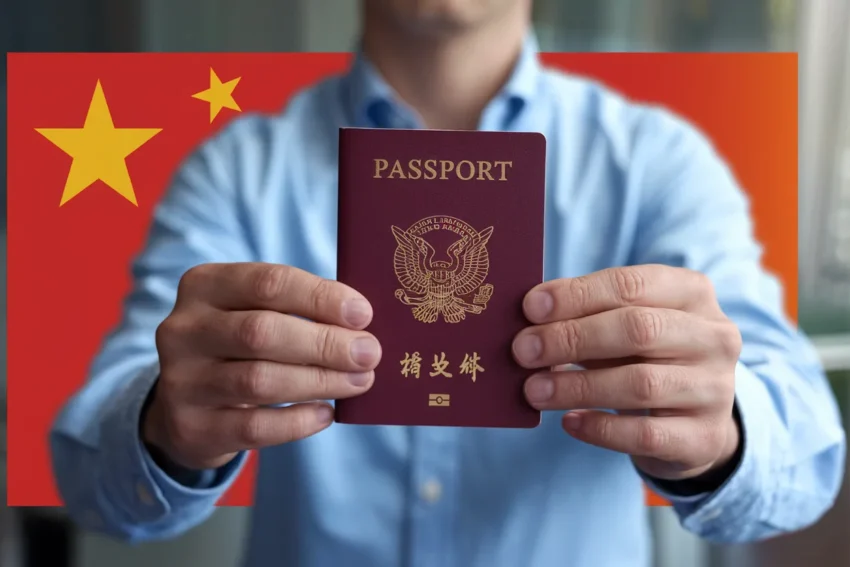
As China expands visa-free travel to key Western countries, a dramatic change in global mobility has begun. A unilateral policy that permits regular passport holders from the UK and Canada to enter the mainland for up to 30 days without a prior visa went into effect on February 17, 2026. This action, which puts a stop to the administrative obstacles that previously impeded impromptu travel, is acknowledged as a key component of a larger plan to enhance people-to-people interactions. Hong Kong’s function as an international gateway has been revived as inbound tourism approaches pre-pandemic levels, providing a smooth transition for individuals wishing to visit the mainland.
Goodbye Visas! The Secret Reason China Just Opened Its Doors To Millions!
The decision to grant 30-day visa-free entry to British and Canadian citizens is being framed by diplomatic analysts as a masterstroke of soft power. It has been observed that the traditional visa application process—often involving biometric appointments and significant fees—acted as a deterrent for many potential visitors. By removing these hurdles, a more welcoming image of the nation is being projected to the world. It is argued that firsthand travel experiences are the most effective tool to counter international misconceptions, as visitors are given the opportunity to witness the country’s modern infrastructure and cultural heritage without state-mediated filters.
This openness is not merely symbolic but is backed by a desire to revitalize the service economy. In 2025, over 30 million foreign nationals entered the country under various visa-exempt schemes, and the inclusion of the UK and Canada is expected to push these numbers to new heights in 2026. The policy covers travel for tourism, business, family visits, and transit, providing a versatile platform for different types of engagement. By facilitating these interactions, a foundation for mutual understanding and long-term economic collaboration is being laid, transcending purely political dialogues.
The 30-Day Escape: Why Your Next Big Vacation Just Got Way Cheaper!
For the average traveler from London or Toronto, the financial and temporal savings of this policy are substantial. The requirement for a $140+ visa fee and a trip to a processing center has been replaced by a simple passport stamp at the border. This change is expected to trigger a surge in short-notice executive visits and leisure trips. Travel management companies have already noted a spike in interest for “multi-city” itineraries that were previously deemed too complex to arrange.
Beyond the 30-day unilateral waiver, the 240-hour (10-day) visa-free transit program has also been expanded to 65 ports of entry. This allows travelers to use China as a sophisticated stop-over destination while en route to a third country. This tiered system of access ensures that whether a visitor has three days or thirty, there is a compliant and efficient way to enter the territory. The result is a more competitive tourism product that positions Chinese cities like Shanghai and Beijing alongside traditional global hubs in Europe and North America.
Hong Kong’s Secret Weapon: The “Superconnector” Is Back and Better Than Ever!
Under the unique “one country, two systems” framework, Hong Kong is positioned as a key beneficiary of the mainland’s newfound openness. The city is being marketed as the ideal starting point for international travelers entering China under the expanded visa-free program. By leveraging its world-class aviation hub and deep-seated international status, Hong Kong acts as a “soft landing” for those who may be visiting the mainland for the first time.
The city’s strategic positioning allows it to capture a significant portion of the transit traffic. Travelers are being encouraged to spend several days enjoying Hong Kong’s vibrant culinary and cultural scene before using the high-speed rail or the Hong Kong-Zhuhai-Macao Bridge to enter the mainland. This “Hong Kong + 1” travel model is being heavily promoted by local tourism boards, emphasizing that a single trip can encompass the global sophistication of the SAR and the historical depth of the Greater Bay Area.
Beyond the Border: How the Greater Bay Area is Changing Travel Forever!
The integration of the Greater Bay Area (GBA) is highlighted as a primary driver of regional tourism growth. With the visa-free policy now covering major GBA entry points like Guangzhou and Shenzhen, the friction of moving between these economic powerhouses has been virtually eliminated for UK and Canadian nationals. Coordination between regional transport authorities has led to the creation of multi-destination itineraries that allow visitors to experience the high-tech hubs of Shenzhen and the colonial charm of Macao in a single, visa-free loop.
Furthermore, the launch of a digital arrival card and the acceptance of international credit cards on platforms like Alipay and WeChat have smoothed the on-ground experience. It is noted that these structural improvements are essential for supporting the influx of visitors. By knitting together the infrastructure of eleven cities into a cohesive travel zone, the GBA is evolving into a world-class megalopolis that rivals the San Francisco Bay Area or the Greater Tokyo Area in terms of accessibility and tourist appeal.
The Final Verdict: Is 2026 the Year China Finally Wins the Tourism War?
As the international travel community looks toward the remainder of 2026, the success of China’s visa-free expansion appears increasingly certain. The strategic goal of rebuilding inbound tourism is being met with a data-driven approach that prioritizes convenience and digital integration. For the global engagement narrative, this period represents a “thaw” in travel relations, where the focus has shifted from restriction to invitation.
The economic impact is already being felt in the retail and hospitality sectors of major hubs. With over 80 new international flights added to the summer 2026 schedule, airlines are betting heavily on the sustained demand from Western markets. The message being broadcast from Beijing and Hong Kong is unified: the doors are open, the process is simple, and the opportunities for discovery are limitless. For the British or Canadian traveler, the “Great Wall” of bureaucracy has finally fallen, leaving only the magnificent physical one left to explore.
The post China Makes A Bold Visa-Free Move That Sparks Travel Boom: What You Need To Know! appeared first on Travel And Tour World.
Source: travelandtourworld.com



Sorry, the comment form is closed at this time.