


China, Vietnam, Thailand, USA Drive Emirates, AirAsia, Cambodia Angkor Air and Marriott, Hilton Expansion as Sihanoukville Emerges as ASEAN’s Smart City Green Hub and Luxury Beach Powerhouse at “Tourism Grows in Peace” Expo — Is This Asia’s Next Coastal Boom?
China, Vietnam, Thailand, USA Drive Emirates, AirAsia, Cambodia Angkor Air and Marriott, Hilton Expansion as Sihanoukville Emerges as ASEAN’s Smart City Green Hub and Luxury Beach Powerhouse at “Tourism Grows in Peace” Expo — Is This Asia’s Next Coastal Boom?
China, Vietnam, Thailand, and the United States are rapidly reshaping the travel dynamics of Cambodia’s southern coast, as fresh tourism data confirms that these markets rank among the country’s largest and most influential visitor sources in 2025. With more than one million arrivals each from China, Vietnam, and Thailand last year, and over two hundred thousand from the United States, the momentum behind Sihanoukville’s transformation is no longer speculative—it is measurable. Cambodia welcomed more than 5.5 million international tourists in 2025, while its aviation sector handled nearly seven million international air passengers, reflecting restored regional connectivity and expanding long-haul access. Against this backdrop, Preah Sihanouk province has unveiled an ambitious master plan to evolve into a smart city and green development hub while positioning Sihanoukville as a top-tier beach resort destination. Airlines are increasing frequencies, hospitality brands are expanding footprints, and international investors are tracking the coastal city’s rise as the “Tourism Grows in Peace” Expo spotlights sustainable growth. What was once a quiet seaside town is now at the center of a regional travel surge, fueled by cross-border leisure, business mobility, and renewed global confidence in Cambodia’s tourism future.
China, Vietnam, Thailand, USA Drive Emirates, AirAsia, Cambodia Angkor Air and Marriott, Hilton Expansion as Sihanoukville Emerges
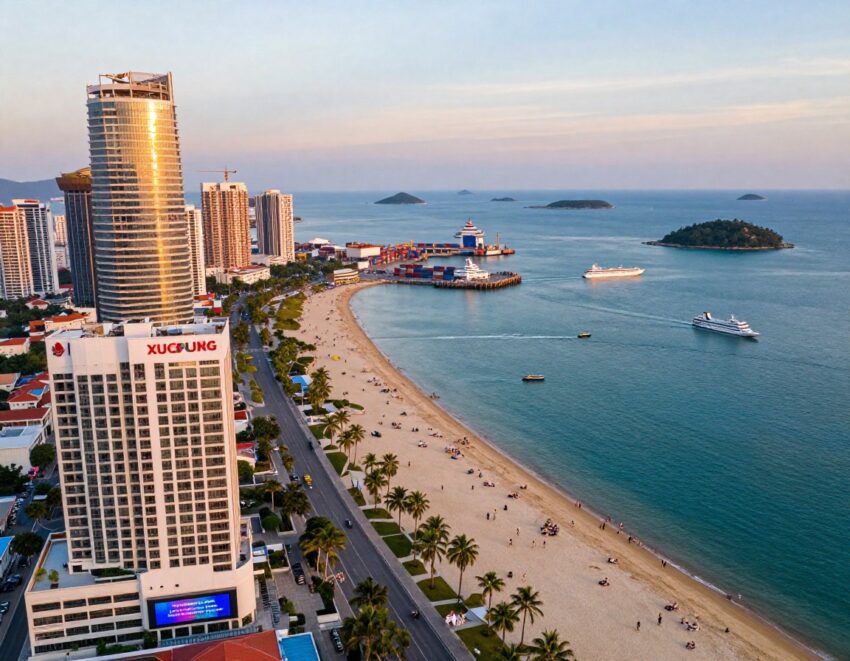
Cambodia is repositioning its southern coastline with unusual speed and clarity. The government has unveiled an ambitious master plan to transform Preah Sihanouk province into a smart city and green development hub while reinforcing its reputation as a top-tier beach resort destination. The announcement coincided with the “Tourism Grows in Peace” Expo in Sihanoukville, a strategic event designed to attract global investors and travelers alike. The shift is already visible in airline schedules, hotel pipelines, and visitor statistics. For travelers, this means better connectivity, upgraded hospitality, and new experiences along one of Southeast Asia’s most dynamic coastlines.
Cambodia recorded 5.57 million international visitors in 2025, according to official tourism data. The country had welcomed approximately 6.7 million international tourists in 2024, showing that demand remains substantial despite year-on-year fluctuations. China, Vietnam, Thailand, and the United States rank among the largest source markets. China alone accounted for more than 1.2 million arrivals in 2025, reflecting a sharp rebound. Vietnam and Thailand each sent over one million visitors, while the United States remained the leading long-haul market. These figures explain why airlines and global hotel brands are intensifying their focus on Cambodia’s coast.
China, Vietnam, Thailand, USA Drive Airline Expansion as Sihanoukville Emerges as a Smart City Green Hub
Air connectivity is the first signal of a destination’s momentum. Cambodia’s aviation sector handled nearly seven million international air passengers in 2025. The number of weekly flights reached well over 1,400, reflecting restored regional capacity and renewed confidence in inbound travel. For Sihanoukville, direct connections and regional feeder routes are central to its smart city blueprint.
AirAsia continues to link Cambodia with major ASEAN cities, offering short-haul affordability for travelers from Kuala Lumpur and Bangkok. Cambodia Angkor Air maintains regional connectivity from Phnom Penh and Siem Reap, supporting domestic and cross-border flows. Emirates connects Cambodia to its global network via Dubai, enabling one-stop access for travelers from Europe and North America. Vietnam Airlines and Thai carriers support heavy cross-border leisure traffic. These routes matter because Vietnam and Thailand together contribute more than two million visitors annually to Cambodia.
The revival of routes between Chinese cities and Sihanoukville further underscores the coastal city’s potential. With China posting a 41 percent year-on-year growth in arrivals in 2025, airlines are restoring frequency. Increased seat capacity from China has a multiplier effect. It supports not only beach tourism but also business travel linked to logistics, real estate, and special economic zones.
For American travelers, improved global connectivity through Middle Eastern and Asian hubs reduces travel friction. One-stop itineraries from major US gateways via Dubai, Doha, Seoul, or Singapore connect smoothly to Phnom Penh or Sihanoukville. The United States delivered more than 200,000 visitors in 2025. With improved marketing and upgraded coastal infrastructure, that number could climb further.
Short-haul markets are even more decisive. Vietnam contributed more than 1.22 million arrivals in 2025. Thailand sent over one million visitors despite a sharp year-on-year dip. Indonesia, South Korea, France, the United Kingdom, Japan, and Laos also ranked among top ten markets. This diverse mix strengthens airline confidence. It spreads risk across regions and seasons.
China, Vietnam, Thailand, USA Fuel Marriott, Hilton and Global Hospitality Growth as Sihanoukville Becomes a Luxury Beach Powerhouse
Hotel development follows air capacity. International brands are positioning themselves for Cambodia’s next growth cycle. Marriott International, Hilton, Accor, InterContinental, and other global players already operate properties in Phnom Penh and Siem Reap. Their expansion into coastal Cambodia reflects confidence in Sihanoukville’s transformation.
Hospitality analysts note that international-standard rooms attract higher-spending travelers. Business delegations attending trade fairs, smart city expos, and investment events require branded accommodation. Leisure travelers from China and Southeast Asia increasingly seek reliable international brands for short beach escapes. The combination supports occupancy stability.
Preah Sihanouk province recorded more than 415,000 foreign visitors in 2025 according to official tourism statistics. Total visitation in the province, including domestic travelers, exceeded 4.7 million. This domestic base is crucial. It fills hotels during weekends and public holidays while international arrivals drive midweek occupancy and premium pricing.
The “Tourism Grows in Peace” Expo functions as more than a marketing event. It signals long-term policy direction. Cambodia’s government aims to position Preah Sihanouk as a model multi-purpose special economic zone under Vision 2038. The blueprint includes green urban planning, logistics corridors, financial services, and sustainable coastal tourism. For hoteliers, this means infrastructure certainty. For travelers, it means cleaner beaches, improved public spaces, and upgraded transport links.
Luxury beach positioning is central. Sihanoukville offers access to islands such as Koh Rong and Koh Rong Samloem, known for clear waters and marine biodiversity. As environmental planning strengthens under the green development framework, conservation efforts align with tourism promotion. Eco-friendly design and renewable energy integration form part of the smart city narrative.
Smart City Vision 2038 Turns Sihanoukville into ASEAN’s Green Development Hub
The master plan envisions Sihanoukville as a smart city powered by digital infrastructure and sustainable practices. Urban upgrades include improved drainage, waste management, and coastal zoning. Green development is not a slogan. It is tied to Cambodia’s long-term goal of achieving high-income status by 2050.
A smart city model attracts foreign direct investment. It also enhances the visitor experience. Digital payment systems simplify transactions for Chinese and regional travelers. Integrated transport corridors reduce congestion. Improved public safety measures strengthen Cambodia’s image as a secure destination.
The logistics dimension matters. Sihanoukville hosts Cambodia’s only deep-water port. Expansion of port capacity supports trade and cruise potential. As maritime facilities modernize, cruise tourism could become a supplementary segment. For airlines and hotels, this diversification adds resilience.
Regional competition is intense. Thailand, Vietnam, and Malaysia already market mature beach destinations. Cambodia’s advantage lies in novelty and integration. Travelers can combine Angkor Wat in Siem Reap, cultural heritage in Phnom Penh, and beach leisure in Sihanoukville within a single itinerary. Improved air and road links make multi-city trips easier.
Tourism Grows in Peace Expo Positions Sihanoukville as Asia’s Next Coastal Boom
The expo’s timing aligns with market recovery. China’s growth trajectory in 2025 signals pent-up demand. If pilot visa exemptions for Chinese travelers are implemented as announced for specific periods in 2026, the effect could be significant. Visa facilitation lowers psychological barriers. It increases spontaneous bookings and package tours.
For Vietnam and Thailand, land and short-haul air travel remain simple. Cross-border bus routes and low-cost carriers support weekend travel. For Americans and Europeans, improved branding and global airline connectivity enhance visibility. France and the United Kingdom both recorded positive growth in arrivals in 2025. Long-haul travelers typically stay longer and spend more per trip.
Hospitality operators see opportunity in meetings and incentives. A smart city narrative appeals to corporate planners seeking fresh destinations. Modern convention facilities combined with beachfront leisure create a compelling dual appeal.
Flight Details and Travel Planning for Sihanoukville Visitors
Travelers can access Cambodia through Phnom Penh International Airport, Siem Reap Angkor International Airport, and Sihanoukville International Airport. Sihanoukville’s airport handles regional flights and selected international services. Phnom Penh serves as the main gateway with broader global connections.
Emirates offers seamless connections via Dubai, linking Europe and North America to Cambodia. AirAsia provides budget-friendly access from Malaysia and Thailand. Cambodia Angkor Air operates domestic routes that connect Phnom Penh and Siem Reap with coastal destinations. Vietnam Airlines supports cross-border routes from Hanoi and Ho Chi Minh City. Regional carriers from South Korea and Singapore maintain additional connectivity.
Flight times from Bangkok to Phnom Penh average just over one hour. From Ho Chi Minh City, travel time is under an hour. From Kuala Lumpur, direct flights take around two hours. Long-haul travelers from the United States typically connect through Asian or Middle Eastern hubs, resulting in total travel times of 18 to 24 hours depending on routing.
Booking early remains advisable during peak seasons such as November through March when weather conditions are dry and beach-friendly. Cambodia’s tropical climate brings heavier rains between May and October, though travel remains possible and hotel rates often decrease.
Travel Tips for a Smart and Sustainable Coastal Escape
Visitors should check visa requirements in advance. Cambodia offers e-visa facilities for many nationalities, allowing online application before arrival. Travelers must carry a passport valid for at least six months and present digital or printed approval letters where required.
Currency exchange is straightforward. The US dollar circulates widely alongside the Cambodian riel. Digital payment options are expanding in line with smart city goals, especially in major hotels and restaurants.
Respect for local culture enhances the experience. Modest dress is recommended when visiting temples. Environmental responsibility aligns with the green development vision. Travelers are encouraged to reduce plastic use and support eco-certified operators.
Transportation within Sihanoukville includes taxis, ride-hailing services, and hotel transfers. Boat services connect the mainland to offshore islands. Advance booking is recommended during holidays.
Why China, Vietnam, Thailand, USA Travelers Are Watching Sihanoukville Closely
China’s scale makes it decisive. With more than 1.2 million arrivals in 2025 and strong year-on-year growth, Chinese outbound demand can rapidly transform a destination. Vietnam and Thailand ensure steady regional flow. The United States adds long-haul prestige and higher per-capita spending.
France, the United Kingdom, South Korea, Japan, and Indonesia also contribute meaningful volumes. This diversified portfolio protects Cambodia from overdependence on a single market. For airlines and hotels, that balance supports sustained investment.
Sihanoukville’s coastal reinvention blends policy ambition with market fundamentals. Visitor numbers, airline capacity, and hotel expansion align with a strategic narrative centered on sustainability and smart growth. The “Tourism Grows in Peace” Expo encapsulates this message. It invites the world to see Cambodia not only as a heritage destination but as a forward-looking coastal hub.
For travelers, the transformation offers tangible benefits. Better flights. More branded hotels. Cleaner urban planning. Enhanced digital convenience. Pristine beaches paired with economic dynamism. ASEAN’s competitive tourism landscape is evolving. Sihanoukville’s smart city and green development model positions it as a serious contender.
China, Vietnam, Thailand, and the United States are driving Cambodia’s tourism rebound, with millions of visitors and rising air capacity accelerating Sihanoukville’s transformation into a smart city and green coastal hub.
Backed by strong 2025 arrival data and expanding airline and hotel investment, the seaside province is rapidly emerging as ASEAN’s next luxury beach and sustainable travel hotspot.
The question now is whether this coastal boom will accelerate as projected. Data suggests momentum is building. Airlines are adding capacity. International brands are expanding. Source markets are diversifying. Cambodia’s southern shoreline is no longer a quiet seaside town. It is emerging as a connected, sustainable, and globally ambitious beach destination ready for the next chapter of Asian travel.
The post China, Vietnam, Thailand, USA Drive Emirates, AirAsia, Cambodia Angkor Air and Marriott, Hilton Expansion as Sihanoukville Emerges as ASEAN’s Smart City Green Hub and Luxury Beach Powerhouse at “Tourism Grows in Peace” Expo — Is This Asia’s Next Coastal Boom? appeared first on Travel And Tour World.
Source: travelandtourworld.com


Sorry, the comment form is closed at this time.