


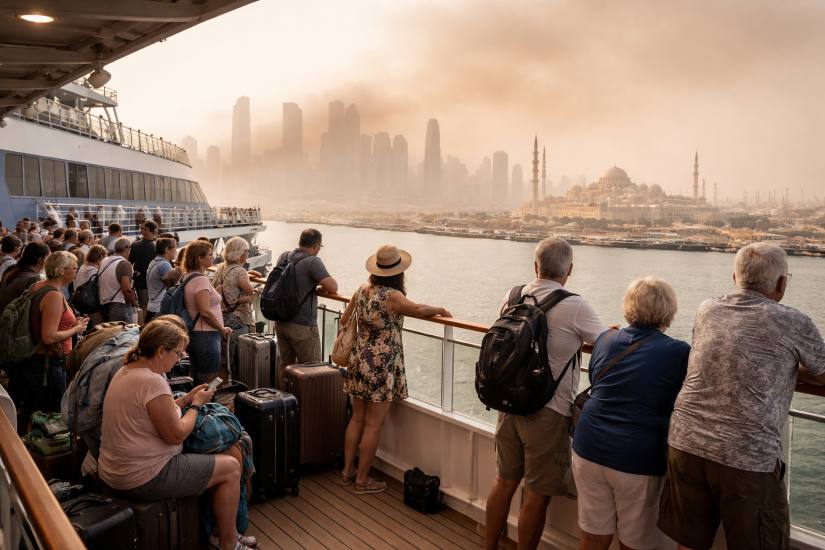
Cruise Passengers Stranded as Middle East Conflict Disrupts Travel Routes
Cruise Passengers Stranded as Middle East Conflict Disrupts Travel Routes
What began as a relaxing cruise vacation across the Middle East has turned into an unexpected waiting game for hundreds of travelers. In Abu Dhabi, United Arab Emirates, Asia, passengers aboard the cruise ship Mein Schiff 4 suddenly found themselves unable to continue their journeys after rising tensions in the region disrupted both cruises and flights.
Many guests had been enjoying sightseeing excursions across Abu Dhabi when the ship called them back onboard. The sudden recall came as military tensions escalated in the Middle East, triggering widespread disruptions across aviation routes and tourism operations.
For passengers, the cruise ship quickly transformed from a holiday getaway into a temporary refuge while travel providers and authorities work to restore safe travel routes.
A Cruise Holiday Interrupted
Passengers onboard the ship described the moment when their vacation plans changed dramatically. Guests exploring Abu Dhabi were asked to return to the ship and remain onboard as a precaution.
Crew members advised passengers to avoid open outdoor areas of the ship, including balconies and pool decks. The instructions were part of safety measures implemented as regional tensions escalated and uncertainty spread across travel networks in the Gulf region.
Despite the unusual situation, life onboard has continued in a surprisingly normal rhythm. Restaurants remain open, fitness centers are operating, and guests are still able to enjoy many of the ship’s amenities.
Yet the atmosphere carries a sense of uncertainty. Some passengers reported hearing distant explosions outside the port area, a reminder of the conflict affecting the region.
For many travelers, the ship now represents the safest place to stay while waiting for flights and travel routes to reopen.
Cruise Industry Responds to Regional Instability
The crisis has forced cruise operators to rapidly adjust their schedules across the Middle East.
TUI Cruises confirmed that sailings of Mein Schiff 4 scheduled through March 9 have been canceled due to the ongoing situation. Another ship in the same fleet, Mein Schiff 5, which is currently in Doha, Qatar, has also suspended its upcoming voyages through at least March 12.
Cruise lines operating in the region are closely monitoring developments and coordinating with authorities to determine when it will be safe to resume normal operations.
Passengers scheduled to sail on these cruises have been informed about the cancellations and are receiving updates about alternative travel arrangements.
The cruise industry is known for its strict safety procedures, and itinerary changes during geopolitical crises are part of standard operational protocols designed to protect travelers.
Air Travel Disruptions Add to the Challenge
Even as cruise lines manage the situation at sea, the aviation sector across the Middle East is facing significant pressure.
Airspace disruptions and security concerns have led to flight cancellations and delays across major hubs such as Dubai, Abu Dhabi and Doha. Although some flights have begun operating again, airline schedules remain limited.
Travelers hoping to return home are now competing for a small number of available seats, creating a backlog across airports in the region.
In some cases, airlines have stepped in to assist stranded cruise passengers. Dozens of travelers were recently accommodated on a flight from Dubai to Munich, allowing some guests to finally begin their journey home.
However, with thousands of passengers across multiple cruise ships and airports trying to leave at the same time, airlines are working through the situation gradually.
More Cruises Forced to Cancel
The disruption is not limited to a single cruise line. Other companies operating winter itineraries in the Middle East have also canceled voyages.
One cruise operator confirmed that the remaining sailings for the season have been scrapped entirely due to the conflict. Ships that were already in the region have been instructed to remain in safer ports while travel companies coordinate repatriation plans for guests.
Cruise operators are now working closely with airlines, embassies and local authorities to organize safe travel options.
Among the solutions being explored are charter flights departing from Dubai, Abu Dhabi and Muscat, which could help accelerate the return of stranded travelers.
Governments Issue Travel Warnings
Government travel advisories have also played a major role in shaping the current situation.
The United States Department of State has urged American citizens to consider leaving several Middle Eastern countries due to security concerns. The advisory includes destinations such as the United Arab Emirates, Qatar and Egypt.
Such advisories often influence airline decisions, insurance policies and cruise operations, making travel companies cautious about continuing itineraries in affected areas.
Authorities continue to monitor developments and provide updated guidance for international travelers.
What Happens to Cruise Passengers Now?
Cruise lines have reassured passengers that onboard services will remain available while return travel plans are arranged.
Industry policies typically allow companies to cancel or adjust itineraries in cases of safety concerns. When voyages are canceled, travelers usually receive refunds, future cruise credits or assistance with alternative travel plans.
Passengers whose flights were originally booked through the cruise line often receive additional support as airlines and travel partners coordinate return journeys.
While these processes can take time, cruise companies say they are working continuously to secure safe and reliable routes home.
Tourism Feels the Ripple Effect
The Middle East has become an increasingly popular cruise destination in recent years, with winter itineraries connecting major ports including Abu Dhabi, Dubai, Doha and Muscat.
The sudden disruption shows how quickly global tourism can be affected when geopolitical tensions escalate.
For now, cruise ships docked in the region are acting as safe waiting points for travelers while airlines and authorities gradually restore travel routes.
Passengers onboard continue to remain patient, balancing a mix of gratitude for the safety of the ship and the understandable desire to return home.
As airlines reopen routes and security conditions stabilize, travelers stranded in Abu Dhabi, United Arab Emirates, Asia are hoping that their unexpected stay at sea will soon come to an end and their journeys home can finally resume.
The post Cruise Passengers Stranded as Middle East Conflict Disrupts Travel Routes appeared first on Travel And Tour World.
Source: travelandtourworld.com



Sorry, the comment form is closed at this time.