


Discover AlUla’s Stunning Eco-Tourism Growth: Arabian Leopard Rewilding Leads the Way!
Discover AlUla’s Stunning Eco-Tourism Growth: Arabian Leopard Rewilding Leads the Way!
Saudi Arabia’s AlUla is fast becoming a global leader in eco-tourism, with its innovative Arabian Leopard protection program capturing the attention of travelers and conservationists alike. As of February 2026, the Royal Commission for AlUla (RCU), in partnership with international conservation organizations like the International Union for Conservation of Nature (IUCN) and the Smithsonian National Zoo, has transformed this region into an unparalleled eco-tourism destination. At the heart of this shift is the rewilding of the Arabian Leopard (Panthera pardus nimr), a project that is not only protecting an endangered species but also driving tourism and economic growth for the local community.
What is AlUla’s Arabian Leopard Rewilding Strategy?
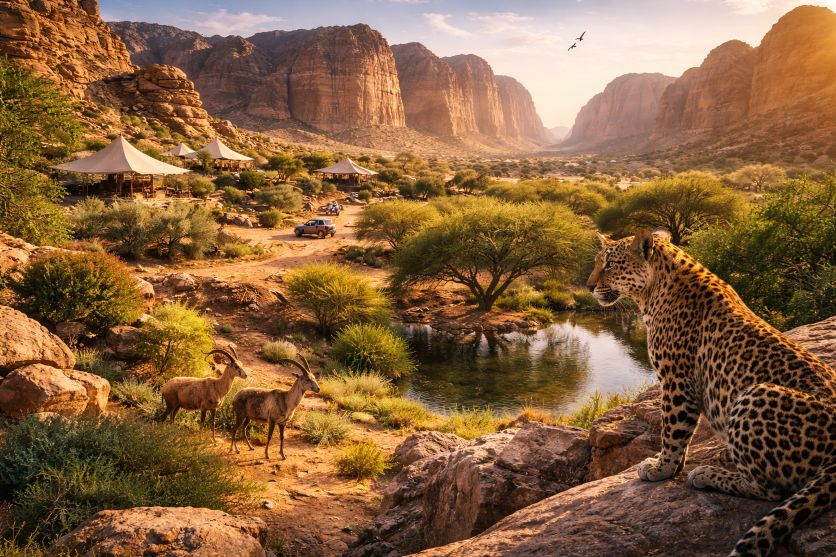
AlUla’s tourism plan revolves around the Sharaan Nature Reserve, a vast 1,540 sq km sanctuary that will soon be home to the first wild populations of the Arabian Leopard in decades. This initiative is part of a broader rewilding strategy, which reintroduces key species like the Nubian Ibex and Idmi Gazelle to restore the ecological balance of the region. The reserve offers a unique “living museum” experience, where visitors can explore the area and learn about conservation efforts while seeing these animals in their natural habitat.
The visitor experience at Sharaan is carefully designed to have a low-impact on the environment. Tourists can take part in conservation-led itineraries such as tracking prey species, visiting the leopard breeding center, and participating in educational tours. This combination of sustainable tourism and wildlife protection has made AlUla a magnet for high-value eco-tourists seeking a more meaningful travel experience.
What Are the Key Conservation Milestones?
The Arabian Leopard breeding program is a major success for AlUla, with the captive population of leopards in the Taif Breeding Center more than doubling since the RCU’s involvement. As of early 2026, the breeding program celebrated the birth of new cubs, bringing the total population to over 30 leopards. These breeding efforts, which include a global exchange program, are crucial for maintaining genetic diversity and preventing inbreeding.
A key milestone in the program’s success came in 2025, when leopards were transferred to the Smithsonian National Zoo in Washington D.C. to further safeguard the genetic line of the species. This partnership has not only protected the leopards but also helped raise international awareness of AlUla’s efforts, driving global attention and interest back to the region.
How Does Eco-Tourism Benefit the Local Community?
The eco-tourism boom driven by the Arabian Leopard protection program is benefiting local communities in AlUla in several ways. The Leopard Ranger program is one such initiative that employs hundreds of local residents, providing them with employment opportunities and a stake in the region’s growing eco-tourism sector. These rangers use advanced tracking technology, including EarthRanger, to monitor the reserve and ensure the safety of wildlife. They also serve as tour guides, offering visitors an authentic, local perspective on the conservation efforts and the cultural heritage of the area.
Additionally, the Arabian Leopard Scholarship Program funds local students to study conservation biology and veterinary science abroad, equipping the next generation of AlUla residents with the skills needed to manage the region’s eco-tourism sector.
What Partnerships Are Driving AlUla’s Success?
AlUla’s global recognition as an eco-tourism hub is a result of its strategic partnerships with leading conservation organizations. Panthera, the global wild cat conservation organization, has pledged $20 million to support the leopard initiative. This partnership sends a strong message to international tourists that AlUla is committed to scientific rigor in its wildlife efforts, distinguishing the project from more superficial tourist attractions.
Another significant achievement for AlUla is its work toward earning IUCN Green List status for Sharaan Nature Reserve. This prestigious certification guarantees that the reserve meets the highest standards in protected area management, reassuring eco-tourists that AlUla is a destination where they can support genuine conservation work.
How Does Eco-Tourism in AlUla Link to Wildlife Conservation?
The intertwining of eco-tourism and wildlife conservation is at the core of AlUla’s success. Several initiatives are designed to ensure that the local economy benefits from the region’s natural beauty while supporting sustainability:
Prey Reintroduction: This initiative has restored the food chain and now allows tourists to observe species like Ibex and Gazelles in the wild.
Leopard Day: Held annually on February 10, this festival generates peak visitation by celebrating the Arabian Leopard through educational events, art exhibits, and immersive “Catmosphere” walks.
Luxury Eco-Lodges: High-end resorts in the Sharaan Nature Reserve market themselves as exclusive destinations in “Leopard Country,” offering eco-conscious travelers a luxurious and sustainable stay.
What Impact Is the Program Having on AlUla’s Eco-Tourism?
The Arabian Leopard program has positioned AlUla as a premier eco-tourism destination in Saudi Arabia. With its focus on conservation-led tourism, AlUla is attracting an increasing number of travelers who seek meaningful engagement with wildlife protection. As of early 2026, the program is not only protecting a vital species but is also creating a circular conservation economy where tourism revenues directly benefit the local community.
Conclusion
AlUla’s Arabian Leopard rewilding program is setting new standards in eco-tourism by combining wildlife protection with sustainable tourism. As Saudi Arabia looks to expand its eco-tourism offerings, AlUla is proving that conservation and tourism can go hand-in-hand, offering a model for other regions to follow. With strategic partnerships, local engagement, and an increasing global spotlight, AlUla is on track to become one of the world’s leading eco-tourism destinations.
The post Discover AlUla’s Stunning Eco-Tourism Growth: Arabian Leopard Rewilding Leads the Way! appeared first on Travel And Tour World.
Source: travelandtourworld.com



Sorry, the comment form is closed at this time.