


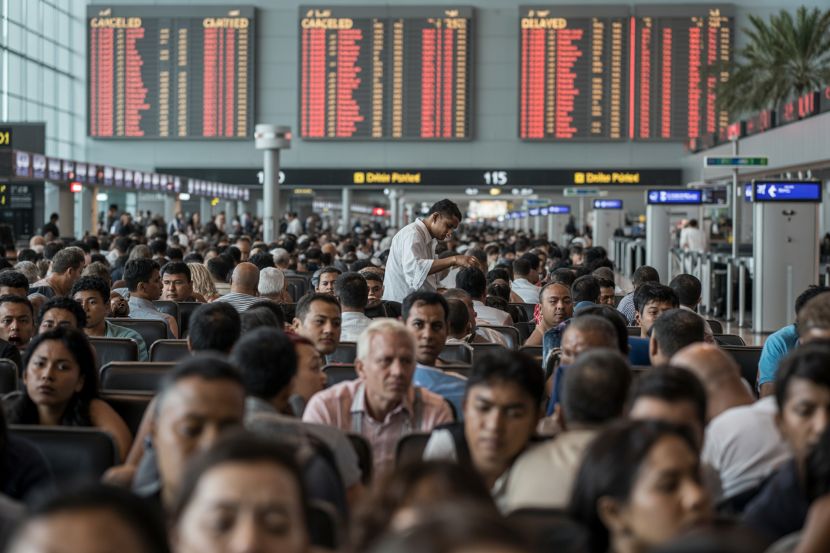
Dubai, UAE: Chaos at Dubai International Airport as Flights Are Grounded Amid Regional Conflict
Dubai, UAE: Chaos at Dubai International Airport as Flights Are Grounded Amid Regional Conflict
A wave of flight cancellations and delays has swept across the Middle East, as tensions between Iran and Israel escalate following US and Israeli airstrikes. Major airlines, including Emirates, British Airways, and Wizz Air, have been forced to suspend services due to airspace closures and safety concerns. Thousands of travelers, including British nationals, have been left stranded as regional airspace remains heavily restricted, disrupting international air traffic in and out of the UAE and surrounding regions.
As military actions intensify, the UK Foreign Office has updated its travel advisories, warning citizens in Israel, Palestine, Bahrain, Qatar, and the UAE to seek shelter immediately. Travelers, especially tourists and business professionals, are facing an uncertain situation as flight schedules remain in flux and the region’s security situation evolves rapidly.
Strikes on Iran Cause Widespread Disruption to Air Travel
The latest wave of military strikes between Israel and Iran has led to multiple airspace closures over key Middle Eastern airports, including those in Dubai, Doha, and Tel Aviv. In response, airlines have been forced to either cancel or divert flights, significantly affecting travelers and businesses alike.
Emirates, one of the Middle East’s largest carriers, confirmed a “red alert” suspension on all flights to and from Dubai International Airport and Al Maktoum International Airport on Saturday afternoon, with operations paused until at least 3:00 PM UAE time on Sunday. This suspension affects thousands of passengers scheduled to travel through Dubai, one of the world’s busiest airports. Passengers with flights departing from or arriving in Dubai are advised to check their flight status regularly for updates, as operations may resume once airspace is deemed safe.
British Airways, Virgin Atlantic, and Wizz Air have also adjusted their schedules in response to the ongoing crisis. British Airways canceled flights to Tel Aviv and Bahrain, and warned that several services to Dubai, Doha, Abu Dhabi, and other cities could be delayed or canceled in the coming days. The airline urged passengers to check their flight statuses before heading to the airport to avoid unnecessary delays.
Impact on Business and Leisure Travelers
The sudden suspension of flights in the region is creating significant challenges for both business travelers and tourists. Business travelers, particularly those heading to Dubai, Abu Dhabi, and Tel Aviv, are facing difficulties as important meetings, conferences, and trade events are disrupted. The inability to travel as planned could result in missed opportunities, especially for those involved in industries that rely on regular travel between Europe and the Middle East.
For tourists, this crisis could mean longer waits and possible rerouting for those looking to visit Dubai or Israel. Popular destinations, including the Burj Khalifa, Dubai Marina, and the Dead Sea, could face a drop in visitor numbers as flights remain grounded. Travelers hoping to visit Dubai for business, shopping, or tourism should consider alternative arrangements, including checking flights from nearby airports in Abu Dhabi or Muscat, which may still have operational flights.
UK Foreign Office Urges Immediate Action for British Nationals
In response to the escalating situation, the UK Foreign Office issued an urgent travel advisory for its citizens in the Middle East. British nationals in Israel, Palestine, Bahrain, Qatar, and the UAE were advised to immediately shelter in place due to the ongoing attacks and airstrikes. The UK government emphasized that the safety of citizens remains its highest priority, and passengers were urged to stay in contact with consular services for any emergency assistance.
In addition, the Foreign Office has recommended that British nationals in other parts of the Middle East, including Lebanon, Iraq, Syria, and Jordan, remain vigilant and follow any instructions provided by local authorities. With the region’s security situation remaining unstable, the situation remains fluid, and travel across the Middle East is expected to face further delays and disruptions in the coming weeks.
What Travelers Should Do Now
For those affected by the ongoing airspace restrictions and flight cancellations, here are several important steps to take:
Stay Informed: Check with airlines and flight-tracking websites for real-time updates on the status of your flight. Emirates, British Airways, and other carriers are actively updating passengers through their websites and apps.
Consider Alternate Routes: If you are traveling to or from Dubai or other affected cities, explore alternate routes through nearby airports like Abu Dhabi, Doha, or Muscat, which may still be operational.
Monitor Travel Advisories: Keep an eye on the UK Foreign Office’s travel advice for the latest updates on the Middle East situation. Register your details with the embassy to receive direct alerts if you are in a high-risk area.
Check with Your Travel Insurance: Ensure your travel insurance covers flight cancellations and disruptions caused by political unrest or military action. Many insurers will provide coverage for flight rerouting, accommodation, and emergency support.
Allow Extra Time for Travel: Given the current airspace restrictions and potential delays, be prepared for longer waiting times at the airport. Consider arriving earlier than usual to ensure you are prepared for any last-minute changes to your flight.
Conclusion
As the situation in the Middle East continues to unfold, the suspension of Emirates flights and the closure of airspace are a stark reminder of the unpredictable nature of international travel in times of conflict. Both business travelers and tourists are facing significant disruptions, and flexibility will be key in navigating this crisis. Travelers should stay updated on the latest information from airlines and government sources, consider alternative flight options, and ensure they are prepared for possible delays.
The UK Foreign Office has urged British nationals to shelter in place where necessary, and to follow safety instructions provided by local authorities. As the conflict progresses, the situation in the region remains highly volatile, with further travel disruptions expected.
Key Points:
Emirates suspends flights to and from Dubai due to regional airspace closures following airstrikes.
British Airways, Virgin Atlantic, and Wizz Air have also canceled or diverted flights to the Middle East.
UK Foreign Office advises British nationals in Israel, Bahrain, Qatar, and UAE to shelter in place.
Travelers should check flight statuses regularly and explore alternate routes.
Ensure you have travel insurance that covers flight cancellations and disruptions.
The post Dubai, UAE: Chaos at Dubai International Airport as Flights Are Grounded Amid Regional Conflict appeared first on Travel And Tour World.
Source: travelandtourworld.com



Sorry, the comment form is closed at this time.