


Dunedin’s Castle Street, New Zealand: How a Notorious Student Hub Became a Global 2026 Tourism Phenomenon
Dunedin’s Castle Street, New Zealand: How a Notorious Student Hub Became a Global 2026 Tourism Phenomenon
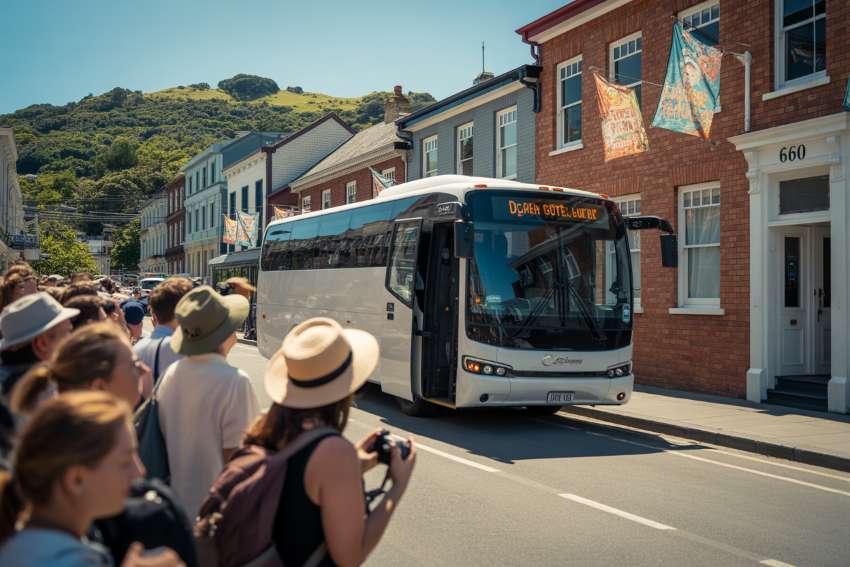
As the 2026 tourism season nears its peak, there has been a significant shift in New Zealand’s travel landscape. In the southern city of Dunedin, a new and somewhat unusual destination has been added to the formal itineraries of international and domestic tour operators. Historically, Castle Street was known as the hub of the University of Otago’s vibrant and often boisterous student life. However, this residential area is now frequented by busloads of tourists eager to experience the city’s distinct “Scarfie” culture, which has defined it for decades. What was once dubbed a “notorious” quarter for student revelry has been reimagined as a must-see cultural landmark, in stark contrast to the city’s traditional heritage sites such as Larnach Castle.
The Rise of Music Pilgrimage: The Six60 Legacy
A primary driver of this newfound interest is the deep-rooted musical history embedded within the street’s architecture. Specifically, the residence at 660 Castle Street has been elevated to the status of a national monument. It was within these walls that the internationally acclaimed band Six60 was formed, and the property has since been purchased by the band members themselves. In a partnership with the University of Otago, the flat is utilized as a scholarship house for performing arts students, offering a blend of historical significance and modern philanthropy. For many travellers, a visit to this address is viewed as a pilgrimage, where the origins of New Zealand’s most successful contemporary musical act can be visualized. The “Six60 House” is now marketed as a symbol of creative success, drawing fans from across the globe who wish to see where the “roots” of the band were planted.
Navigating the Chaos of Orientation Week
The timing of these tours often coincides with the University’s Orientation Week, or “O-Week”, a period famously characterized by exuberant celebrations. During February 2026, the street is frequently described by local authorities as being in a state of “controlled chaos”. While tourists are driven through the quarter to observe the festive atmosphere, a delicate balance must be maintained between sightseeing and public safety. Security-controlled gatherings, complete with wristband entry, have been implemented by many student residents to manage the influx of both peers and curious onlookers. The juxtaposition of luxury tour buses navigating through streets lined with colourful student “flats” and temporary festive decorations provides a visual narrative of Dunedin’s dual identity as both a historic Scottish settlement and a youthful university town.
Official Safety Measures and Regulatory Oversight
The transformation of the area into a tourist attraction has not occurred without significant oversight from local government and university officials. A proactive stance has been taken by the University of Otago’s Vice-Chancellor, Grant Robertson, who has repeatedly emphasized the importance of safety during this high-energy period. Explicit warnings have been issued regarding the dangers of “roof-climbing”, a practice that has unfortunately led to critical injuries in recent months. To mitigate these risks, the university’s “Campus Watch” team is deployed 24/7 to provide guidance to students and to ensure that the environment remains secure for both residents and visitors. Furthermore, the Dunedin City Council has integrated the student quarter into its broader “Destination Management Plan”, recognizing that while the area is a private residential zone, its cultural impact on the city’s brand is undeniable.
A New Frontier in “Authentic” Travel
This trend reflects a broader global movement toward “authentic” travel, where visitors seek out experiences that reflect the true social fabric of a destination rather than curated tourist traps. By including Castle Street on their routes, tour operators like Fantail Tours are catering to a demographic that values raw, lived history. The street is now viewed as a living museum of New Zealand’s unique “Scarfie” subculture—a term used to describe the local students. The grit of the student quarter, with its iconic street parties and historic brick flats, is perceived by international visitors as a refreshing counterpoint to the manicured gardens and Victorian architecture found elsewhere in the city.
The Challenges of Residential Tourism
Despite the economic benefits brought by increased foot traffic, tensions are occasionally reported between the student population and the tourism industry. Concerns have been raised by some residents who feel that their private lives are being treated as a spectacle. Instances of property damage, such as smashed windows and littering by non-student visitors, have prompted calls for a “culture change” in how the area is marketed. Students have expressed that the street is not merely a backdrop for photos but a place where people live and study. Consequently, tour operators are being encouraged to conduct their visits with a high degree of respect, ensuring that the privacy and dignity of the student residents are preserved even as their neighbourhood becomes a global curiosity.
Dunedin’s Strategic Vision for 2026 and Beyond
Looking ahead, the Dunedin City Council and Enterprise Dunedin are still evaluating how the student quarter fits into the city’s long-term tourism strategy. As the “Four Quarters” plan for the central city is implemented, the relationship between the educational sector and the visitor economy is expected to improve. The goal is to create an environment in which the youth population’s energy can be celebrated while not jeopardising the community’s safety or well-being. Castle Street’s evolution demonstrates how, with care and historical context, notoriety can be transformed into a valuable cultural asset.
The post Dunedin’s Castle Street, New Zealand: How a Notorious Student Hub Became a Global 2026 Tourism Phenomenon appeared first on Travel And Tour World.
Source: travelandtourworld.com



Sorry, the comment form is closed at this time.