


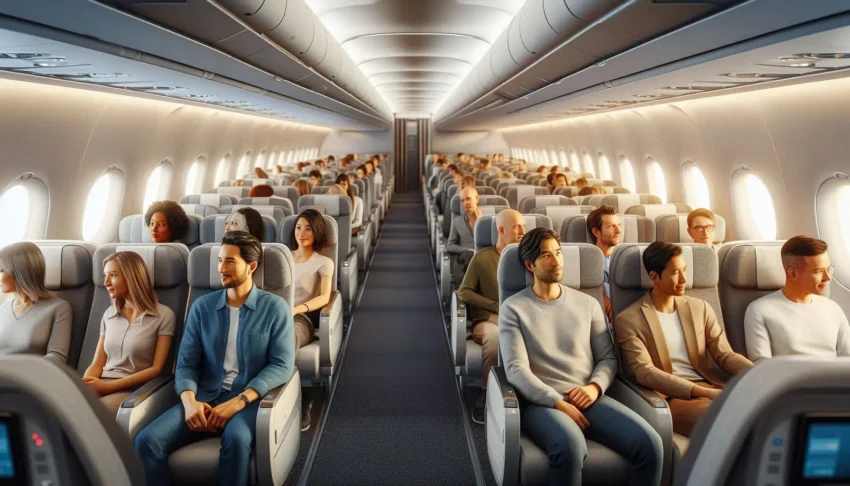
Economy Class Leaders in 2026: Japan, UAE, United States, Singapore and Australia Dominate Top 15 for Legroom
Economy Class Leaders in 2026: Japan, UAE, United States, Singapore and Australia Dominate Top 15 for Legroom
Commercial aviation has evolved significantly over the past several decades, with aircraft becoming more efficient and cabins more densely configured. In the 1970s, passengers in economy cabins were commonly provided with 35 inches of seat pitch. Today, that average has narrowed to approximately 30 inches on many aircraft worldwide. As seating layouts have been optimized to accommodate higher passenger volumes, the overall economy class legroom experience has often been reduced.
Yet in 2026, several airlines across Japan, the United Arab Emirates, the United States, Singapore, Hong Kong, Australia, Taiwan, Türkiye, Germany, and the United Kingdom have continued to prioritize generous seat pitch standards. Despite industry-wide pressure to maximize capacity, these carriers have maintained above-average legroom in economy cabins. Even incremental increases of two to four inches have been shown to substantially improve comfort, particularly on long-haul routes linking Asia, North America, Europe, and Oceania. Through deliberate cabin planning and customer-focused design strategies, these airlines have demonstrated that operational efficiency can coexist with passenger well-being.
Why Seat Pitch Remains Central to Passenger Comfort
Seat pitch is defined as the distance between a specific point on one seat and the same point on the seat directly in front. Although it does not measure seat width, it serves as the primary indicator of legroom in commercial aviation.
On extended flights connecting Japan and the United States, Australia and Europe, or Singapore and North America, restricted space can contribute to stiffness and fatigue. A modest increase in pitch can ease movement, improve circulation, and reduce the sense of confinement within the cabin. For passengers traveling in standard economy without upgrading to premium cabins, these additional inches can significantly shape the overall journey.
Airlines that continue to invest in higher pitch measurements have therefore distinguished themselves in global comfort rankings.
Japan and the United Arab Emirates Set the Highest Benchmark
Japan Airlines and All Nippon Airways have maintained 34 inches of seat pitch in economy class, positioning them at the top of the global rankings. This measurement exceeds the prevailing industry average and reflects Japan’s long-standing emphasis on service precision and thoughtful design.
Flights departing from Tokyo to destinations across the United States, Europe, and Australia frequently extend beyond ten hours. By preserving 34 inches of space, prolonged travel has been made more manageable. Ergonomic seat structures and carefully arranged cabin layouts have further enhanced the onboard environment.
Emirates, headquartered in the United Arab Emirates, has matched the 34-inch standard. While globally recognized for premium suites and luxury offerings, the airline has extended comfort principles throughout its aircraft. Ultra-long-haul routes from Dubai to North America, Europe, Asia, and Australia have benefited from this spacious configuration, reinforcing the airline’s global standing.
Strong Performers at 32 to 32.3 Inches
JetBlue has emerged as a leading carrier within the United States, offering 32.3 inches of seat pitch. While many domestic airlines have opted for denser seating arrangements, JetBlue has maintained a configuration that exceeds the national average.
Cathay Pacific of Hong Kong has consistently provided 32 inches, ensuring added comfort on long-haul services to Europe and North America. Singapore Airlines has also maintained 32 inches across much of its global fleet, combining physical space with its established service standards.
Qantas, representing Australia, has provided 32 inches as well. Given Australia’s geographic distance from major global hubs, long-haul endurance has remained a design priority. EVA Air of Taiwan and Turkish Airlines of Türkiye have similarly maintained approximately 32 inches, strengthening Asia-Pacific and Eurasian representation among top-performing carriers.
Competitive Airlines at 31 to 31.8 Inches
Southwest Airlines has offered 31.8 inches, placing it above many U.S. domestic competitors. Alaska Airlines and Delta Air Lines have each maintained 31 inches, ensuring competitive positioning within North America.
United Airlines has also generally provided around 31 inches across its fleet. While these figures fall slightly below the 34-inch leaders, they remain above the tighter configurations observed in certain high-density aircraft worldwide.
From Europe, Lufthansa of Germany and British Airways of the United Kingdom have typically offered approximately 31 inches on long-haul aircraft. Although European carriers have not matched the highest benchmarks, their measurements remain competitive within global standards.
Top 15 Airlines With the Most Legroom in Economy Class in 2026
Rank | Airline | Legroom Inches | Legroom cm
1 | Japan Airlines | 34 | 86.4
2 | All Nippon Airways | 34 | 86.4
3 | Emirates | 34 | 86.4
4 | JetBlue | 32.3 | 82
5 | Cathay Pacific | 32 | 81.3
6 | Singapore Airlines | 32 | 81.3
7 | Qantas | 32 | 81.3
8 | EVA Air | 32 | 81.3
9 | Turkish Airlines | 32 | 81.3
10 | Southwest Airlines | 31.8 | 80.8
11 | Alaska Airlines | 31 | 80.8
12 | Delta Air Lines | 31 | 80.8
13 | United Airlines | 31 | 80.8
14 | Lufthansa | 31 | 80.8
15 | British Airways | 31 | 80.8
Regional Patterns in Economy Comfort
Clear leadership has been demonstrated by Japan and the United Arab Emirates at 34 inches. Asia-Pacific carriers from Singapore, Hong Kong, Taiwan, and Australia have closely followed with consistent 32-inch standards. The United States has remained competitive through JetBlue and Southwest Airlines, while other major American airlines have maintained slightly lower but still respectable figures.
European representation through Lufthansa and British Airways has ensured inclusion within the top 15, though without reaching the highest global measurements.
Practical Considerations for Travelers
Passengers seeking improved comfort in economy class are advised to review aircraft seat maps and published pitch measurements before booking. Differences of two to three inches can materially influence long-haul travel experiences between countries such as Japan, the United States, Australia, Singapore, Türkiye, Germany, and the United Kingdom.
Exit-row and bulkhead seats may offer additional legroom, although supplemental charges may apply. Balancing fare pricing, flight duration, and cabin configuration can support more informed decision-making.
Final Assessment
While average seat pitch across the global aviation industry has declined over time, fifteen airlines spanning Japan, the United Arab Emirates, the United States, Singapore, Hong Kong, Australia, Taiwan, Türkiye, Germany, and the United Kingdom have maintained above-average legroom in 2026.
Japan Airlines, All Nippon Airways, and Emirates have established the highest standard at 34 inches. A strong group of international carriers has followed at 32 inches, while several major airlines have sustained competitive configurations between 31 and 31.8 inches.
Even modest enhancements in legroom can meaningfully improve long-distance travel. Within an increasingly competitive aviation environment, these carriers have demonstrated that comfort within economy cabins can remain a strategic and measurable priority.
The post Economy Class Leaders in 2026: Japan, UAE, United States, Singapore and Australia Dominate Top 15 for Legroom appeared first on Travel And Tour World.
Source: travelandtourworld.com



Sorry, the comment form is closed at this time.