


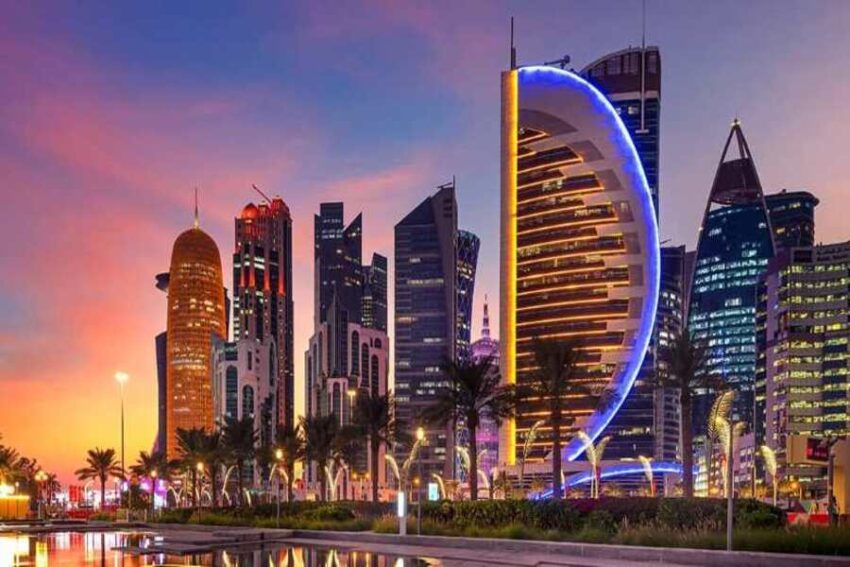
Egypt and Qatar’s Vision for 2030 Collaborative Efforts in Tourism Urban Infrastructure and Transport to Boost Global Competitiveness
Egypt and Qatar’s Vision for 2030 Collaborative Efforts in Tourism Urban Infrastructure and Transport to Boost Global Competitiveness
Egypt and Qatar are teaming up for a transformative partnership aimed at enhancing their global competitiveness by 2030. Both nations have outlined ambitious strategies to revamp tourism, urban infrastructure, and transportation systems, capitalizing on their strategic locations and shared interests. By focusing on sustainable development and modernizing key sectors, they aim to create world-class destinations that not only attract international tourists but also foster regional economic growth. This collaboration promises to improve connectivity, promote tourism exchanges, and create a lasting impact on both countries’ economies in the coming decade.
Egypt is entering a new phase of rapid development, with tourism, urban infrastructure, and transportation at the heart of the country’s strategic growth. The government’s efforts are focused on enhancing the nation’s appeal as a global hub for trade and tourism, showcasing ambitious projects that aim to transform the country’s economy and bolster its position in the global market. These initiatives, ranging from state-of-the-art transport systems to large-scale residential and tourism developments, highlight Egypt’s systematic approach to its geoeconomic upgrade.
A major part of Egypt’s modernization efforts includes the development of a new yacht and cruise port in New Alamein, set to be constructed at a cost of $80 million. The port will span 180,000 square meters and will be operated by the private sector, with the government providing the necessary infrastructure. This new port is designed to accommodate luxury yachts and cruise ships, enhancing Egypt’s appeal as a prime tourism destination. The project is in line with the country’s broader goal of attracting 30 million tourists by 2030, positioning Egypt as a key player in the global tourism industry.
The development of the New Alamein port is just one part of a broader strategy to boost tourism flows and foster economic growth. The government is focused on creating a diversified tourism offering, which includes expanding its coastal infrastructure and establishing new luxury destinations. With an eye on attracting more international tourists, Egypt’s government is investing in infrastructure that supports high-end tourism and leisure travel, thus enhancing the country’s status as a leading tourism destination in the Middle East and North Africa.
In parallel to the development of the New Alamein port, one of the largest residential and tourism projects in Egypt’s history is taking shape in the Matrouh area. This multi-billion-dollar initiative is set to redefine the country’s real estate and tourism sectors. Spanning 4,900 acres and stretching across 7.2 kilometers of coastline, the project is set to offer a mix of residential, commercial, and tourism facilities. A significant portion of the development will be dedicated to residential housing, with hotel units providing over 4,500 rooms. The development will also include retail and leisure spaces designed to create an integrated, self-sustained community that aligns with the government’s vision for sustainable urban growth.
With an estimated investment value of $29.7 billion, the project will require substantial funding, with $3.5 billion allocated for land acquisition and the remaining $26.2 billion to be invested in infrastructure and development. A key component of this development is its collaboration with the New Urban Communities Authority (NUCA), which will receive 15% of the net profits. This ambitious residential project is expected to have a transformative effect on the region, contributing significantly to local job creation and economic development.
In addition to its focus on residential and tourism development, Egypt has made significant strides in enhancing its urban transportation network, with the inauguration of the first phase of its Monorail system in East Cairo. The Monorail, which spans 56.5 kilometers, connects Nasr City to the New Administrative Capital and features 22 stations. This modern transit system integrates Metro Line 3 with a light rail network, enhancing the connectivity of Cairo’s urban areas. Designed to be fully electric and driverless, the Monorail will serve up to 10,000 passengers per direction per hour, helping reduce fuel consumption and emissions.
The Monorail represents a significant milestone in Egypt’s efforts to modernize its urban infrastructure and promote sustainable transport options. The development of this fully electric, driverless system is a clear indication of the country’s commitment to reducing its carbon footprint while improving the quality of life for its citizens. With advanced safety, accessibility, and monitoring technologies, the Monorail also serves as a model for energy-efficient urban transportation, setting the stage for further investments in sustainable transport systems across the country.
Another crucial development contributing to Egypt’s growing global influence is the resurgence of the Suez Canal, which has long been a critical artery for international trade. The Suez Canal Authority recently announced the successful transit of the CMA CGM Benjamin Franklin, a massive container ship with a capacity of 177,000 tons. This marks the first time such a large vessel has passed through the canal since regional tensions disrupted international shipping two years ago. The safe passage of this vessel highlights the restored confidence in the security of the Suez Canal and the wider regional shipping routes.
As one of the most important maritime trade routes in the world, the Suez Canal handles approximately 12% of global trade. The return of large-scale shipping operations through the canal underscores Egypt’s commitment to maintaining and enhancing its role as a global trade hub. The successful transit of the CMA CGM Benjamin Franklin is also indicative of Egypt’s stable and secure maritime environment, which has encouraged major shipping companies such as CMA CGM and MSC to resume large-scale transport operations through the canal. This development is part of Egypt’s broader efforts to attract more international trade and investment by offering a secure and efficient shipping route for global cargo.
Egypt and Qatar are joining forces to enhance their global competitiveness by 2030 through strategic investments in tourism, urban infrastructure, and transport, aiming to create world-class destinations and foster regional economic growth.
The combination of these various development projects – from tourism infrastructure to urban transport and maritime trade – signals Egypt’s determination to capitalize on its strategic location and resources. By making substantial investments in its transport infrastructure and tourism sector, Egypt is positioning itself as a regional powerhouse, ready to take on an expanded role in global trade and tourism. With these efforts, the country is laying the groundwork for sustainable growth and long-term prosperity, boosting both domestic and international confidence in its future trajectory.
The post Egypt and Qatar’s Vision for 2030 Collaborative Efforts in Tourism Urban Infrastructure and Transport to Boost Global Competitiveness appeared first on Travel And Tour World.
Source: travelandtourworld.com


Sorry, the comment form is closed at this time.