


Emirates, Etihad, Qatar Airways and Lufthansa Ground Flights Across UAE, India, UK and Australia — Marriott, Hilton and Accor Brace for Gulf Tourism Shockwaves as Middle East Airspace Chaos Deepens
Emirates, Etihad, Qatar Airways and Lufthansa Ground Flights Across UAE, India, UK and Australia — Marriott, Hilton and Accor Brace for Gulf Tourism Shockwaves as Middle East Airspace Chaos Deepens
Emirates, Etihad and Qatar Airways are once again at the centre of a global aviation storm, as escalating Middle East airspace restrictions triggered by recent US–Israel–Iran tensions force widespread flight suspensions, reroutings and schedule changes across the UAE, India, the UK and Australia. Dubai International, which handled more than 95 million passengers in 2025 and is projected to approach 100 million this year, along with Doha’s Hamad International Airport and Abu Dhabi’s Zayed International Airport, forms one of the world’s most critical aviation corridors linking Europe, Asia and Oceania. When even partial closures affect this airspace, the impact ripples instantly across continents — disrupting long-haul connections, stranding transit passengers, and putting pressure on global airline networks that depend on Gulf hubs as strategic transfer points. European carriers such as Lufthansa have adjusted operations, Indian airlines have cancelled select long-haul services due to West Asia airspace constraints, and governments including Australia and the UK have issued travel advisories urging passengers not to cancel flights prematurely but to await airline guidance. At the same time, hospitality giants in Dubai and Doha — cities that welcomed record international visitor numbers in 2025 — are navigating booking volatility as stranded travellers extend stays while new arrivals temporarily slow. The result is a high-stakes test of aviation resilience, consumer rights awareness and tourism stability, unfolding in real time across some of the busiest air routes on the planet.
Emirates, Etihad, Qatar Airways and Lufthansa Ground Flights Across UAE, India, UK and Australia — Marriott, Hilton and Accor Brace for Gulf Tourism Shockwaves as Middle East Airspace Chaos Deepens
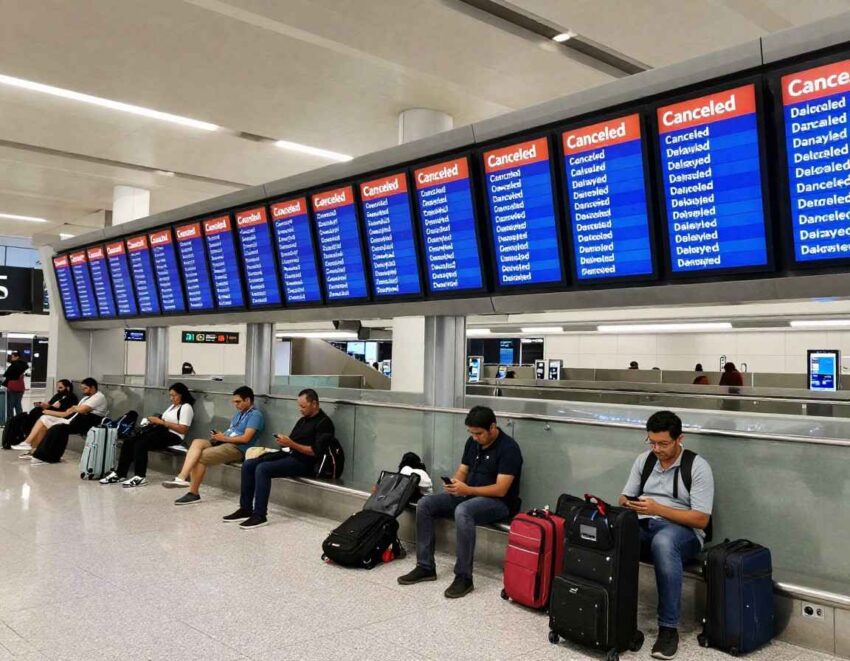
The global aviation map has shifted overnight. Emirates, Etihad, Qatar Airways and Lufthansa have adjusted, suspended, or rerouted services as escalating military tensions in the Middle East forced partial airspace closures across key corridors linking Europe, Asia and Australia. What began as a regional security response has quickly evolved into a global travel disruption, affecting thousands of passengers transiting through Dubai, Abu Dhabi and Doha — three of the most important aviation hubs in the world.
For travellers, the message is clear: do not panic, do not cancel prematurely, and stay connected with your airline. For airlines and hotels, the challenge is operational resilience. The Gulf’s aviation-powered tourism model is facing one of its most significant stress tests since the pandemic.
Emirates, Etihad, Qatar Airways and Lufthansa Suspend and Reroute Flights Across UAE, India, UK and Australia
The Middle East sits at the crossroads of global aviation. Dubai International Airport handled 95.2 million passengers in 2025 and is forecast to approach nearly 100 million in 2026. Doha’s Hamad International Airport and Abu Dhabi’s Zayed International Airport are similarly critical connectors between Europe, South Asia, Southeast Asia and Australia.
When sections of regional airspace closed following US and Israeli strikes on Iran and subsequent retaliatory actions, airlines responded swiftly. Emirates temporarily suspended select operations to and from Dubai during peak disruption windows. Etihad issued travel advisories offering rebooking or refunds for affected passengers. Qatar Airways directed customers to its mobile app and digital channels for schedule updates. Lufthansa and other European carriers suspended or rerouted services that normally transit Gulf airspace.
Air India cancelled dozens of long-haul services to Europe and North America due to West Asia airspace restrictions. British Airways and Virgin Australia adjusted selected routes depending on operational feasibility. The disruption extended beyond airlines based in the Gulf. Any carrier flying Europe–Asia sectors via Middle Eastern corridors faced longer routings, higher fuel burn, and crew repositioning challenges.
Over one intense weekend, thousands of flights were cancelled or delayed globally as airlines scrambled to avoid restricted airspace. Even when airports remained open, flight paths changed dramatically. Aircraft diverted south via Saudi Arabia or north through Central Asia. Some journeys added hours to scheduled travel time.
The immediate impact? Stranded passengers. Rebookings. Congested call centres. And complex crew logistics.
Marriott, Hilton and Accor Confront Tourism and Hotel Occupancy Volatility in UAE, Qatar and Wider Gulf
Airline disruptions ripple directly into hotel occupancy. Dubai welcomed 19.59 million international overnight visitors in 2025, marking a 5% year-on-year increase. Hotel occupancy averaged over 80% across the year, with more than 44 million room nights sold. Qatar recorded 5.1 million international visitors in 2025, with 71% average hotel occupancy and strong air-arrival dependency.
When air connectivity falters, arrivals slow immediately. But the effect is not one-dimensional.
Hotels face two parallel forces. First, cancellations from inbound leisure travellers who cannot depart origin cities. Second, extended stays from stranded transit passengers who require accommodation while waiting for onward flights.
The UAE’s aviation authority confirmed that stranded passengers were being assisted, with the government bearing accommodation costs in some cases. Around 20,000 travellers were reportedly supported during the disruption window. For properties under brands like Marriott, Hilton, Accor, Hyatt and Jumeirah, this created sudden booking fluctuations.
Luxury city hotels in Dubai and Doha saw short-term occupancy surges from grounded passengers. Resort properties dependent on pre-booked leisure arrivals saw slower new check-ins. Revenue managers adjusted rates dynamically. Flexible cancellation policies became critical tools.
The hospitality sector understands volatility. It survived COVID-19 shutdowns. It now faces a shorter, security-driven disruption. The expectation across industry analysts is that if airspace reopens swiftly, pent-up demand will rebound quickly, especially from Europe and South Asia — two of Dubai’s largest source regions, accounting for roughly 21% and 15% of visitors respectively.
Why Gulf Hubs Matter So Much to Global Travel
The Gulf carriers operate on a hub-and-spoke model. Emirates alone operates more than 250 widebody aircraft. These fleets connect secondary cities in India, Europe and Africa to long-haul destinations in North America and Australia via a single stop in Dubai.
Relocating such a hub is practically impossible. Aircraft require parking stands, engineering support, catering, fuel infrastructure and crew bases. Thousands of employees operate within tightly integrated systems. That is why when airspace closes, operations pause rather than shift elsewhere.
Qatar Airways and Etihad function similarly. Their entire business model depends on safe, uninterrupted transit traffic. Lufthansa, British Airways and Air India rely on these corridors for efficiency. When rerouted, costs rise. Fuel consumption increases. Aircraft rotations become misaligned. This affects ticket pricing and scheduling in the weeks that follow.
Impact on Key Travel Markets: India, UK, Saudi Arabia, Australia, China and Europe
India is one of the largest outbound and transit markets connected via Gulf hubs. Indian travellers heading to Europe or North America frequently connect through Dubai or Doha. When West Asia airspace restrictions emerged, Air India cancelled multiple Europe and US-bound flights. This affected leisure travellers, students, and business passengers alike.
The United Kingdom is another major contributor to Gulf tourism flows. British travellers form a significant portion of Dubai’s Western Europe segment. Disruptions affected UK holidaymakers booked on half-term and early spring departures.
Saudi Arabia and other GCC countries also generate high travel volumes within the region. Even short-haul Gulf connections felt the strain.
Australia experienced ripple effects as flights between Sydney, Melbourne and Europe typically transit Doha or Dubai. Australian government advisories warned travellers not to cancel prematurely and to check insurance policies carefully due to war exclusions.
China, which has been rebuilding outbound travel, is a growth market for Dubai and Qatar. Any prolonged instability may temporarily slow Chinese leisure traffic routed through the Gulf.
What This Means for Airline Pricing and Schedules
Airlines face higher operational costs during rerouting. Longer flight paths burn more fuel. Crew duty times extend. Spare aircraft positioning becomes complicated. These factors can influence short-term fare increases, particularly on Europe–Asia routes.
However, airlines are also cautious. Demand elasticity matters. If prices spike too aggressively, travellers defer trips. Most carriers are therefore focusing on restoring schedule stability first.
Passengers should expect temporary schedule changes even after airspace reopens. Aircraft and crews must return to original rotations. Backlogs of stranded travellers must be cleared. Extra “recovery flights” are often added to manage demand surges.
Travel Insurance and Consumer Rights: What Tourists Need to Know
Travellers should read their ticket conditions carefully. If an airline cancels a flight, passengers are typically entitled to rebooking or refunds under consumer protection frameworks. If a passenger cancels voluntarily, rights may diminish.
Many travel insurance policies exclude acts of war or military conflict. This means claims for voluntary cancellations linked to geopolitical events may not be covered.
Keep all documentation. Save airline notifications. Retain hotel invoices if stranded. Use official airline apps for real-time updates. Avoid relying solely on third-party travel agents during peak disruption windows.
Tourist-Friendly Travel Tips During Middle East Airspace Disruptions
Arrive early at airports. Check flight status 24 hours before departure and again before leaving home. Download your airline’s official mobile app. Register for SMS and email alerts.
Consider flexible tickets for future travel. Look at alternative routing options via Southeast Asia or Central Asia if necessary. If transiting through Dubai or Doha, verify whether your onward flight operates on the same ticket or separate bookings.
For those currently in the UAE or Qatar, monitor official airport advisories. Major hubs have multilingual help desks and accommodation coordination systems.
Hospitality Resilience: Marriott, Hilton, Accor and the Gulf’s Recovery Playbook
The Gulf hospitality sector has shown extraordinary resilience over the past decade. Dubai recorded three consecutive record-breaking tourism years through 2025. Hotel supply expanded, yet occupancy remained robust above 80%.
Marriott International operates dozens of properties across the UAE and Qatar. Hilton and Accor maintain extensive regional portfolios. These brands leverage dynamic pricing, loyalty programs and flexible booking policies to manage volatility.
If airspace disruptions remain short-lived, hotel occupancy could rebound sharply once flights stabilize. Historically, Gulf tourism has demonstrated rapid recovery after geopolitical events.
Will Travellers Still Come? The Outlook
Yes. Geography has not changed. The Gulf remains the most efficient bridge between continents. Western Europe, South Asia and the GCC collectively represent nearly half of Dubai’s inbound visitor base. Qatar’s arrivals are heavily air-dependent, but aviation recovery tends to be swift once restrictions lift.
Short-term uncertainty may reduce bookings for a few weeks. But global travel demand remains strong. Airlines are forecasting near-record passenger volumes in 2026. Dubai International is projected to approach 100 million passengers this year.
Security-driven disruptions create headlines. But travel is resilient. People continue to visit family. Attend business meetings. Take holidays. Airlines and hotels adjust quickly.
Final Word for Travellers
Do not panic. Stay informed. Let airlines manage rebookings. Avoid cancelling unless advised. Keep insurance documentation accessible. Monitor official advisories.
The Middle East remains one of the world’s most strategically located aviation corridors. Emirates, Etihad, Qatar Airways and Lufthansa will restore normal schedules as soon as airspace conditions allow. Marriott, Hilton and Accor will continue welcoming guests.
Emirates, Etihad and Qatar Airways are navigating major airspace disruptions as Middle East tensions force flight suspensions and reroutes across the UAE, India, the UK and Australia. With Gulf hubs like Dubai and Doha among the world’s busiest transit corridors, the ripple effects are reshaping global travel plans in real time.
Global travel has faced storms before. It adjusts. It reroutes. It rebounds.
For tourists planning upcoming trips via UAE, Qatar, India, the UK or Australia, preparation is key. Flexibility is power. And informed travellers travel best.
The post Emirates, Etihad, Qatar Airways and Lufthansa Ground Flights Across UAE, India, UK and Australia — Marriott, Hilton and Accor Brace for Gulf Tourism Shockwaves as Middle East Airspace Chaos Deepens appeared first on Travel And Tour World.
Source: travelandtourworld.com



Sorry, the comment form is closed at this time.