


Emirates, Lufthansa, Delta, Air India and Cathay Pacific Plunge as US, UK, Saudi Arabia and India Routes Disrupted — Dubai and Doha Hotels Including Hilton, Hyatt and Accor Brace for Global Tourism Aftershock
Emirates, Lufthansa, Delta, Air India and Cathay Pacific Plunge as US, UK, Saudi Arabia and India Routes Disrupted — Dubai and Doha Hotels Including Hilton, Hyatt and Accor Brace for Global Tourism Aftershock
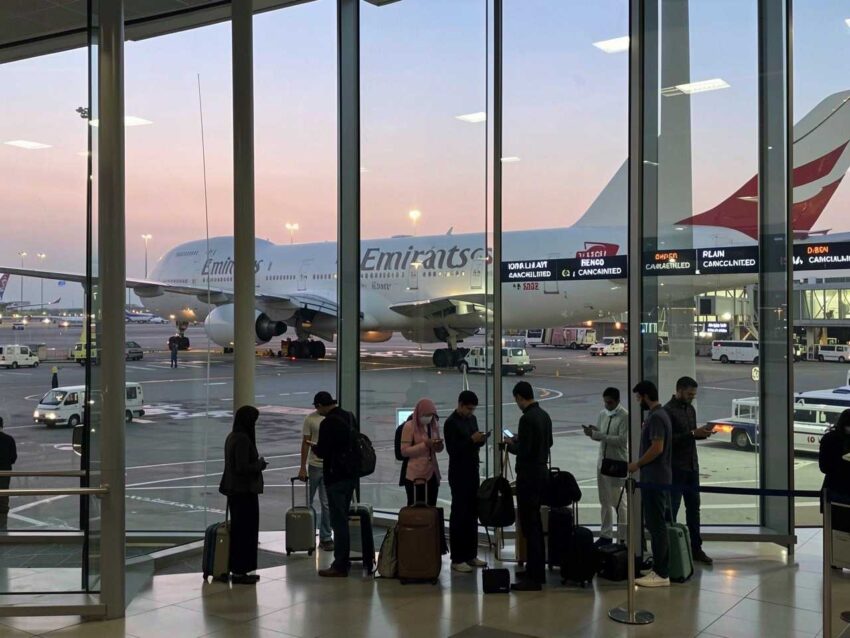
Emirates, Lufthansa and Delta Air Lines are at the center of a fast-moving aviation storm after escalating tensions involving Iran triggered widespread Middle East airspace closures, forcing thousands of cancellations and costly reroutes across one of the world’s busiest flight corridors. As oil prices jumped by more than 10 percent in the immediate aftermath of the escalation and global airline stocks shed billions in market value, carriers from Europe, North America and Asia scrambled to adjust schedules linking the US, UK, Saudi Arabia and India through key Gulf hubs. Dubai International Airport, which handled more than 95 million passengers last year, and Doha’s Hamad International Airport, a primary connector between Europe and Asia, faced operational strain as airlines revised flight paths to avoid restricted airspace. The ripple effects extend beyond aircraft and stock exchanges, with hotel groups in Dubai and Doha monitoring booking volatility amid delayed arrivals and disrupted itineraries. For travelers, the crisis is no longer just geopolitical news—it is reshaping routes, fares, connection times and even hotel check-ins in real time, underscoring how a single regional flashpoint can send shockwaves through global aviation and tourism overnight.
Emirates, Lufthansa, Delta, Air India and Cathay Pacific Plunge as US, UK, Saudi Arabia and India Routes Disrupted
Escalating tensions involving Iran have triggered one of the most significant airspace disruptions since the pandemic recovery, shaking global aviation networks and sending airline shares sharply lower. Major international carriers including Emirates, Lufthansa, Delta Air Lines, Air India and Cathay Pacific have been forced to reroute or suspend services as Middle East airspace closures disrupt a corridor that carries hundreds of thousands of passengers daily. Oil prices have jumped more than 10 percent week-on-week amid fears of supply constraints, raising jet fuel costs and pressuring airline margins. For frequent travelers, the ripple effects are immediate: longer routes, volatile fares, and uncertainty around connections through Gulf hubs.
Emirates, Lufthansa, Delta, Air India and Cathay Pacific Reroute as UAE and Qatar Airspace Tightens
The Middle East functions as one of the world’s most critical aviation bridges. With Russian airspace largely restricted for many Western carriers, flights between Europe and Asia have relied heavily on southern routings via the Gulf. When parts of Iranian airspace closed and regional tensions escalated, airlines were forced to divert around restricted zones. That adds flying time, fuel burn and crew costs.
Flights from London to Mumbai that normally transit Gulf airspace are operating on extended trajectories. Some Europe–Southeast Asia services have added between 30 minutes and two hours of flight time depending on the reroute. Gulf-based carriers initially suspended portions of their network before gradually resuming limited operations, prioritizing essential and high-demand routes.
Daily passenger throughput in the Gulf typically exceeds 600,000 travelers. Even short-term suspensions quickly cascade across continents. Airports in India reported dozens of cancellations on routes linked to Dubai and Doha in the first days of disruption. European airlines adjusted schedules to avoid congested alternative corridors over Central Asia and the Eastern Mediterranean.
For travelers, flexibility is now essential. Choose refundable or changeable tickets where possible. Monitor aircraft routings using flight tracking apps. Build in longer connection windows when transiting through affected hubs. Loyalty members should also check fare-class protections, as many carriers are offering one-time waivers during the crisis period.
US, UK, Saudi Arabia and India Routes Disrupted as Hilton, Hyatt and Accor Monitor Booking Volatility
The impact is not limited to airlines. Dubai welcomed nearly 19.6 million international overnight visitors in 2025, maintaining hotel occupancy above 80 percent across the year. Doha recorded more than 5 million international arrivals, with over 60 percent arriving by air. When connectivity tightens, the hospitality sector feels the shock.
Premium transit hotels and airport-linked properties saw a surge in short-notice bookings from stranded passengers, while leisure-oriented resorts reported temporary cancellations from travelers unsure about flight reliability. Global hotel brands including Hilton, Hyatt and Accor are closely watching occupancy patterns across the Gulf.
Short-haul regional travel within the Gulf Cooperation Council has proven more resilient. Visitors from Saudi Arabia, which represents a significant share of UAE arrivals, continue to travel by both air and road where feasible. However, long-haul travelers from the UK, India and parts of East Asia are more exposed to airspace instability.
Travelers planning trips to Dubai or Doha should reconfirm hotel cancellation policies. Many properties are offering flexible rebooking windows. If arriving late due to reroutes, inform your hotel directly to prevent room release after standard check-in deadlines.
Airline Stocks Slide as Fuel Prices Surge and Capacity Shrinks
Financial markets reacted quickly. Airline shares across Europe, Asia and North America dropped between 3 and 9 percent in early trading sessions following the airspace closures. Analysts estimate that more than $20 billion in combined airline market value was erased in a matter of days. The surge in crude oil prices compounds the problem, as fuel represents one of the largest operating costs for carriers.
For airlines like Lufthansa and Delta, which do not operate Middle East hubs but rely on connecting flows, reduced passenger confidence can weaken transcontinental demand. Asian carriers such as Cathay Pacific must navigate longer routings that increase operating expenses. Air India, amid its fleet modernization and international expansion plans, faces added scheduling complexity.
Frequent flyers should expect dynamic pricing shifts. When capacity tightens, last-minute fares often spike. Redeeming miles can offer better value than cash fares during irregular operations. Consider alternative departure airports if available, as secondary hubs sometimes retain more stable pricing.
Dubai International and Hamad International Face Operational Pressure
Dubai International Airport handled over 95 million passengers last year and was forecast to approach 100 million this year before the crisis. Hamad International Airport continues to serve as a global connector between Europe, Asia and Africa. Temporary service suspensions and wave-based departures disrupted carefully timed bank structures that maximize connectivity.
Airport authorities implemented crowd management protocols and prioritized passenger welfare services. Additional ground staff were deployed to assist with rebookings. Lounges experienced peak congestion as travelers waited for updated departure times.
Frequent travelers transiting through Gulf hubs should download airline apps for instant gate updates. Enroll in SMS alerts. If your layover exceeds five hours due to rerouting, ask about lounge access vouchers or meal compensation depending on ticket class and airline policy.
Fleet Strategy and Operational Adjustments Across Global Carriers
Several airlines accelerated aircraft swaps to optimize fuel efficiency on longer routings. Widebody aircraft such as the Airbus A350 and Boeing 787 are being prioritized on routes requiring extended detours due to their lower fuel burn per seat. Some carriers temporarily grounded older, less efficient aircraft to control operating costs.
Cabin crew duty limits also affect scheduling. Extended flight times can trigger crew rest requirements, leading to further delays. Airlines are strategically adjusting rotations to ensure compliance with safety regulations.
For passengers, this means potential last-minute aircraft changes. Seat assignments may shift. Check your booking 24 hours before departure to secure preferred seating again if equipment changes occur.
Security Procedures and Travel Advisories Update Rapidly
Governments issued updated travel advisories urging caution when transiting affected regions. Some countries temporarily closed airspace entirely before reopening under limited formats. Airlines implemented enhanced security screenings and contingency planning.
Travelers should verify visa validity, especially if rerouted through alternative transit points. Carry printed and digital copies of travel documents. Ensure travel insurance covers trip interruption and geopolitical events.
Airport security lines may lengthen during irregular operations. Arrive at least three hours before international departures. Use online check-in and digital boarding passes to streamline the process.
Impact on India, UK, Saudi Arabia, China and Australia Travelers
India remains one of the largest source markets for Gulf carriers. The India–UAE corridor is among the busiest international routes globally. Even a temporary slowdown disrupts business travel, family visits and tourism flows. The UK similarly depends on Gulf hubs for one-stop connections to Asia and Australasia.
Saudi Arabia contributes substantial regional tourism traffic to Dubai and Doha. Chinese and Australian travelers, who often transit through Gulf hubs en route to Europe, face longer alternative routings when services are constrained.
To mitigate disruption, consider alternative transfer hubs such as Istanbul or Singapore when booking complex itineraries. Compare total journey time, not just ticket price. A slightly higher fare on a more direct routing may save hours of uncertainty.
Hotel Industry Response and Revenue Management Shifts
Luxury and upper-upscale hotels in Dubai and Doha are adjusting revenue strategies. Short-term cancellations are balanced by stranded-passenger demand. Conference and events organizers are reassessing attendance forecasts.
Resort properties are promoting flexible booking windows to retain traveler confidence. Some hotel loyalty programs are extending elite status validity for members affected by travel disruption.
Travelers should leverage loyalty status benefits such as guaranteed late checkout and room upgrades, which provide comfort during uncertain arrival schedules. Monitor hotel apps for last-minute promotional rates if occupancy dips.
Long-Term Outlook for Aviation and Tourism
Historically, Gulf aviation has demonstrated resilience. After previous regional disruptions, traffic rebounded once airspace stabilized. Dubai’s diversified tourism portfolio, from luxury retail to global events, supports rapid recovery. Doha continues investing in hospitality infrastructure and cultural tourism.
However, sustained geopolitical instability could accelerate structural changes in routing patterns. Airlines may permanently diversify corridor strategies to reduce reliance on any single airspace zone. Fuel hedging strategies will also play a critical role in stabilizing airline finances.
Frequent travelers should remain adaptable. Loyalty diversification across alliances can provide more rerouting options. Maintain updated passport validity of at least six months. Store emergency airline contact numbers.
Miles Optimization and Fare Strategy During Disruption
When cash fares surge, mileage redemptions often remain relatively stable. Check partner award availability across alliances. Mixed-cabin itineraries can offer value if economy seats are scarce.
Flexible fare categories allow same-day changes with minimal penalties. Consider purchasing travel insurance that includes delay compensation.
If connecting through Dubai or Doha during the disruption window, schedule at least a two-hour buffer beyond minimum connection time. This reduces the risk of missed onward flights due to delayed arrivals.
Final Word for Travelers
The escalating conflict has once again illustrated how interconnected global aviation has become. From airline stock volatility to hotel occupancy swings, the consequences ripple far beyond the immediate region. Yet global travel continues. Flights are gradually resuming. Airports are adapting. Hotels remain open and welcoming.
Emirates, Lufthansa and Delta Air Lines are navigating sudden Middle East airspace closures after escalating tensions involving Iran forced thousands of cancellations and costly reroutes across global networks. As oil prices surge and airline stocks slide, Dubai and Doha’s aviation and hotel sectors brace for immediate ripple effects.
Stay informed. Book smart. Travel prepared. The Gulf’s role as a bridge between continents remains vital, and once stability returns, passenger flows are expected to rebound strongly. Until then, informed travelers will navigate the turbulence with flexibility and confidence.
The post Emirates, Lufthansa, Delta, Air India and Cathay Pacific Plunge as US, UK, Saudi Arabia and India Routes Disrupted — Dubai and Doha Hotels Including Hilton, Hyatt and Accor Brace for Global Tourism Aftershock appeared first on Travel And Tour World.
Source: travelandtourworld.com


Sorry, the comment form is closed at this time.