


Etihad Airways, Emirates, Qatar Airways & Lufthansa See Thailand, UAE, Switzerland and UK Travel Surge as Hilton, Marriott and Accor Brace for Bangkok Boom After A380 Upgrade — Is This the Biggest Gulf–Asia Aviation Bet of 2026?
Etihad Airways, Emirates, Qatar Airways & Lufthansa See Thailand, UAE, Switzerland and UK Travel Surge as Hilton, Marriott and Accor Brace for Bangkok Boom After A380 Upgrade — Is This the Biggest Gulf–Asia Aviation Bet of 2026?
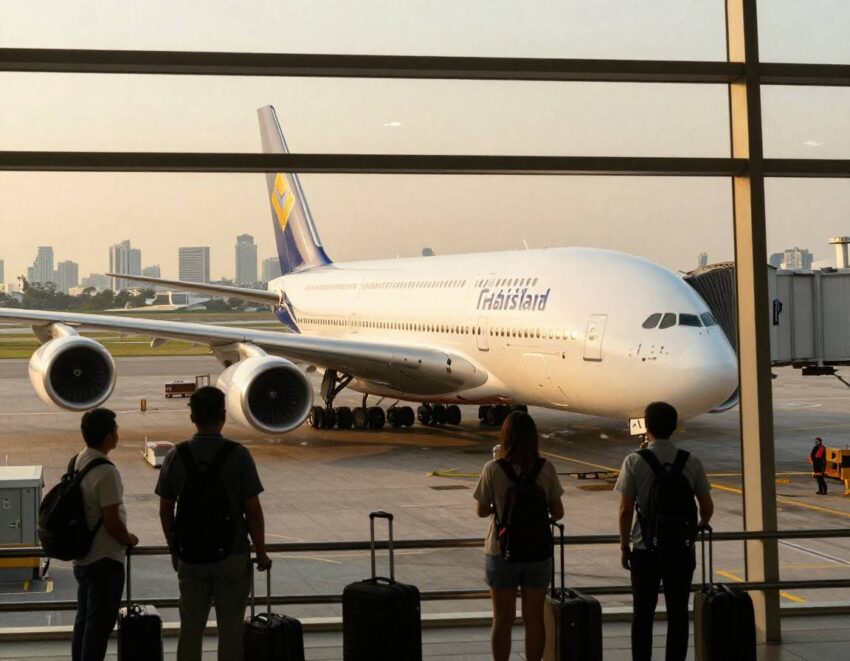
Etihad Airways, Emirates, Qatar Airways and Lufthansa are reshaping the aviation map between Thailand, the UAE, Switzerland and the UK as long-haul demand accelerates into the 2026 winter season, with Etihad confirming that its Airbus A380 will operate daily between Abu Dhabi and Bangkok from 25 October 2026, significantly increasing premium and total seat capacity on one of Southeast Asia’s most competitive corridors. The move comes as Thailand reports strong early-2026 international arrival figures and positions itself toward higher-value tourism, while Gulf carriers continue to strengthen their hub strategies through Abu Dhabi and Doha, offering seamless one-stop links to major European gateways including Zurich, Geneva and London. Emirates and Qatar Airways already operate high-capacity widebodies into Bangkok, reinforcing the Gulf’s dominance in connecting Europe and Asia, and Lufthansa’s network supports strong flows from Germany, Switzerland and the wider European market into Thailand’s capital. At the same time, global hotel groups such as Hilton, Marriott and Accor are preparing for sustained winter occupancy growth in Bangkok’s luxury and upper-upscale segments, reflecting renewed confidence in premium leisure and business travel. With expanded aircraft gauge, strengthened connectivity and steady inbound momentum across key source markets including China, India, Malaysia, Russia and the UK, the Gulf–Thailand corridor is emerging as one of 2026’s most closely watched aviation growth stories, and travelers are already adjusting their booking strategies to secure seats, rates and seamless connections before peak demand intensifies.
Etihad Airways, Emirates, Qatar Airways & Lufthansa See Thailand, UAE, Switzerland and UK Travel Surge
The Gulf–Asia corridor is entering a new phase. Capacity is rising. Premium cabins are expanding. Hotels in Bangkok are preparing for stronger winter demand. At the center of this shift is Etihad Airways and its decision to deploy the Airbus A380 on the Abu Dhabi–Bangkok route from 25 October 2026. The move does not stand alone. Emirates, Qatar Airways and Lufthansa are all reinforcing links between Thailand, the UAE, Switzerland and the UK as long-haul demand accelerates. Bangkok’s hospitality sector, led by brands such as Hilton, Marriott International and Accor, is positioning for higher-spending international arrivals. For frequent travelers, this is not just another aircraft swap. It is a structural shift in connectivity, pricing power and travel strategy.
Etihad Airways, Emirates, Qatar Airways & Lufthansa Expand Thailand–UAE–Switzerland–UK Connectivity Through Capacity Growth and Premium Focus
Etihad’s A380 deployment on Abu Dhabi–Bangkok marks a significant upgauge in capacity. The aircraft replaces smaller widebodies on flight EY402 and EY403. The evening departure leaves Abu Dhabi at 21:20 and lands at Bangkok’s Suvarnabhumi Airport at 06:35 the next morning. The return departs at 08:30 and arrives back at Zayed International Airport at 12:20. The timing is deliberate. It feeds Europe-bound departures in the late morning and early afternoon from Abu Dhabi, including connections to Zurich, Geneva and London.
The A380 adds meaningful seat volume. It carries 337 Economy seats, 68 Economy Space seats, 70 Business Studios, nine First Apartments and the ultra-exclusive Residence suite. Compared with the Boeing 787 previously deployed on certain rotations, this represents a substantial increase in premium inventory. Industry analysts estimate capacity growth on the rotation at roughly 25–30 percent depending on previous aircraft mix. That additional lift arrives just ahead of the Northern Hemisphere winter, Thailand’s high season.
Emirates and Qatar Airways already operate high-capacity aircraft into Bangkok, reinforcing the Gulf’s role as the dominant connecting region between Europe and Southeast Asia. Lufthansa continues to feed Swiss demand via Frankfurt and Munich, while codeshare and alliance links widen the funnel. The competitive effect is clear. Travelers now have more one-stop options between Thailand and Western Europe. Airlines are competing on comfort, lounge access and fare flexibility, not just price.
Hilton, Marriott and Accor Prepare for Bangkok Occupancy Surge as Thailand Strengthens Value-Led Tourism Strategy
Thailand entered 2026 with strong inbound momentum. Government tourism updates reported nearly six million foreign arrivals in the first eight weeks of the year, generating hundreds of billions of baht in tourism revenue. China, Malaysia, Russia, India and South Korea ranked among the leading source markets. The UK and US both exceeded one million annual arrivals in the previous year, reflecting renewed long-haul strength.
Bangkok’s hotel sector is already performing steadily. Market reports from late 2025 showed occupancy rates hovering around 70 percent in the capital, with average daily rates rising year-on-year in upper-upscale segments. Luxury and premium hotels saw particularly strong weekend and winter demand. With added long-haul lift from the Gulf, hoteliers expect pressure on premium inventory during peak months.
Hilton, Marriott and Accor all operate multiple properties across Bangkok’s Sukhumvit, Silom and Riverside districts. The return of high-density widebody capacity supports group travel, corporate MICE events and premium leisure bookings. For travelers, this means booking early for riverfront suites and executive lounge access during peak season. For loyalty members, it may also mean fewer last-minute redemption nights at flagship properties.
The Airbus A380 Returns to Southeast Asia as a Premium Experience Magnet
The A380 is more than a capacity tool. It is a product statement. Etihad’s upper deck Business Studio offers direct aisle access and access to an onboard lounge. First Apartments provide private suites with separate seating and sleeping areas. The Residence includes a living room, bedroom and private shower. These features attract premium leisure travelers, honeymooners and corporate executives.
For frequent flyers, the key is timing. Award seats in Business and First are expected to tighten in the first months after launch. Travelers using miles should search midweek departures and consider open-jaw itineraries. For example, fly into Bangkok and return from Phuket or Chiang Mai using regional connections. That strategy can unlock additional award space while diversifying the itinerary.
Economy travelers also benefit. The A380’s cabin is quieter on the upper deck. Seats near the wing offer smoother ride characteristics. Booking window seats on overnight sectors increases rest potential. Bringing noise-canceling headphones and boarding early to secure overhead bin space reduces stress.
Airport Infrastructure and Security Updates Across Abu Dhabi and Bangkok
Zayed International Airport continues to expand its terminal capacity following recent upgrades designed to streamline transfers. The airport’s layout enables relatively short connection times for Europe-bound departures. However, given recent regional airspace volatility, travelers should build in slightly longer layovers during peak evening banks.
Suvarnabhumi Airport experiences heavy arrival waves in the early morning. Immigration lines can extend during winter high season. Booking airport fast-track services or choosing seats closer to the front of the aircraft reduces exit time. Travelers connecting onward domestically should allow at least three hours between flights.
Security procedures in both hubs emphasize electronic screening efficiency. Laptops often remain inside carry-ons depending on lane technology. However, liquids restrictions still apply. Packing smartly with organized pouches speeds inspection.
Travel Advisory Awareness and Airspace Volatility
The Middle East has experienced intermittent airspace adjustments in recent months due to regional tensions. While operations have largely stabilized, airlines have occasionally rerouted flights to avoid restricted zones. Travelers booking complex itineraries should favor single-ticket bookings to ensure protection during disruptions. Travel insurance covering missed connections and airspace-related delays is advisable.
Monitoring airline apps for real-time gate updates reduces anxiety during tight transfers. Signing up for SMS notifications provides instant alerts. Elite status holders should leverage priority rebooking desks during irregular operations.
Country-Specific Impact: China, India, Malaysia, Russia, South Korea, UK and Switzerland
China remains Thailand’s largest inbound market. Improved capacity via Gulf hubs provides alternative routing options beyond direct Chinese carriers. Indian travelers represent one of Thailand’s fastest-growing segments, supported by targeted marketing and expanding air connectivity. Malaysia continues to supply strong regional flows, especially for short stays. Russian travelers favor extended winter escapes, benefiting from high-capacity long-haul lift.
The UK and Switzerland contribute high-spending leisure segments. Swiss travelers often connect via Zurich and Geneva. Etihad’s scheduling allows morning arrivals into Abu Dhabi that align with European departures. This strengthens the Thailand–Switzerland corridor. For UK passengers, London connections via Abu Dhabi compete directly with nonstop services and other Gulf hubs.
Miles Optimization and Fare Strategy for 2026
With expanded capacity, fare dynamics may shift. Increased seat supply sometimes moderates base fares in economy while premium cabins maintain pricing strength due to product differentiation. Travelers should track fare sales in late summer and early autumn before winter demand peaks.
Using flexible date search tools can uncover lower midweek fares. Combining cash tickets outbound with mileage redemptions inbound can reduce total trip cost. Credit card transfer bonuses to airline loyalty programs may further enhance value.
Lounge Access and Premium Ground Experience
Etihad’s premium passengers departing Abu Dhabi access dedicated lounges with dining and shower facilities. During peak hours, lounge crowding may increase due to A380 capacity. Arriving earlier ensures access to quieter seating zones. Bangkok’s international departure lounges also see peak congestion in late evening waves. Purchasing day passes in advance can secure entry when space is limited.
Hospitality Trends and Smart Booking Advice
Bangkok’s hospitality sector is adapting to value-led tourism. Hotels are bundling airport transfers, spa credits and dining vouchers into winter packages. Travelers should compare package inclusions rather than focusing solely on nightly rate. Riverside properties often command higher rates but provide easier access to cultural landmarks and boat transport.
Booking cancellable rates protects against sudden schedule adjustments. Loyalty members should monitor elite night promotions and bonus point campaigns aligned with high season.
Sustainability and Aircraft Efficiency Considerations
The A380’s large capacity improves per-seat efficiency when operating at high load factors. Airlines deploying larger aircraft on strong routes can consolidate multiple smaller flights, potentially reducing slot congestion at busy airports. However, environmental scrutiny remains. Travelers interested in reducing footprint can purchase sustainable aviation fuel contributions when available or select nonstop itineraries when practical.
What This Means for 2026 Travelers
The Gulf–Asia aviation corridor is intensifying. Etihad’s A380 deployment is both symbolic and strategic. Emirates and Qatar Airways maintain strong regional dominance. Lufthansa reinforces European access. Bangkok’s hotels are preparing for high-yield guests. Airport infrastructure continues to modernize. For travelers, the message is clear. Plan early. Stay flexible. Leverage loyalty benefits. Build in buffer time. Optimize miles. Secure premium seats before peak season compresses availability.
Etihad Airways, Emirates and Qatar Airways are intensifying competition across the Thailand–UAE–Europe corridor as Etihad confirms its Airbus A380 launch on Abu Dhabi–Bangkok from 25 October 2026, adding significant premium capacity ahead of peak winter demand.
With Thailand reporting strong early-2026 visitor momentum and major hotel brands preparing for higher occupancy in Bangkok, the Gulf–Asia aviation link is quickly becoming one of the most strategically important travel stories of the year.
The biggest Gulf–Asia aviation bet of 2026 may not simply be about one aircraft. It is about integrated strategy across airlines, airports and hospitality brands. Thailand’s tourism momentum, Europe’s winter travel appetite and the Gulf’s hub efficiency converge on this corridor. Those who plan smartly will experience smoother journeys, better value and enhanced comfort across one of the world’s most competitive long-haul markets.
The post Etihad Airways, Emirates, Qatar Airways & Lufthansa See Thailand, UAE, Switzerland and UK Travel Surge as Hilton, Marriott and Accor Brace for Bangkok Boom After A380 Upgrade — Is This the Biggest Gulf–Asia Aviation Bet of 2026? appeared first on Travel And Tour World.
Source: travelandtourworld.com


Sorry, the comment form is closed at this time.