


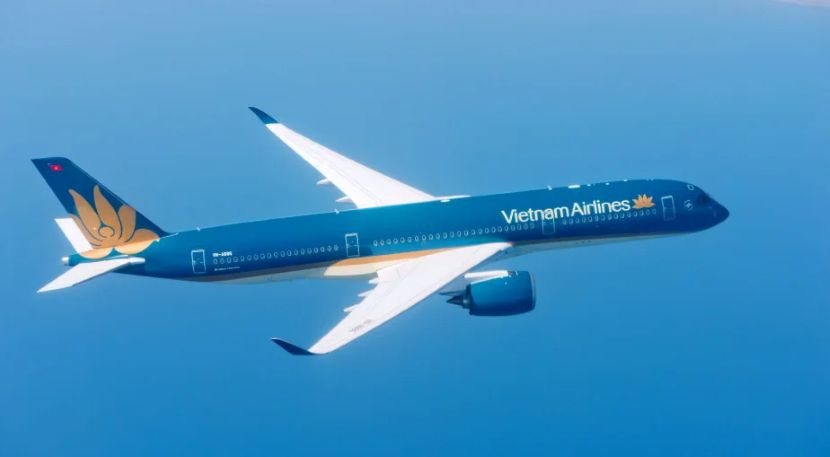
Explore What Vietnam Airlines’ Bold 737 MAX Decision Signals for Travel: A Powerful Expansion Strategy Set to Redefine Regional Connectivity Across Southeast Asia
Explore What Vietnam Airlines’ Bold 737 MAX Decision Signals for Travel: A Powerful Expansion Strategy Set to Redefine Regional Connectivity Across Southeast Asia
For travelers walking through Noi Bai International Airport or Tan Son Nhat, the future of regional travel just became clearer. Vietnam Airlines has formally confirmed a firm order for 50 Boeing 737-8 aircraft, marking a decisive shift in the national carrier’s strategy to expand domestic and Southeast Asian connectivity.
The agreement was officially announced in February 2026 during a ceremony in Washington, D.C., attended by senior representatives from Vietnam Airlines and Boeing, along with Vietnamese officials. Boeing’s investor relations release confirmed the finalization of the order, specifying that the aircraft involved are part of the 737 MAX family, specifically the 737-8 variant.
This is not a tentative agreement. It is a confirmed fleet commitment.
A Defining Move in Vietnam’s Aviation Strategy
Vietnam Airlines currently operates a mixed fleet that includes widebody Boeing 787 Dreamliners for long-haul services. The addition of 50 Boeing 737-8 aircraft introduces a powerful narrow-body backbone designed for short- and medium-haul routes.
According to Boeing’s official aircraft specifications, the 737-8 offers improved fuel efficiency and extended range compared to previous-generation single-aisle jets. For an airline serving rapidly growing regional markets, efficiency translates into competitive pricing and route flexibility.
Deliveries are expected between 2030 and 2032, as confirmed by industry fleet reporting agencies. That timeline provides Vietnam Airlines with a clear pathway for phased network expansion.
Why This Matters for Travel
The implications for travelers are significant.
Vietnam has experienced strong tourism growth over the past decade, supported by increasing inbound demand and rising domestic travel. Expanding the narrow-body fleet directly supports higher frequency services between major cities and regional destinations.
More aircraft means more seats. More seats often lead to increased competition and improved schedule options. For travelers flying between Hanoi, Ho Chi Minh City, Da Nang and neighboring Southeast Asian capitals, that translates into greater connectivity.
Single-aisle jets like the 737-8 are ideal for routes linking Vietnam with Thailand, Singapore, Malaysia, Indonesia and other regional markets. These aircraft are designed for efficiency on routes typically ranging between two to five hours.
Strengthening Southeast Asia’s Travel Web
Southeast Asia remains one of the world’s most dynamic aviation regions. Rising middle-class travel demand, tourism growth and regional trade all fuel air traffic expansion.
Vietnam Airlines’ confirmed order positions the carrier to compete strongly within ASEAN’s aviation landscape. By reinforcing its short- and medium-haul capacity, the airline enhances its ability to connect secondary cities and strengthen hub operations in Hanoi and Ho Chi Minh City.
For travel planners, tour operators and business travelers, expanded fleet capacity often means improved route reliability and greater scheduling depth.
Economic and Tourism Impact
Tourism is a critical contributor to Vietnam’s economy. Increased air capacity supports inbound arrivals, particularly from neighboring Asian markets.
Government tourism targets emphasize sustained growth in visitor numbers. Expanding regional connectivity through modern aircraft plays a direct role in meeting those goals.
The Boeing 737-8 aircraft also feature updated cabin systems designed to enhance passenger comfort and onboard technology. While configuration details are determined by the airline, the aircraft platform itself incorporates advanced aerodynamics and improved engine performance.
Operational efficiency reduces fuel consumption per seat compared to older models. That contributes to cost stability, which can positively influence ticket pricing structures.
A Strategic Partnership with Boeing
Boeing’s official release confirmed that this order represents Vietnam Airlines’ first single-aisle commitment with the American manufacturer. The airline already operates Boeing widebody aircraft, but this order marks a broader integration of Boeing’s product line into its future narrow-body fleet.
The announcement in Washington underscores the deal’s strategic nature. It reflects both commercial intent and international aviation partnership.
Fleet modernisation is not just about replacing aircraft. It is about preparing for long-term demand.
Preparing for the Next Decade of Travel
The 2030–2032 delivery window aligns with projected regional travel growth. Southeast Asia’s aviation sector continues to expand as tourism rebounds and infrastructure investments accelerate.
Vietnam Airlines’ decision to secure 50 737-8 aircraft ensures the carrier is equipped to meet future passenger volumes.
For travelers today, the impact may not be immediate. But fleet planning decisions shape route maps years in advance. As Vietnam strengthens its position as both a tourism hotspot and a regional transit hub, additional aircraft provide the capacity backbone required to support that ambition.
Standing in departure halls in Hanoi or Ho Chi Minh City in the early 2030s, passengers will board these next-generation jets without necessarily thinking about the strategic planning behind them. Yet the ripple effect of this confirmed order will be visible in expanded route options, smoother connections and broader access to Southeast Asia’s diverse destinations. Vietnam Airlines has made its move. The region’s travel network is preparing to evolve alongside it.
IMAGE SOURCE: Vietnam Airlines
The post Explore What Vietnam Airlines’ Bold 737 MAX Decision Signals for Travel: A Powerful Expansion Strategy Set to Redefine Regional Connectivity Across Southeast Asia appeared first on Travel And Tour World.
Source: travelandtourworld.com



Sorry, the comment form is closed at this time.