


Flights Cancelled in Pune, Dubai and Abu Dhabi: Urgent Middle East Airspace Closures Spark Massive Disruptions With Rising USA‑Israel‑Iran Conflict Forcing Airlines to Ground Overseas Services
Flights Cancelled in Pune, Dubai and Abu Dhabi: Urgent Middle East Airspace Closures Spark Massive Disruptions With Rising USA‑Israel‑Iran Conflict Forcing Airlines to Ground Overseas Services
Flights from Pune to Dubai and Abu Dhabi were abruptly cancelled due to urgent airspace closures in the Middle East, triggered by escalating tensions between the USA, Israel, and Iran. These geopolitical issues have forced several countries to shut down parts of their airspace, crippling global aviation networks. As a result, passengers were left stranded, with many facing uncertainty about their travel plans and no clear guidance from airlines on how to proceed. The cancellations have caused significant disruptions, especially for travellers with immediate commitments or upcoming events like Ramzan and Eid.
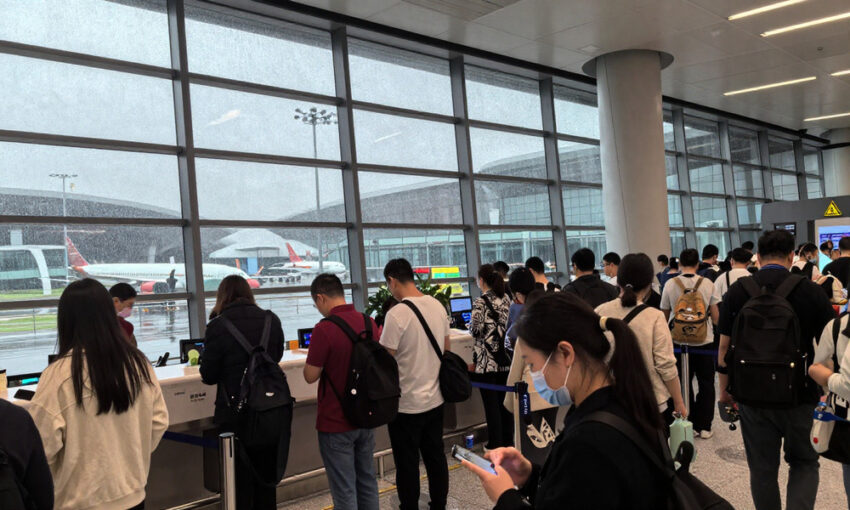
On Saturday, many passengers traveling from Pune to Dubai and Abu Dhabi found themselves stranded after airlines cancelled several flights due to airspace closures in the Middle East. The closures were a direct result of the rising tensions between the USA, Israel, and Iran, which prompted flight disruptions across the region.
Pune typically operates a handful of flights to Dubai, serviced by SpiceJet and IndiGo, and one flight to Abu Dhabi, operated by Air India Express. However, on this particular Saturday, all three of these flights were grounded. The affected flights included SG-51 (Pune-Dubai), IX-283 (Pune-Abu Dhabi), and 6E-1484/1483 (Dubai-Pune-Dubai). These cancellations left passengers frustrated and stranded, with little communication from the airlines regarding their next steps.
Airport authorities in Pune confirmed that the cancellations were a direct result of the ongoing conflict in the Middle East, which has forced several airspaces in the region to close. Airport authorities confirmed that passengers were informed about the cancellations, but there was little additional information regarding when services would resume or how passengers would be compensated. In the absence of clear guidance, many passengers were left unsure about how to proceed with their travel plans, particularly those with urgent commitments.
One stranded passenger expressed frustration with the situation, as there was no clarity on when flights would be rescheduled. With a work commitment on March 1, the uncertainty made it difficult to make alternative travel arrangements. While the family was relieved that they were not affected by the cancellations, the passenger faced growing stress due to the lack of updates from the airline. This left many others in a similar position, struggling to navigate the confusion and find solutions.
While some passengers were left in a state of limbo, others found themselves fortunate in a different way. A couple based in Hadapsar, who had been planning a holiday in Dubai, had their trip cancelled by their tour operator just hours before the airspace shutdown was announced. Having already reached Lonavla for the start of their journey, the couple received the news that their trip was off. Though the cancellation was a disappointment, they felt somewhat fortunate not to have been caught up in the chaotic situation affecting many other passengers.
For many, the timing of the cancellations could not have been worse. With the holy month of Ramzan well underway and Eid approaching, the disruptions left several passengers facing an uncertain future. Shafiq Shaikh, a resident of Kondhwa Khurd, expressed concern about his brother’s family, who were supposed to travel to Pune for Eid. With the situation in the Middle East escalating, their plans now hung in the balance. Shaikh voiced hope that the situation would normalise soon, but it was clear that many others shared his anxieties. For many, the cancellation of flights during such a significant time created a sense of unease and frustration.
Travel agencies, too, reported growing concerns among clients. Santosh Gupta, the owner of Shree Vinayak Holidays, shared that passengers scheduled for early and mid-March were particularly worried. Gupta mentioned a specific client who was booked to travel on March 1 but was now left uncertain about the fate of his flight. Other passengers who had booked flights to London via Dubai on Emirates were also anxious, as the flight disruptions could potentially affect their travel plans. With the airspace closures affecting not only direct flights to Dubai but also connecting flights through the region, the ripples of the disruption were felt far and wide.
As of the latest reports, airlines had yet to clarify their refund policies. Travel agents, passengers, and airlines alike were all waiting for further updates. Without clear guidance from the airlines, passengers were left to fend for themselves, scrambling to make new arrangements or find other ways to get to their destinations. The situation was further complicated by the lack of communication and the absence of clear procedures for those seeking compensation for their disrupted travel plans.
Meanwhile, airlines took to social media to post advisories and keep passengers informed of the situation. However, the updates offered little reassurance, and many passengers continued to express frustration over the lack of concrete solutions. For those who had planned their travel far in advance, the uncertainty of not knowing when services would resume added to the stress of the situation. Airlines continued to post advisories and information on their social media platforms, but this was not enough to quell the growing concerns among passengers.
The impact of the airspace closures extended beyond just the airlines. With the airspace over the Middle East remaining closed, many travellers who were scheduled to fly in the coming days were unsure whether their flights would be cancelled or delayed. This uncertainty caused significant anxiety, particularly among those who had family or business commitments in the coming weeks. With travel plans disrupted and no clear path forward, many passengers were left questioning when things would return to normal.
As airlines scrambled to manage the situation, travel agencies faced the challenge of managing heightened anxiety among their clients. The travel industry had already been hit hard by the global pandemic, and these new disruptions only added to the challenges. Passengers and travel agents alike found themselves in an unprecedented situation, with no clear resolution in sight. As the days passed, it became evident that the situation would take time to resolve, and in the meantime, passengers would have to remain patient and continue to seek answers.
In the wake of the cancellations, there is hope that things will eventually return to normal. Airlines and travel agencies continue to work to provide clarity for passengers, but until then, many will remain uncertain about their travel plans. Passengers are advised to stay informed through official channels and social media, as further updates on flight schedules and refunds are expected to be released.
The post Flights Cancelled in Pune, Dubai and Abu Dhabi: Urgent Middle East Airspace Closures Spark Massive Disruptions With Rising USA‑Israel‑Iran Conflict Forcing Airlines to Ground Overseas Services appeared first on Travel And Tour World.
Source: travelandtourworld.com


Sorry, the comment form is closed at this time.