


Fort Smith Competes with San Antonio, Philadelphia, Nashville, Detroit and More US Cities Promoting as Budget Friendly Tourism Destination with New Marketing Tools, Latest Update is Here
Fort Smith Competes with San Antonio, Philadelphia, Nashville, Detroit and More US Cities Promoting as Budget Friendly Tourism Destination with New Marketing Tools, Latest Update is Here
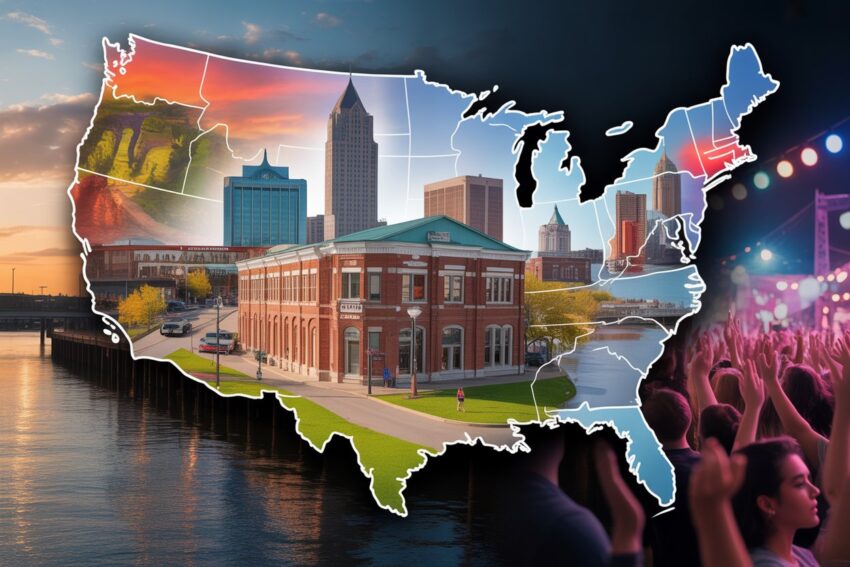
Fort Smith Competes with San Antonio, Philadelphia, Nashville, Detroit and More US Cities Promoting as Budget Friendly Tourism Destination with New Marketing Tools, Latest Update is Here — and the shift is impossible to ignore. Fort Smith competes boldly, strategically and confidently with San Antonio, Philadelphia, Nashville, Detroit and more US cities, all promoting as budget friendly tourism destination hubs in 2026. However, this time, Fort Smith competes with sharper intent. With new marketing tools deployed across digital platforms, targeted visitor campaigns, and data-driven storytelling, the latest update is here to signal a decisive transformation.
As travel costs rise nationwide, cities promoting as budget friendly tourism destination magnets are recalibrating strategies. San Antonio, Philadelphia, Nashville, Detroit and more US cities have long invested in structured tourism messaging. Now, Fort Smith competes directly, leveraging affordability, heritage assets, and community-led experiences. Moreover, the introduction of new marketing tools amplifies visibility, strengthens regional branding, and positions Fort Smith within the competitive national tourism marketplace.
Consequently, this latest update is here not merely as an announcement but as a statement. Fort Smith competes. Fort Smith promotes. Fort Smith evolves. Travel And Tour World urges readers to explore how this budget friendly tourism destination is redefining value travel against San Antonio, Philadelphia, Nashville, Detroit and more US cities.
Fort Smith, Arkansas
Fort Smith, Arkansas is preparing for a highly visible change to its downtown skyline as Discover Fort Smith, the city’s official tourism agency, moves forward with plans to install a nearly 60-foot tall LED digital sign on the building that houses its offices. The agency, formally known as the Fort Smith Convention & Visitors Bureau (CVB), says the sign is designed to increase awareness of city events and reinforce Fort Smith’s presence as a tourism destination.
The new display will replace the long-standing “Area Agency on Aging” signage that has remained on the structure since the 1960s. According to Storm Nolan of Nextgen Development Partners, the firm that acquired and renovated the seven-storey building at 524 Garrison Avenue, the previous sign had fallen into disrepair after decades of exposure. The building has since undergone redevelopment, and the digital installation marks the next phase of its modernisation.
Discover Fort Smith relocated to the Garrison Avenue property in 2024, leaving its former home in the historic Miss Laura’s building. Executive Director Ashleigh Bachert explained that the LED sign is part of a broader effort to make the agency’s presence more visible downtown while creating a flexible platform to promote tourism-driven events.
The sign will stand approximately 59 feet tall and 3.28 feet wide. It will feature a three-sided LED configuration, effectively functioning as a digital billboard capable of rotating messages and displaying animated content. Installation is expected to be completed by late March, with cranes scheduled to lift sections of the display into a new steel support structure in the coming weeks. The total project cost is estimated at around $110,000.
Bachert noted that the sign will primarily promote tourism-related activities, conventions, conferences, and major events hosted in Fort Smith. For example, if operational earlier in the year, the sign would have highlighted the Great American Conference basketball tournament scheduled for March 4–8. That event is projected to bring approximately 1,300 attendees to the city, with about 500 requiring overnight accommodation. The LED display will likely first promote the Steel Horse Rally, a large-scale motorcycle event set for May 1–2. Since its inception in 2015, the rally has attracted tens of thousands of visitors to downtown Fort Smith and the surrounding region, generating significant economic activity.
To manage costs, the CVB opted to use open-source software to control the messaging system rather than investing in proprietary digital management platforms. This approach allows staff to scroll text, update announcements, incorporate animation, and rotate promotions internally while keeping operational expenses lower.
The agency has also adopted content policies to regulate what appears on the display. Bachert stated that the sign will be reserved for tourism promotion and approved community messages, such as congratulating local schools on athletic achievements. It will not be used for unrelated advertising.
Concerns about brightness and visual impact have also been addressed. Nolan and Bachert confirmed that the LED sign will include dimmable lighting technology to reduce glare and minimise disruption during evening hours. Both emphasised that the intention is to enhance downtown visibility rather than create an eyesore.
Discover Fort Smith employs seven full-time and two part-time staff members. The organisation is funded through a 3% lodging tax levied on overnight stays within the city. Its mission is to promote Fort Smith as a destination for tourism, conventions, sporting events, and conferences that drive visitor spending and support the local economy. The new LED sign represents a strategic communication tool aimed at strengthening that mission and elevating Fort Smith’s profile within the regional tourism market.
Washington DC: Free Culture as a Strategic Weapon in the US Tourism Sector
Washington DC stands as one of the strongest examples of how the USA promotes accessible travel without using the word “cheap.” Through its official tourism gateway linked via Destination DC, the city highlights free Smithsonian museums, open public memorials, and the vast National Mall. These are permanent, no-cost attractions supported by federal funding. This structure allows families, students, and international visitors to experience premium culture without high entry fees. The US tourism sector benefits because visitors stay longer and spend on food, transport, and local services instead. Washington DC’s model shows how the USA integrates public heritage into tourism strategy. It strengthens national identity while maintaining global appeal. In 2026, as the Americas prepare for major international events, DC’s free cultural access reinforces the message that US travel is inclusive. It proves that affordability in the USA can be built into infrastructure, not discounts.
Chicago: Urban Marketing That Expands Access Within the USA
Chicago’s tourism direction in 2026 reflects structured planning rather than promotional exaggeration. Reporting on the city’s tourism strategy, highlighted through coverage of official meetings such as those referenced by CBS News Chicago, shows a clear focus on economic impact and visitor growth. The city promotes neighbourhood districts, public lakefront areas, seasonal festivals, and accessible arts programming. These initiatives allow visitors to experience large-scale urban culture without mandatory premium ticketing. The US tourism sector relies on this approach to diversify its appeal. Instead of focusing only on high-end attractions, Chicago balances affordability with experience. Public parks and civic spaces become economic assets. This supports domestic US travel and encourages regional tourism across the Americas. Chicago demonstrates how the USA strengthens its tourism ecosystem by combining city pride, strategic marketing, and open-access infrastructure that keeps travel attainable for broader audiences.
San Antonio, Texas
San Antonio’s official tourism strategy positions the city as historically rich and economically accessible within the Texas travel landscape. Visit San Antonio and municipal authorities consistently promote the Alamo, the San Antonio River Walk, and the San Antonio Missions National Historical Park—sites that either offer free entry or require minimal spending to experience fully. The River Walk’s pedestrian-centric design reduces transportation dependency, allowing visitors to explore key attractions on foot without incurring additional mobility costs. Municipal tourism planning documents underscore family accessibility and heritage tourism, aligning the city’s cultural identity with broad economic inclusion. Compared to other major Texas destinations, hotel and dining rates remain competitively moderate, and official promotional materials emphasize value-driven hospitality options. In 2026, San Antonio’s marketing narrative centers on authentic heritage, public access to historic spaces, and integrated urban design, all of which structurally reduce the overall cost of visitation without framing the city as a discount destination.
Philadelphia, Pennsylvania
Philadelphia’s tourism promotion in 2026 intersects with national commemorative programming tied to America’s 250th anniversary, reinforcing the city’s role as a cornerstone of democratic history. Through the Philadelphia Convention and Visitors Bureau and the Pennsylvania Office of Tourism, official messaging highlights Independence National Historical Park, the Liberty Bell Center, and numerous public heritage sites that provide free or low-cost entry. This concentration of federally managed landmarks significantly reduces cultural access costs for visitors. Municipal tourism campaigns emphasize walkable historic districts, public markets, and accessible transportation networks that facilitate economical exploration. Compared to nearby metropolitan centers such as New York and Washington, Philadelphia’s hotel inventory remains relatively moderate in price, enhancing its value proposition. Government planning documents frame the city as a place where history is accessible to all, reinforcing affordability through civic design rather than promotional discounting. The city’s official narrative blends patriotic heritage with economic openness, attracting domestic and international travelers seeking meaningful yet cost-conscious experiences.
Nashville, Tennessee
Nashville’s official tourism promotion leverages a distinctive cultural asset that inherently lowers visitor entertainment expenses: live music without mandatory admission fees. Through Visit Music City and the metropolitan government, 2026 campaigns emphasize the city’s open music culture, where performances occur daily in venues that often do not require cover charges. This structural characteristic reduces nightlife costs compared to other entertainment-centric cities. Official marketing also highlights public festivals, community-driven cultural programming, and accessible culinary experiences rooted in Southern traditions. While peak-season hotel rates have increased in recent years, municipal tourism planning reflects efforts to diversify geographic visitor flow into neighborhoods beyond the core entertainment district, encouraging cost variability. Nashville’s affordability is therefore embedded within cultural norms rather than promotional discounts. The city’s government-aligned tourism messaging frames music as a public experience rather than an exclusive commodity, enabling visitors to engage with high-quality entertainment without significant financial barriers.
Albuquerque, New Mexico
Albuquerque’s 2026 tourism strategy emphasizes natural accessibility and cultural authenticity as primary drivers of visitation. Through Visit Albuquerque and the New Mexico Tourism Department, official campaigns highlight proximity to public lands, including Petroglyph National Monument and the Sandia Mountains, where outdoor recreation opportunities are either free or low-cost. The state’s tourism office positions New Mexico as a value-oriented alternative to more expensive Western urban centers, reinforcing the idea of accessible exploration. Albuquerque’s lodging market remains competitively priced relative to comparable mountain or desert destinations, and official materials emphasize local cuisine and community festivals that provide culturally immersive yet affordable experiences. Government planning documents frame tourism growth around sustainability and preservation rather than high-end exclusivity. By foregrounding public land access and heritage preservation, Albuquerque’s official tourism promotion naturally aligns with budget-conscious travel patterns without explicitly adopting a discount-based branding strategy.
Kansas City, Missouri
Kansas City’s tourism promotion in 2026 underscores cultural depth and Midwestern cost advantages. Through Visit KC and municipal economic development frameworks, official materials promote the city’s jazz heritage, barbecue culture, public art installations, and revitalized downtown districts. Compared to coastal metropolitan areas, Kansas City maintains lower average hotel and dining costs, a structural advantage reflected in tourism positioning. Municipal strategy documents emphasize accessible urban experiences, including free live music events and community-driven festivals. The city’s tourism promotion integrates sports, food, and heritage tourism while maintaining price flexibility across accommodation tiers. Kansas City does not brand itself as a bargain destination; rather, it highlights authenticity and local culture that remain financially attainable for a broad visitor demographic. Official messaging frames the city as welcoming and unpretentious, attributes that coincide with moderate visitor spending requirements. This alignment between cultural narrative and economic structure sustains Kansas City’s budget-friendly positioning.
Detroit, Michigan
Detroit’s resurgence narrative under the Pure Michigan campaign integrates affordability with cultural reinvention. Visit Detroit’s official promotion in 2026 highlights riverfront redevelopment, music heritage, automotive history, and public art initiatives that are accessible to visitors at minimal cost. The city’s hotel market remains priced below major coastal competitors, reinforcing Detroit’s value advantage. State-level tourism marketing integrates Detroit into broader road-trip campaigns, encouraging domestic travel that reduces transportation costs relative to air-dependent destinations. Municipal economic reports emphasize tourism diversification and inclusive community engagement, ensuring that attractions remain broadly accessible. Public festivals, sports events, and heritage programming are frequently highlighted in official visitor guides. Detroit’s tourism promotion reflects a city leveraging affordability as a structural reality rather than a marketing slogan. The narrative focuses on renewal, culture, and accessibility, positioning the city as a compelling option for travelers seeking urban experiences without premium metropolitan pricing.
Cleveland, Ohio
Cleveland’s 2026 tourism promotion, led by Destination Cleveland, centers on lakefront revitalization, cultural institutions, and cost-effective urban exploration. Official materials highlight access to Lake Erie, public parks, and a revitalized downtown entertainment district. The Rock and Roll Hall of Fame anchors the city’s tourism identity, while complementary attractions and community programming enhance visitor engagement. Compared to larger metropolitan centers, Cleveland maintains lower average lodging and dining expenses, a structural characteristic reflected in its promotional messaging. Municipal tourism strategy documents emphasize inclusivity, regional accessibility, and family-oriented travel. Public infrastructure investments have strengthened connectivity and walkability, reducing ancillary transportation costs for visitors. Rather than positioning Cleveland as inexpensive, official tourism campaigns promote authenticity, approachability, and accessible cultural depth. These characteristics align with moderate visitor expenditure levels, reinforcing Cleveland’s status as a budget-conscious destination supported by government-aligned tourism frameworks.
Arizona: State-Level Planning That Uses Nature as Affordable Tourism Capital
The Arizona Office of Tourism’s structured FY2026 budget request, available through the official Arizona Office of Tourism document, outlines coordinated state investment in tourism promotion. While the language focuses on growth and competitiveness, the practical effect supports accessible travel. Arizona markets deserts, national parks, scenic highways, and outdoor recreation. Many of these attractions involve minimal entry costs compared to urban entertainment complexes. The USA uses geography strategically. Outdoor tourism reduces barriers for families and independent travellers. It distributes tourism benefits beyond large metropolitan centres. In the broader US tourism sector, this model ensures that visitors can engage with landscapes and heritage without excessive pricing structures. In 2026, Arizona strengthens the USA’s image across the Americas as a destination of natural scale and affordability. The state demonstrates that well-funded government promotion can position outdoor spaces as powerful drivers of sustainable and accessible US travel.
Minnesota: Cooperative Regional Promotion Expanding US Travel Inclusion
Minnesota’s official tourism framework, documented in the Explore Minnesota Tourism budget papers, reveals a cooperative marketing approach that strengthens regional visibility. The state invests in partnerships with local destinations, visitor centres, and digital marketing campaigns. This approach does not centre solely on major cities. Instead, it highlights lakes, small towns, parks, and seasonal activities. Such decentralised promotion reduces cost pressures for visitors and spreads economic opportunity across communities. The US tourism sector benefits because travellers gain access to varied price points and accommodation options. Minnesota’s structure shows how the USA integrates state-level planning with broader national objectives. In 2026, as US travel continues to evolve, regional inclusivity becomes an asset. Minnesota reinforces the idea that the US tourism sector thrives when affordability is embedded in geographic diversity. The state’s method demonstrates careful policy alignment within the wider Americas tourism landscape.
Michigan: Pure Michigan as Structured State Branding Supporting Accessible US Tourism
The Pure Michigan campaign, operating under state authority and documented publicly through references such as the Pure Michigan overview, remains a central pillar of Michigan’s tourism identity. The campaign promotes lakeshores, scenic drives, small communities, and cultural festivals. Road travel plays a major role in Michigan’s accessibility strategy. Domestic visitors can explore regions without relying on expensive long-haul flights. This strengthens internal US travel while supporting the broader US tourism sector. By focusing on natural and regional assets, Michigan ensures that affordability remains part of the visitor experience. In 2026, such state branding reinforces the USA’s capacity to balance aspiration with practicality. Pure Michigan exemplifies how government-backed marketing builds long-term recognition while sustaining diverse visitor demographics. Within the Americas, Michigan’s approach demonstrates how structured state campaigns can contribute to national tourism resilience and economic continuity.
New York City: High-Profile Branding Balanced With Public Accessibility
New York City’s official tourism body, outlined through references including New York City Tourism + Conventions, promotes the city globally while maintaining strong emphasis on public space. Central Park, open streets, public parades, and civic celebrations offer visitors accessible engagement. Although NYC is often perceived as expensive, official tourism communications regularly highlight free cultural programming and public landmarks. This reduces psychological barriers for international visitors considering US travel. The US tourism sector benefits because iconic imagery attracts attention while public accessibility sustains volume. In 2026, New York remains one of the USA’s strongest global brands across the Americas. Its tourism strategy blends aspiration with inclusion. By maintaining open civic experiences alongside premium attractions, the city reinforces the broader narrative that the USA can remain competitive internationally while ensuring that travel within the US tourism sector remains attainable to diverse income groups.
Brand USA: National Coordination Driving the 2026 US Tourism Narrative
At the federal coordination level, Brand USA’s “America the Beautiful” campaign, detailed through its official newsroom at Brand USA, reflects strategic international positioning. The campaign aligns with global events and major national milestones. While it does not specifically categorise cities by price level, it amplifies destination visibility across the USA. This unified branding strengthens state and city initiatives. The US tourism sector relies on such coordination to maintain international competitiveness. By promoting landscapes, culture, and shared values, Brand USA enhances perception across the Americas and beyond. In 2026, national messaging complements local affordability structures. Together, they create a layered system. The result is a resilient US tourism sector that integrates federal branding, state investment, and city-level accessibility. This interconnected strategy ensures that US travel remains broad, structured, and economically significant within the global tourism marketplace.
The post Fort Smith Competes with San Antonio, Philadelphia, Nashville, Detroit and More US Cities Promoting as Budget Friendly Tourism Destination with New Marketing Tools, Latest Update is Here appeared first on Travel And Tour World.
Source: travelandtourworld.com

Sorry, the comment form is closed at this time.