


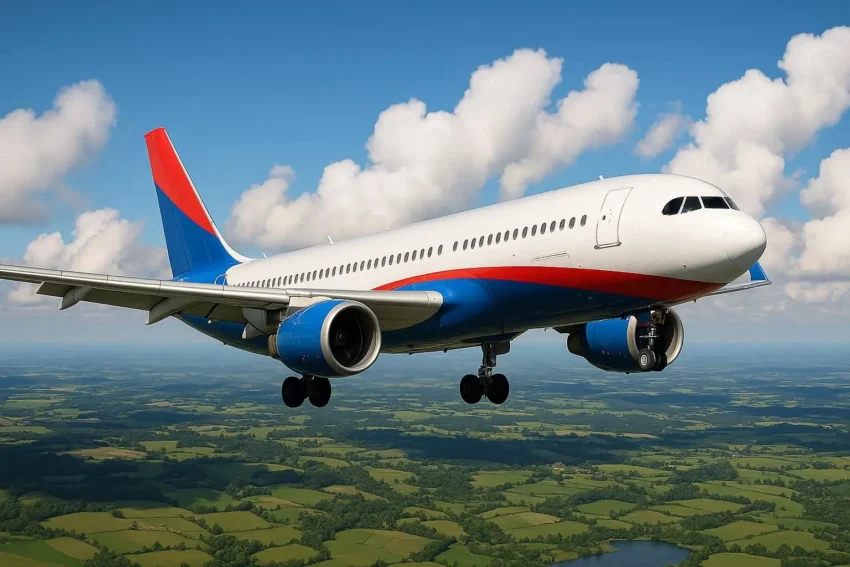
France and Côte dIvoire Aviation Alert as Air France A350 Enters Defense Zone at Abidjan Airport
France and Côte dIvoire Aviation Alert as Air France A350 Enters Defense Zone at Abidjan Airport
A serious ground movement incident involving Air France, an Airbus A350, and Côte dIvoire aviation authorities was brought into focus after an international arrival at Abidjan inadvertently crossed into a restricted military zone. The event, which unfolded after a routine long haul flight from France, underscored how even highly regulated airport environments can be disrupted by momentary taxiing confusion. While the aircraft landed safely and no injuries were reported, the consequences extended far beyond a simple delay. Passenger disembarkation was postponed for hours, airport operations were disrupted, and a scheduled return service was ultimately canceled.
Such events, although rare, are closely examined within global aviation because ground navigation errors carry unique risks. Taxiways are often complex, especially at airports shared by civilian and military operations, as is the case in parts of West Africa. The incident in Côte dIvoire quickly drew attention not only from French aviation stakeholders but also from safety analysts worldwide. Comparisons were later drawn with a separate taxiway deviation in the Philippines, illustrating how similar challenges can emerge across very different aviation environments. Together, these events reinforced the importance of clear ground procedures, precise communication, and constant situational awareness during all phases of flight operations.
Arrival of Air France Flight AF702 in Côte dIvoire
An Air France arrival at Félix Houphouët Boigny International Airport in Abidjan was completed without incident in the air but was followed by unexpected complications on the ground. Flight AF702, operated by an Airbus A350-900 registered F-HUVM, had completed its scheduled six hour journey from Paris Charles de Gaulle Airport and landed on Runway 03 at 19:27 GMT on February 3, 2026.
After touchdown, standard taxi instructions were issued by air traffic control. The aircraft was expected to proceed toward the civilian terminal using a designated parallel taxiway. Instead, a wrong turn was taken during taxi operations, placing the wide body aircraft on a route leading directly into the Abidjan Military Air Base. This area is designated exclusively for military use and is subject to heightened security protocols.
Entry Into a Restricted Military Area
Once the aircraft entered the restricted zone, movement options became extremely limited. The taxiway infrastructure within the military area was not designed to accommodate an Airbus A350, one of the largest commercial aircraft currently in service. Due to its size and weight, safe maneuvering was not possible, and the aircraft was effectively immobilized.
The presence of a civilian wide body aircraft inside a high security military zone immediately triggered alerts among airport and defense authorities in Côte dIvoire. While no threat was identified, established security procedures required the situation to be handled with caution. Passenger disembarkation was delayed as authorities coordinated a safe and controlled response.
Passenger Impact and Ground Recovery Efforts
The flight was carrying 283 passengers along with 12 crew members. All individuals remained on board while the situation was assessed and recovery plans were implemented. No injuries were reported, and cabin conditions were managed to ensure passenger comfort during the extended wait.
Specialized ground teams were deployed to assist in removing the aircraft from the restricted area. Due to the unsuitable taxiway surface and limited clearance, towing equipment was required. The recovery operation extended over several hours, during which time normal airport operations at Abidjan experienced disruptions.
Once the aircraft was carefully repositioned onto a civilian parking stand, passengers were finally able to disembark. The prolonged delay had a ripple effect across evening schedules, affecting ground handling resources and late night departures.
Cancellation of the Return Flight to France
Operational consequences continued to mount after the aircraft was secured. The scheduled return service to Paris, Flight AF703, was canceled. The cancellation was attributed to the delayed availability of the aircraft and the need for thorough technical inspections before further operation.
Air France arranged for technical personnel to be dispatched from France to Côte dIvoire. Inspections were focused on the landing gear, tires, and structural components that may have been affected by operating on a taxiway not designed for the aircraft weight and dimensions. Such inspections are standard practice following any abnormal ground movement involving large commercial aircraft.
Investigation by Ivorian Aviation Authorities
A formal investigation was launched by aviation authorities in Côte dIvoire to examine the circumstances surrounding the taxiing error. Particular attention was placed on communications between the control tower and the cockpit crew during the post landing phase.
The investigation aims to determine how the aircraft deviated from its assigned route and entered a restricted military area. Reviews typically include an assessment of taxiway signage, airport layout complexity, controller instructions, and cockpit navigation coordination. Findings from the inquiry may result in procedural adjustments intended to reduce the likelihood of similar events in the future.
Broader Context of Taxiway Deviations
Taxiway deviations are considered uncommon within commercial aviation, yet they remain a recognized risk, especially at airports with complex layouts or shared civilian and military infrastructure. Analysts note that workload during taxi operations can increase significantly at unfamiliar airports or during nighttime operations, when visual cues may be less distinct.
Clear and unambiguous communication between flight crews and controllers is regarded as essential. Strict adherence to taxi instructions and continuous cross checking of airport charts are emphasized during pilot training. Incidents such as the one in Abidjan serve as reminders that ground operations require the same level of vigilance as airborne phases of flight.
Similar Incident in the Philippines Involving Cathay Pacific
A comparable taxiway deviation was previously reported in the Philippines, highlighting that such challenges are not confined to any single region. Cathay Pacific flight CX918, scheduled to operate from Manila to Hong Kong, used an incorrect taxiway during ground movement prior to departure.
The deviation briefly disrupted airport operations at Manila. Air traffic controllers responded by delaying arrivals to maintain safe separation while the situation was resolved. The aircraft was eventually repositioned correctly and cleared for departure without any impact on passenger or crew safety.
Air Traffic Control Response in Manila
During the Manila incident, controllers adjusted arrival sequences as a precautionary measure. Temporary delays were applied to inbound flights to prevent congestion and ensure that no aircraft entered unsafe proximity. Once traffic sequencing was stabilized, normal runway operations resumed.
Cathay Pacific confirmed that an internal review was initiated in cooperation with Philippine aviation authorities. The review encompassed cockpit procedures, airport ground markings, taxiway signage, and coordination with air traffic services. Such collaborative reviews are considered standard following ground movement irregularities.
Global Focus on Ground Safety Procedures
Events in Côte dIvoire and the Philippines collectively reinforced the global aviation focus on runway and taxiway safety. While technological advances have enhanced navigation and situational awareness, human factors and airport design continue to play significant roles in ground safety outcomes.
Aviation authorities worldwide routinely emphasize the importance of clear signage, updated airport charts, and effective communication protocols. Lessons drawn from investigations often lead to targeted training enhancements and procedural refinements aimed at reducing risk.
The Air France A350 taxiing incident in Abidjan highlighted how quickly routine operations can be disrupted by a single navigation error on the ground. Although no injuries occurred and the situation was resolved safely, the operational and security implications were substantial. As investigations proceed in Côte dIvoire and lessons continue to be drawn from similar cases in the Philippines, the aviation industry remains focused on strengthening ground movement safety to ensure smooth and secure operations across international airports.
The post France and Côte dIvoire Aviation Alert as Air France A350 Enters Defense Zone at Abidjan Airport appeared first on Travel And Tour World.
Source: travelandtourworld.com


Sorry, the comment form is closed at this time.