


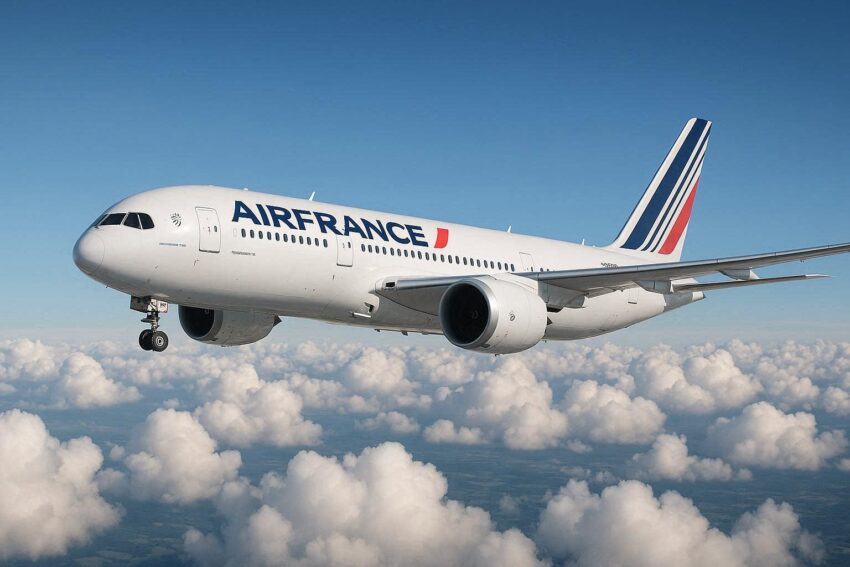
France and Netherlands Aviation Shift: Air France-KLM Moves to Replace 59 Boeing 777-300ER Jets Earlier Than Anticipated
France and Netherlands Aviation Shift: Air France-KLM Moves to Replace 59 Boeing 777-300ER Jets Earlier Than Anticipated
A significant transformation is being prepared within the long-haul fleet strategy of Air France-KLM, as the Franco-Dutch airline group accelerates plans to phase out its fleet of Boeing 777-300ER aircraft. In both France and the Netherlands, where the group’s two flagship carriers operate extensive intercontinental networks, attention has increasingly been directed toward long-term fleet modernization. During a recent earnings discussion, it was indicated that a decision regarding replacements may be taken sooner than previously expected, largely due to limited aircraft production availability at both Airbus and Boeing.
The aircraft under consideration as successors include the Airbus A350-1000 and the yet-to-be-certificated Boeing 777-9, both of which represent the next generation of widebody efficiency and capacity. With 59 Boeing 777-300ERs currently in operation across the group, the upcoming decision is set to influence the airline’s competitive positioning across Europe, North America, Asia, and other global markets. The move is being viewed as part of a broader fleet renewal strategy designed to enhance operational efficiency, reduce fuel consumption, and support sustained profitability.
A Strategic Replacement for 59 Widebody Aircraft
A total of 59 Boeing 777-300ER aircraft are presently being operated within the group, with 43 assigned to Air France and 16 to KLM. These aircraft have long served as a backbone of the carriers’ intercontinental operations, connecting Paris and Amsterdam to key destinations worldwide.
Among these jets, the highest-density configuration features 472 seats and is primarily deployed on leisure-oriented long-haul routes by Air France. While the Boeing 777-300ER has been regarded as a reliable and high-capacity aircraft, the advancing age of the fleet and evolving market demands have made replacement considerations increasingly urgent.
It has been acknowledged that production backlogs at both Airbus and Boeing have added a layer of urgency to the decision-making process. Delivery slots for new-generation widebody aircraft are becoming increasingly constrained, making early commitments strategically advantageous.
Evaluating the Airbus A350-1000 and Boeing 777-9
Two principal contenders have been identified for the fleet renewal: the Airbus A350-1000 and the Boeing 777-9.
The Airbus A350-1000 is already in commercial service and is recognized for its improved fuel efficiency, advanced aerodynamics, and reduced emissions compared with older widebody models. Airbus has also been assessing the feasibility of a potential stretch of the A350-1000, which could provide additional seating capacity while retaining efficiency gains.
Meanwhile, the Boeing 777-9 remains uncertificated but has been designed to deliver substantial improvements in passenger capacity and fuel performance relative to earlier 777 variants. As part of the 777X program, it is intended to serve as Boeing’s flagship long-haul aircraft for high-demand routes.
The final selection is expected to reflect a careful balance between delivery timelines, capacity requirements, operational economics, and long-term strategic alignment across both France and the Netherlands.
Broader Widebody Renewal Underway
The potential replacement of the Boeing 777-300ER fleet is not an isolated initiative but rather a continuation of a wider transformation strategy.
Air France-KLM has already been integrating Airbus A350-900 and A350-1000 aircraft into its fleet to replace Airbus A330s and Boeing 777-200ERs. In 2023, a deal was signed for 50 A350 aircraft, adding to earlier commitments and reinforcing confidence in the type.
However, in August of the previous year, the group adjusted its order mix. The initial allocation of 11 A350-1000 aircraft within the 50-jet deal was reduced to three, with the remainder being shifted toward additional A350-900 aircraft. This adjustment was interpreted as a reflection of evolving network needs and demand patterns.
Air France has been receiving A350-900 deliveries since 2019, steadily incorporating them into its long-haul operations. The first A350-900 delivery for KLM is scheduled for this year, marking a new phase in fleet modernization for the Dutch carrier.
In addition to the A350 family, both Air France and KLM operate Boeing 787 aircraft, which further support the group’s long-haul network diversification strategy.
Fleet Simplification Efforts at Air France
A focused effort on fleet simplification has been pursued at Air France since the launch of its strategic roadmap in 2019. Standardization has been emphasized as a key lever for improving operational efficiency, maintenance costs, and crew training alignment.
Within the narrowbody segment, the airline has been replacing its entire Airbus A320ceo-family fleet with Airbus A220 aircraft. Notably, Air France does not operate A320neo variants, opting instead for a more streamlined fleet composition centered on the A220.
By the end of the decade, Air France is expected to operate between 90 and 95 A220 aircraft. While speculation has arisen regarding potential interest in a stretched A220-500 variant, no official comment has been provided on that possibility.
This transition toward the A220 family is intended to support lower fuel consumption, improved environmental performance, and a more unified operational structure across domestic and short-haul European routes.
Financial Strength Supports Modernization Plans
The fleet transformation has been underpinned by a solid financial performance in 2025. Air France-KLM reported annual revenues of €33 billion, equivalent to $39 billion, representing a 4.9 percent year-on-year increase.
Operating profit reached just over €2 billion, reflecting an improvement of €403 million compared with 2024. Net income climbed to €1.75 billion, up €1.3 billion year on year, with nearly €700 million attributed to unrealised foreign exchange gains.
Within the group, KLM recorded an operating profit of €416 million, remaining essentially flat year on year. Air France, meanwhile, posted an operating result of €1.36 billion, representing an increase of almost €400 million compared with the previous year.
Performance in premium cabins was described as particularly strong, while disciplined capacity management was credited with supporting yield stability. These financial gains have provided the group with greater flexibility to consider long-term fleet investments.
Sustaining Competitiveness in a Tight Aircraft Market
The decision regarding the replacement of the Boeing 777-300ER fleet is expected to be central to maintaining long-term competitiveness in an increasingly constrained aircraft supply environment.
With global demand for new-generation widebody aircraft remaining high, production slots at both Airbus and Boeing are limited. Early commitment may therefore prove essential in securing timely deliveries that align with retirement schedules for ageing aircraft.
For Air France-KLM, the outcome will influence operational efficiency, environmental performance, and passenger experience across major intercontinental markets. The move is being positioned as a forward-looking step designed to strengthen the group’s standing among Europe’s leading airline groups.
As fleet simplification and modernization continue across both France and the Netherlands, the upcoming widebody decision will represent another milestone in the airline group’s long-term transformation journey.
The post France and Netherlands Aviation Shift: Air France-KLM Moves to Replace 59 Boeing 777-300ER Jets Earlier Than Anticipated appeared first on Travel And Tour World.
Source: travelandtourworld.com



Sorry, the comment form is closed at this time.