


France Unites US, UK, Germany, Sweden, Poland And More in a Fierce Warning Against Travel to Iran
France Unites US, UK, Germany, Sweden, Poland And More in a Fierce Warning Against Travel to Iran
France Unites US, UK, Germany, Sweden, Poland And More in a Fierce Warning Against Travel to Iran as governments move urgently to shield their citizens. In this moment, France stands beside the US and UK, while Germany, Sweden and Poland also tighten their stance. Together they signal that travel to Iran now carries serious risks. More countries quietly join this fierce warning and create a united front. As a result, ordinary travellers are being told to rethink plans, delay trips and watch alerts closely. This growing alliance does not emerge overnight. It builds as new military moves and regional tensions raise fresh concerns. Step by step, France, the US, the UK, Germany, Sweden, Poland and more nations speak with one voice. Their message is clear and direct: avoid non‑essential travel to Iran right now.
France: Iran‑Linked Warnings For Israel And The West Bank
France adopted an approach that directly linked the situation in Iran to risk assessments elsewhere. On February 27, 2026, the French Foreign Ministry issued a security advisory that strongly discouraged travel to Israel, Jerusalem, and the West Bank, explicitly citing the security situation in Iran and the potential for its repercussions to manifest in those territories.
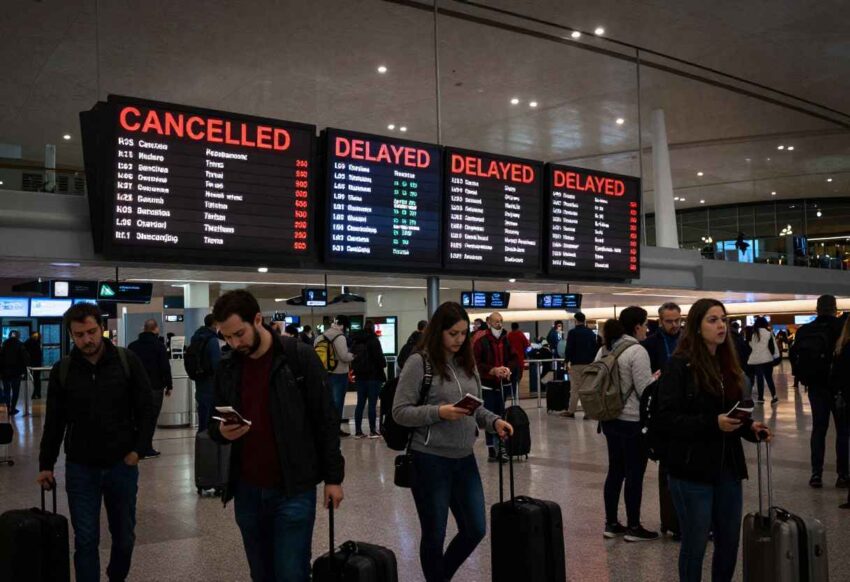
This advisory covered tourism and family visits and drew attention to a realistic prospect of sudden airspace closures, cancellations, and delays affecting flights in and around the region. France’s position was also being articulated within a broader, coordinated European pattern of responses to the evolving crisis around Iran.
United States: Maximum‑Level Warning And Airspace Ban
For Iran, the U.S. State Department’s travel advisory has remained at Level 4: Do Not Travel, representing the highest formal warning in the American system. This status was maintained as tensions rose and was supplemented in early February 2026 by communication from the U.S. virtual embassy for Iran, in which American citizens present in the country were being urged to leave without delay by using any available commercial options.
In addition to the travel advisory, the broader regional security picture was being reshaped when the United States decided that non‑essential personnel and eligible family members would be withdrawn from its embassy in Lebanon, with this step being explicitly linked to fears of escalation involving Iran. On the aviation side, the FAA continued to enforce a long‑standing prohibition on U.S. air carriers, commercial operators, and U.S.‑registered civil aircraft entering the Tehran Flight Information Region (OIIX), with the restriction extended through October 31, 2027, thereby effectively sealing U.S. civil aviation out of Iranian skies for the medium term.
United Kingdom: Complete Travel Freeze And Embassy Drawdown
For the United Kingdom, a very restrictive posture was adopted as the Foreign, Commonwealth & Development Office (FCDO) advised that all travel to Iran should be avoided. This guidance has reflected a serious assessment of the risks facing British nationals, particularly those with dual British‑Iranian nationality, who were being described as facing a significant danger of arbitrary detention by the Iranian authorities.
The British government moved further on February 26–27, 2026, when British staff from the embassy in Tehran were temporarily withdrawn and operations were shifted to a remote model. Under these conditions, the provision of face‑to‑face consular support during emergencies was being described as impossible, while warnings about violent domestic protests, communication blackouts, and disrupted air links were being highlighted in the advisory language.
Germany: Exit Advice And A Direct Airspace Prohibition
In Germany’s case, the Federal Foreign Office advised that German citizens should leave Iran, with this message being communicated as early as January 2026 while commercial and overland exit routes still remained available. In addition, the German embassy was reporting that the wider regional environment must be regarded as extremely unstable, and the possibility of further military confrontation and escalation was openly acknowledged.
The German aviation authority then implemented a concrete operational constraint by issuing NOTAM EDWW B0082/26 on February 10, 2026, under which German operators were directed not to enter Iranian airspace until at least March 10, 2026. In parallel, Germany’s travel guidance was widened to cover Israel as well, reflecting concern that regional conflict dynamics could spread rapidly.
Sweden: Total Avoidance And No Evacuation Guarantee
Sweden’s Foreign Ministry adopted an uncompromising position on January 12, 2026, when citizens were being advised to avoid all travel to Iran and to leave immediately if already present in the country. This clear line was reinforced in February, when the foreign minister stated that Swedish nationals who chose to remain in Iran should not anticipate that the Swedish government would be able to organize evacuation operations if the situation deteriorated further.
Poland: Early And Blunt Warnings
In Poland, very direct language was deployed when Prime Minister Donald Tusk stated that Polish citizens should leave Iran without delay and should under no circumstances travel there while the crisis persisted. The possibility of a full‑scale conflict was described as very real, and the risk that evacuation might prove impossible at a later stage was emphasized. Similar advice was extended to Polish nationals in Israel and Lebanon, where civilian airspace closures were being considered a tangible risk.
Italy: Non‑Essential Presence Asked To End
Italy’s Foreign Ministry, in an advisory dated February 27, 2026, urged that Italians in Iran for tourism or whose presence was not strictly necessary should depart the country. Italy’s guidance also set out a discouraged stance on travel to Iraq and Lebanon, while Italian nationals in Israel were being asked to maintain a particularly high degree of vigilance in light of the broader crisis environment.
Finland: Iran Added To A High‑Risk Group
Finland responded by advising its citizens to avoid all travel to Iran, placing it alongside Yemen and Libya on a list of destinations where immediate departure was being encouraged in February 2026 updates. The Finnish authorities thereby indicated that Iran had entered a small group of countries seen as exceptionally dangerous for Finnish travelers.
Netherlands: Top‑Level Warning On Border Regions
For the Netherlands, the principal change centered on neighboring conflict zones. Dutch authorities raised their advisory level to red, the most serious category, for border regions between Israel and Gaza, Lebanon, and Egypt, citing rising tensions in the Middle East that were closely associated with the Iran–US confrontation. Dutch actions formed part of the joint European pattern woven around Iran‑related risk perceptions.
Serbia: Prompt Departure Encouraged
Serbia’s Foreign Ministry advised that Serbian nationals present in Iran should leave as soon as possible, noting both the increased tensions and the possibility that the security situation could worsen rapidly. This move placed Serbia among the European states encouraging active exit rather than merely cautioning against future travel.
Cyprus: Early Do‑Not‑Travel And Renewed Warnings
Cyprus reacted at an early stage. On January 13, 2026, the Cypriot Foreign Ministry advised its citizens to avoid all travel to Iran and to leave the country immediately if already there. This stance was renewed on February 26, 2026, as part of a second wave of advisories following fresh setbacks in US–Iran nuclear talks and rising talk of potential U.S. military action.
The effect of this guidance could be observed in the Cypriot voluntary traveler registry known as Esther, where registrations were reported to have increased by about 35 percent after the initial advisory.
Greece: Non‑Essential Travel Discouraged
Greece’s Foreign Ministry joined the pattern on February 27, 2026 by urging that Greek citizens avoid all non‑essential travel to Iran, Israel, and the Palestinian territories. This position was justified by references to the escalating standoff between the United States and Iran and the associated increase in security risks within the broader region.
India: Broad‑Based Message To Leave Iran
The Indian Embassy in Tehran was reported on February 23, 2026 as having urged all Indian citizens in Iran—including students, pilgrims, and business owners—to exercise caution and to depart using any available transportation, including the remaining commercial flights. This guidance marked a significant escalation, given the size and diversity of the Indian community living, working, and studying inside Iran.
South Korea: Level 3 Red Alert Maintained
South Korea’s handling of the situation involved an already elevated framework. The South Korean Embassy in Iran issued a safety advisory on February 22, 2026, under which nationals were urged to leave the country promptly. South Korea maintains a Level 3 red alert for all regions of Iran, which by definition constitutes a recommendation to depart. In addition, the embassy indicated that civilian flights could be suspended if the local situation worsened quickly, thereby underscoring the risk of being stranded.
Australia: Strongest‑Possible Language On Iran
Australia has been counted among the countries that adopted the strongest available language about Iran. The Australian government advised that travel to Iran should not be undertaken and urged Australian citizens to leave as soon as possible. Iran’s security environment was characterized as extremely volatile, and a high risk of detention for Australian nationals, including those with dual nationality, was highlighted. The Australian approach included instructing families of diplomats in Israel and Lebanon to depart and offering voluntary departure options to dependents of diplomats in the United Arab Emirates, Jordan, and Qatar.
Canada: Highest Alert And No Embassy Presence
Global Affairs Canada maintained its top‑tier warning by advising that all travel to Iran should be avoided. In late February 2026, this advisory was reinforced when Canadian citizens were explicitly urged to leave Iran if safe departure remained possible, with the message closely echoing wording used by other close U.S. partners.
The explanation for this firm stance was grounded in ongoing regional instability, the risk of sudden military escalation, the possibility of arbitrary detention, and the absence of a Canadian embassy in Iran, which severely limits consular capacities. Overland exit routes via Turkey and Armenia were specifically mentioned as avenues that might still be accessible in an emergency.
China: Risk Elevated And Evacuation Encouraged
China’s Foreign Ministry reacted on February 27, 2026 by describing a significant increase in external security risks in Iran, and it was advised that Chinese citizens should refrain from traveling there. Those already in the country were encouraged to improve their security precautions and to evacuate as soon as possible, while Chinese embassies and consulates in Iran and neighboring states were tasked with providing assistance for relocation by commercial or land routes.
Singapore: Travel Deferment Renewed
Singapore’s Ministry of Foreign Affairs maintained a cautious line, advising that Singaporean citizens should continue to defer all travel to Iran. This advice was anchored in an assessment that the security environment remained unpredictable and that rapid deterioration could not be excluded.
Brazil: Iran Added To A List Of Crisis Destinations
Brazil’s government indicated in late February that Brazilian citizens should leave Iran, building on a similar alert that had been issued for citizens located in Lebanon in January 2026. Even before this spike in tensions, Brazilian policy had recommended that travel to Iran and Lebanon should be avoided, and the renewed messaging reflected how both states were being treated as part of a shared crisis zone.
Japan: Wide Regional Alert Including Iran
On February 20, 2026, Japan’s Foreign Ministry issued a travel alert that covered more than 50 countries and territories, including Iran and much of the Middle East. This advisory warned that a sharp change in the regional situation was possible and that further escalation might result in airport closures and restrictions on airspace.
Japanese citizens were encouraged to follow updates closely, to avoid U.S. military facilities, and to take strong personal safety measures if present in affected territories.
Kazakhstan: Travel Put On Hold And Exits Urged
Kazakhstan’s Ministry of Foreign Affairs advised on February 27, 2026 that citizens should temporarily refrain from traveling to Iran and that Kazakh nationals already on Iranian soil were being urged to leave. The ministry recommended heightened vigilance, careful attention to local instructions, and reliance on Kazakh diplomatic missions, which remained open and were providing hotline support for citizens.
New Zealand: Do‑Not‑Travel And Embassy Closure
New Zealand’s advisory framework placed Iran under an avoid‑all‑travel category. It was stipulated that New Zealanders in Iran should leave now, provided that departure could be carried out safely. The New Zealand Embassy in Tehran had already been temporarily closed from January 16, 2026 due to the deteriorating security environment.
New Zealand further signaled that consular assistance would be extremely limited under these conditions and that commercial options for departure might vanish at short notice, meaning that early exit would be a prudent strategy.
Aviation Regulators: EASA And FAA Tighten The Sky Around Iran
EASA: Conflict Zone Bulletin CZIB 2026‑02
EASA published a Conflict Zone Information Bulletin, designated CZIB 2026‑02, on January 16, 2026, which advised that EU‑regulated airlines and third‑country operators authorized by EASA should not operate at any altitude within the airspace of Iran, that is, the Tehran FIR (OIIX). The bulletin cited the potential presence and possible use of a wide range of weapons and air‑defense systems, combined with unpredictable state reactions, as creating a high risk for civil aviation.
On February 12, 2026, the validity of this bulletin was extended until March 31, 2026, without any change to its substantive content. The document emphasized an increased likelihood of misidentification of civil aircraft, particularly given elevated alert levels of Iranian air defenses and the precedent set by the 2020 downing of Ukraine International Airlines Flight PS752. Operators were also being advised to exercise caution in neighboring airspaces, especially where U.S. bases are located, and to maintain robust contingency plans.
FAA: Long‑Term Prohibition For U.S. Operators
The FAA’s restrictions were continuing a longer trend but acquired new relevance as the 2026 crisis deepened. In its list of prohibitions and restrictions, the FAA specified that operations by U.S. air carriers, commercial operators, and U.S.‑registered civil aircraft in the Tehran FIR (OIIX) were not permitted, with the rule being extended through late 2027. The FAA also took note of Iranian NOTAMs tied to missile exercises and military drills, highlighting the volatility of the environment in and around Iranian airspace.
Germany: National NOTAM Mirroring EASA Advice
Germany’s issuance of NOTAM EDWW B0082/26 created a binding national prohibition on German operators entering Iranian airspace, at least through March 10, 2026. This national step mirrored the EASA guidance and reflected the same underlying risk assessment.
Drivers Of The Advisory Wave And Aviation Disruption
The convergence of so many national advisories and aviation decisions around Iran in early 2026 can be traced to several interconnected drivers. Indirect nuclear negotiations mediated by Oman in Geneva did not lead to a breakthrough, because Washington insisted on near‑zero uranium enrichment while Tehran maintained its demand for recognition of a peaceful nuclear program. At the same time, the largest U.S. air and naval buildup in the Middle East since 2003 was seen in the deployment of carrier strike groups built around the USS Abraham Lincoln and USS Gerald R. Ford, accompanied by additional fighters and support assets.
Inside Iran, severe economic hardship led to protests that began on December 28, 2025 and evolved into nationwide demonstrations against the government. Those protests were met with a harsh security response that reportedly caused thousands of deaths and involved extensive internet blackouts and communication restrictions.
From the aviation risk perspective, concerns were intensified when Iran suddenly closed its airspace on January 14 for about five hours without clear explanation, and then issued NOTAMs about missile launch exercises. The memory of the 2020 downing of Ukraine International Airlines Flight PS752 by Iranian air defenses remained vivid, and EASA explicitly referenced the heightened risk of misidentification during periods of elevated military alert.
Conclusion: A Coordinated Global Response To A Concentrated Risk
Across January and February 2026, the international response to the Iran–US crisis produced a tightly interwoven pattern of travel advisories, evacuation calls, airspace restrictions, and airline route changes. More than 22 countries spanning Europe, Asia, Oceania, and the Americas were recorded urging their citizens either not to travel to Iran or to leave the country, while some also extended their warnings to Israel, Lebanon, and related hotspots. Regulators such as EASA and the FAA used their authority to keep civil aircraft away from Iranian airspace, and commercial airlines reconfigured networks at significant operational cost.
By late February 2026, Iran’s international connectivity had thus been sharply reduced, and many governments were stressing that conditions might deteriorate further without warning. In this environment, a combination of political, military, and domestic factors has been driving a shared perception of risk, and that perception has been reflected in the most comprehensive set of Iran‑focused travel and aviation restrictions seen in many years.
The post France Unites US, UK, Germany, Sweden, Poland And More in a Fierce Warning Against Travel to Iran appeared first on Travel And Tour World.
Source: travelandtourworld.com



Sorry, the comment form is closed at this time.