


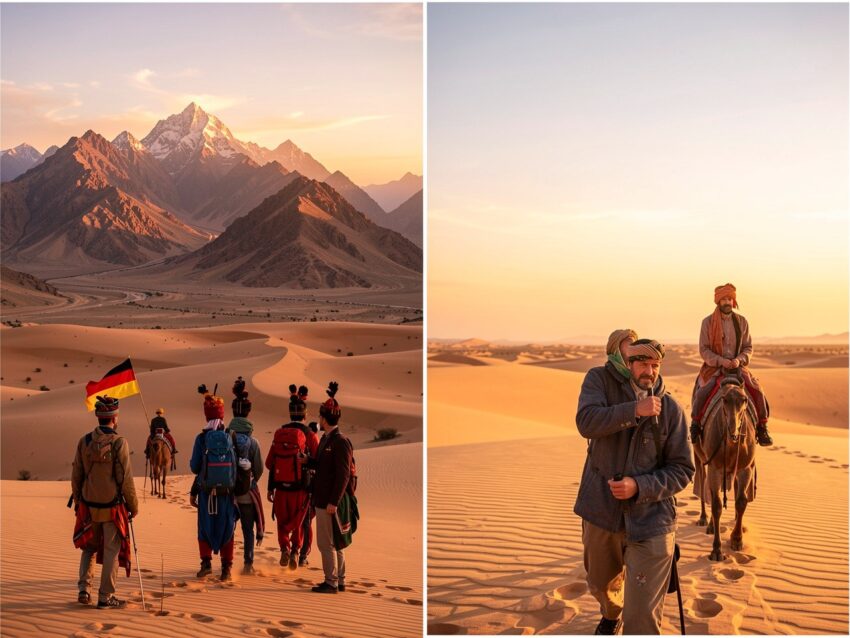
Germany joins South Korea, India, China, United Kingdom, Russia, Türkiye and UAE in Setting Sights on Western Kazakhstan’s Mangystau as Air Astana, Turkish Airlines and FlyArystan Ride the Surge While Hilton, Marriott and Wyndham Scale Up in Aktau — The Telegraph Effect Ignites a Desert Tourism Boom
Germany joins South Korea, India, China, United Kingdom, Russia, Türkiye and UAE in Setting Sights on Western Kazakhstan’s Mangystau as Air Astana, Turkish Airlines and FlyArystan Ride the Surge While Hilton, Marriott and Wyndham Scale Up in Aktau — The Telegraph Effect Ignites a Desert Tourism Boom
Germany, South Korea and India are now part of a widening global wave turning toward western Kazakhstan’s Mangystau region after The Telegraph recently named it among the “10 deserts to visit in your lifetime,” a recognition that is rapidly transforming this once-remote landscape into one of Central Asia’s most talked-about travel frontiers. With Kazakhstan welcoming 15.3 million foreign visitors in 2024 and generating more than $2.6 billion in inbound tourism spending, the spotlight on Mangystau arrives at a moment of measurable national growth, not speculation. China has already emerged as one of Kazakhstan’s fastest-growing source markets with more than 650,000 visitors last year, while India, Germany, South Korea and the United Kingdom continue to expand their outbound travel footprints into emerging destinations supported by visa-free access and improved air connectivity. Aktau, the gateway city to Mangystau’s dramatic Bozzhyra cliffs and vast Ustyurt landscapes, is seeing stronger airline interest through Air Astana’s international network, Turkish Airlines’ Istanbul hub connections and FlyArystan’s domestic links, reinforcing accessibility to a region once considered logistically challenging. International hotel brands including Wyndham, Hilton and Marriott are strengthening their presence in Kazakhstan’s growing urban centers, aligning hospitality capacity with rising visitor demand. What was once an off-the-grid geological marvel is now positioned at the intersection of aviation expansion, hospitality investment and global media validation—turning Mangystau from a hidden desert secret into a strategic tourism play with real economic momentum.
Germany joins South Korea, India, China, United Kingdom, Russia, Türkiye and UAE in Setting Sights
Western Kazakhstan’s Mangystau region is stepping into the global spotlight. After being named by The Telegraph among the “10 deserts to visit in your lifetime,” this remote, cinematic landscape is now drawing serious international attention. The recognition is not symbolic. It is commercial. It is strategic. And it is already influencing airlines, hotels, and tourism planners across Central Asia.
Mangystau is no longer just a geological marvel. It is becoming a structured tourism economy.
Kazakhstan recorded 15.3 million foreign visitors in 2024, with more than 10 million staying overnight. International tourists spent over $2.6 billion in the country last year. The average foreign visitor spent between $1,200 and $1,500 per trip. These figures reflect a tourism sector that is expanding with intent. Mangystau now wants a larger share of that spending.
Bozzhyra, Sherkala, and the underground mosques of Beket Ata and Shakpak Ata are no longer niche attractions. They are being positioned as global icons.
Germany, South Korea, India and China Drive New Momentum as Western Kazakhstan’s Mangystau Gains Strategic Tourism Relevance
Kazakhstan’s tourism data shows strong momentum from non-CIS markets. In 2024, China sent over 650,000 visitors. India contributed more than 146,000 travelers. Germany sent over 90,000 tourists. South Korea added more than 40,000. These numbers reflect growing awareness and improved connectivity.
Visa policies are playing a key role. Kazakhstan offers visa-free access to citizens of 87 countries and provides e-visa options to over 100 nationalities. Simplified entry procedures are lowering friction. That matters for long-haul travelers from Europe and Asia who seek new destinations without complex paperwork.
Germany’s outbound adventure and photography travel segment is particularly strong. South Korea’s demand for cinematic landscapes aligns perfectly with Bozzhyra’s dramatic chalk cliffs. Indian travelers are exploring emerging Silk Road routes beyond traditional Europe itineraries. Chinese tourism growth is linked to expanding air connectivity and visa facilitation.
Mangystau fits all these narratives. It is remote. It is visually surreal. It feels undiscovered.
United Kingdom, Russia, Türkiye and UAE Strengthen Airline and Hospitality Demand in Aktau as The Telegraph Effect Reshapes Travel Flows
The United Kingdom’s influence is indirect but powerful. British media recognition often shifts perception. When a major publication ranks a destination among the world’s best deserts, global tour operators take notice. Digital searches increase. Influencers respond. Airlines monitor booking patterns.
Russia and Uzbekistan remain among Kazakhstan’s largest inbound markets. In the first half of 2025 alone, more than 7.5 million foreign visitors entered Kazakhstan, with the majority coming from neighboring countries including Uzbekistan, Kyrgyzstan, and Russia. These short-haul markets are crucial. They fill flights year-round and support weekend tourism.
Türkiye and the UAE play a different role. They act as aviation connectors. Turkish Airlines operates strong connectivity into Kazakhstan through Istanbul. The UAE serves as a global transit hub linking Europe, Asia, and Africa. Increased visibility of Mangystau encourages multi-stop itineraries that combine Almaty, Astana, and Aktau.
Aktau International Airport is the gateway to Mangystau. Bozzhyra lies roughly 300 kilometers from Aktau, requiring a four-wheel-drive journey across desert terrain. That remoteness is part of the appeal. It also creates opportunity for tour operators and transportation providers.
Air Astana continues expanding its network with strong regional and international connectivity. FlyArystan supports domestic traffic with competitive fares linking Aktau to Almaty and Astana. Turkish Airlines provides onward European connections. SCAT Airlines has introduced new regional services, including cross-border links from Aktau into neighboring countries.
As flight frequencies stabilize and load factors improve, airlines gain confidence to add seasonal capacity. Mangystau benefits from that momentum.
Air Astana, Turkish Airlines and FlyArystan Ride Rising Demand as Western Kazakhstan’s Aktau Becomes a Desert Gateway
Air Astana operates direct flights from Frankfurt to Astana and Almaty, offering seamless domestic connections to Aktau. The airline also links Kazakhstan with London, Istanbul, Beijing, Delhi, and Seoul through codeshares and partnerships. These connections make Mangystau reachable within one or two stops from major global cities.
FlyArystan provides affordable domestic routes that connect Aktau with Kazakhstan’s primary hubs. This low-cost option appeals to younger travelers and adventure seekers.
Turkish Airlines links Istanbul to multiple Kazakh cities. Istanbul functions as a powerful transit hub connecting Europe, South Asia, and the Middle East. This gives Mangystau indirect exposure to dozens of feeder markets.
Flight durations remain manageable. Frankfurt to Astana averages around six hours nonstop. Delhi to Almaty takes roughly three to four hours. Istanbul to Aktau is under three hours. These times position Mangystau as accessible rather than remote.
Air connectivity drives confidence among international tour operators. When flights are frequent and reliable, packaged itineraries become viable. Airlines are not just carriers. They are confidence builders.
Hilton, Marriott and Wyndham Scale Up in Aktau as Hospitality Investment Accelerates in Mangystau
Hospitality investment is following demand signals. Mangystau recorded over 350,000 visitors in the first nine months of 2025. Tourism services in the region generated more than 17 billion tenge during that period, marking double-digit year-on-year growth.
International hotel brands are responding. Wyndham Garden Aktau has entered the market. Other global names such as Hilton and Marriott are strengthening their footprint in Kazakhstan’s growing cities. While not all operate directly within Mangystau’s desert zones, their presence in Aktau supports business travelers, tour operators, and upscale leisure guests.
New tourism investment projects in Mangystau between 2025 and 2029 are valued at nearly 200 billion tenge. Plans include infrastructure upgrades, improved road access, modernization of railway stations, and the development of Kendirli Airport near resort zones.
Hospitality expansion matters for desert tourism. Adventure travelers still require comfortable bases before and after excursions. Reliable hotels enable higher-spending travelers to consider Mangystau as a premium experience rather than a backpacking expedition.
Bozzhyra, Sherkala and Zhygylgan Turn Western Kazakhstan into a Cinematic Playground for Global Travelers
Bozzhyra’s white limestone cliffs rise dramatically from the desert floor. Drone imagery has gone viral across social media platforms. British travel photographers have highlighted the region as one of Kazakhstan’s most breathtaking landscapes.
Sherkala Mountain stands like a solitary fortress. Zhygylgan features collapsed rock formations that resemble a natural amphitheater. Torysh, known as the Valley of Balls, displays mysterious spherical rock formations scattered across vast plains.
The region’s underground mosques, including Beket Ata and Shakpak Ata, add spiritual depth. These sacred sites attract pilgrims and cultural travelers. Discussions about UNESCO recognition for selected sites are ongoing, which could elevate global awareness further.
Mangystau offers diversity. It combines geology, spirituality, adventure, and film potential.
Travel Tips for Visiting Mangystau’s Desert Landscapes
Travelers should plan carefully. Bozzhyra is remote and requires off-road vehicles. Guided tours are recommended for safety. Summer temperatures can exceed 40 degrees Celsius. Spring and autumn provide more comfortable conditions.
Aktau offers modern hotels, dining options, and Caspian Sea views. Visitors can combine desert excursions with coastal relaxation.
Cash availability may be limited in remote areas. Travelers should carry sufficient funds and water supplies during desert trips.
International visitors should check entry requirements. Many nationalities enjoy visa-free access for short stays, but travelers should confirm specific duration allowances before departure.
Insurance coverage is essential for off-road adventures.
How Mangystau Strengthens Kazakhstan’s National Tourism Strategy
Kazakhstan’s tourism growth reflects coordinated policy. The government is investing in infrastructure and digital traveler services. New applications provide information on transportation, accommodation, and attractions.
With 15.3 million foreign visitors in 2024 and rising tourism spending, Kazakhstan is positioning itself as Central Asia’s emerging tourism leader.
Mangystau contributes a distinctive brand. While Almaty offers mountains and Astana showcases futuristic architecture, Mangystau delivers otherworldly desert beauty. This geographic diversity strengthens Kazakhstan’s international appeal.
Diversified tourism reduces dependence on a single region. It spreads economic benefits across provinces. Mangystau’s growth creates local employment in guiding, transport, hospitality, and maintenance sectors.
What This Means for Germany, South Korea, India, China, United Kingdom, Russia, Türkiye and UAE Travelers
For German and British travelers, Mangystau offers a new frontier beyond the Sahara and Icelandic highlands. For Indian and Chinese tourists, it provides a fresh alternative to crowded European circuits. For Russian and Uzbek visitors, it offers proximity with dramatic scenery. For travelers transiting through Türkiye and the UAE, it adds a compelling stopover opportunity.
The Telegraph’s recognition acts as a credibility stamp. It validates Mangystau as a bucket-list destination.
Airlines respond to trends. Hotels respond to airlines. Investors respond to hotels. The cycle is underway.
Western Kazakhstan’s Mangystau is no longer hidden. It is structured. It is investable. It is bookable.
Germany, South Korea and India are driving fresh global attention toward western Kazakhstan’s Mangystau after The Telegraph ranked it among the world’s must-visit deserts, accelerating interest from airlines and hotel giants alike. With Kazakhstan recording 15.3 million foreign visitors and over $2.6 billion in tourism spending in 2024, this desert spotlight could reshape Central Asia’s next big travel boom.
And for travelers seeking landscapes that feel untouched yet increasingly accessible, the desert boom has only just begun.
The post Germany joins South Korea, India, China, United Kingdom, Russia, Türkiye and UAE in Setting Sights on Western Kazakhstan’s Mangystau as Air Astana, Turkish Airlines and FlyArystan Ride the Surge While Hilton, Marriott and Wyndham Scale Up in Aktau — The Telegraph Effect Ignites a Desert Tourism Boom appeared first on Travel And Tour World.
Source: travelandtourworld.com


Sorry, the comment form is closed at this time.