


Germany Overtakes United Kingdom, Italy, United States, France, Spain And More in Leads as Major Source as Istanbul Airport Records Nearly Eighty-Five Million Passengers in 2025, Cementing Its Position as the Top Aviation Hub
Germany Overtakes United Kingdom, Italy, United States, France, Spain And More in Leads as Major Source as Istanbul Airport Records Nearly Eighty-Five Million Passengers in 2025, Cementing Its Position as the Top Aviation Hub
Germany overtook the United Kingdom, Italy, the United States, France, Spain, and others to become the top source of passengers at Istanbul Airport, which recorded nearly eighty-five million passengers In 2025. This achievement highlights the growing demand for travel between Germany and Turkey, driven by strong historical ties, a growing Turkish diaspora, and increased business and leisure exchanges. As a result, Istanbul Airport has not only cemented its position as Europe’s busiest airport but has also reinforced its strategic role as a major aviation hub connecting Europe, Asia, and the Middle East.
Istanbul Airport has firmly cemented its position as the unrivalled leader in European aviation, with nearly eighty-five million passengers passing through its terminals in 2025. This milestone marks an extraordinary feat for the Turkish aviation hub, as it continues to dominate the skies, outpacing rivals in the bustling sector of air travel. With a solid mix of business, leisure, and transit passengers, Istanbul Airport’s record performance underlines the recovery and sustained growth of the aviation industry following the pandemic’s grip.
This article delves into how Istanbul Airport has not only maintained its top position but has also seen growth driven by key source countries. These countries contributed massively to the passenger traffic surge, making Istanbul a central hub for air travel. The top-performing markets have shifted, with new leaders emerging in passenger numbers. Notably, Germany has overtaken long-standing powerhouses like the United Kingdom, Italy, the United States, France, and Spain to become the dominant source country for travelers heading to Istanbul.
Germany’s Dominance in Passenger Numbers: A Game-Changer for Istanbul Airport
In 2025, Germany surged ahead of other countries, making it the largest source of international passengers at Istanbul Airport. The long-standing ties between Turkey and Germany, coupled with high frequency direct flights offered by Turkish Airlines and Lufthansa, are a major factor behind this growth. The large Turkish diaspora in Germany plays an essential role, as many flights from cities like Frankfurt, Munich, and Berlin continue to contribute significantly to Istanbul’s traffic. This surge reflects Germany’s robust economy, growing tourism demand, and a steady stream of business travelers flying between the two countries. The increase in flights directly linking key cities of both nations is a testimony to the continuing demand for travel.
United Kingdom: A Traditional Powerhouse in Air Travel
Though Germany has outstripped the United Kingdom in passenger numbers, the UK remains a strong contributor to Istanbul Airport’s success. The London-Istanbul route is consistently one of the busiest, with multiple flights operating daily between the two cities. Istanbul serves as a vital transit hub for UK passengers flying onwards to Asia, the Middle East, and Africa. Turkish Airlines and British Airways are the primary carriers facilitating this traffic, and despite Germany’s rise, the UK market still sees high volumes of leisure and business travel. Additionally, Gatwick and Heathrow have continued to be major points of connection for travelers heading to Istanbul.
Italy: Mediterranean Gateway to Istanbul
The rise of Mediterranean travel has been a key driver of Istanbul’s growth in 2025. Italy, with its rich history, culture, and the influx of tourists seeking direct access to Istanbul, has been a major contributor. Cities like Rome, Milan, and Venice boast regular flights to Istanbul. As Italy continues to see a surge in post-pandemic tourism, Istanbul has been the natural gateway to connect visitors to Asia and beyond. The ongoing tourism boom from destinations like Rome and Milan has placed Italy high among Istanbul Airport’s most important sources of air traffic.
United States: A Global Transit Hub for North America
Istanbul has solidified its role as a primary gateway between the East and West, with United States passengers contributing significantly to the total passenger traffic. New York, Chicago, and Los Angeles lead the U.S.-Istanbul routes, as passengers from North America frequently transit via Istanbul to reach destinations across the Middle East, Africa, and Asia. Turkish Airlines, offering non-stop flights from major U.S. cities to Istanbul, has played a critical role in cementing Istanbul’s place as a global aviation leader. The transatlantic travel volume between Istanbul and the U.S. has flourished, with both business and leisure travelers filling the flights.
France: Strong Connectivity with Istanbul
Despite the rise of Germany, France remains a crucial player in Istanbul Airport’s success in 2025. Paris Charles de Gaulle remains one of the busiest international airports linked with Istanbul, with French citizens and residents traveling to Istanbul for business meetings, cultural exchange, and tourism. As France continues to embrace post-pandemic international travel, Istanbul Airport serves as a preferred entry point for many travelers wishing to explore Turkey, the Mediterranean, and Asia. French tourists, along with growing business aviation, keep France firmly in the top ranks for passenger traffic.
Spain: Sun, Sea, and the Surge in Travel to Istanbul
The surge in leisure travel has seen Spain rise as one of the key contributors to passenger numbers at Istanbul Airport. With airports like Barcelona, Madrid, and Malaga seeing a surge in flights to Istanbul, Spain’s contribution has been significant in 2025. As Mediterranean tourism continues to thrive, many Spanish travelers choose Istanbul as the perfect starting point for their journeys to Asia or the Middle East. Spanish tourists in particular flock to Istanbul for its rich culture, historical landmarks, and proximity to other Mediterranean and Eastern destinations.
Other Countries Fueling Istanbul Airport’s Passenger Surge
Netherlands: The Amsterdam-Istanbul route remains one of the busiest, catering to both leisure tourists and business travelers.
Russia: Passengers flying from Moscow, St. Petersburg, and other Russian cities continue to feed the Istanbul–Russia route, especially as travel between the two nations continues to grow.
Saudi Arabia: As Saudi travelers make frequent journeys to Istanbul for tourism and religious pilgrimages, Istanbul Airport benefits from strong demand from the Middle East.
Iran: Despite geopolitical tensions, Iranian visitors make up a large segment of Istanbul’s passenger numbers, both for business and leisure travel.
China: With a growing business presence and an increase in tourist arrivals, Chinese visitors have become an important source of traffic for Istanbul.
India: Indian passengers flying through Istanbul are seeing a rise, as India’s rapidly growing middle class seeks more opportunities for tourism and business exchanges in Turkey.
UAE: Dubai-Istanbul remains a key link between two thriving economic centers, and Turkish Airlines caters to this traffic extensively.
Istanbul Airport’s Strategic Growth: Infrastructure and Connectivity
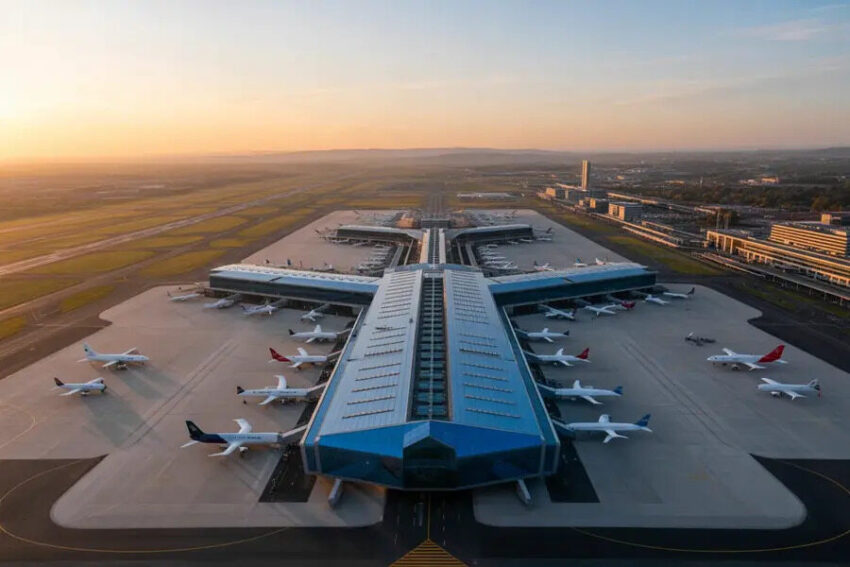
What sets Istanbul Airport apart from other European hubs is its state-of-the-art infrastructure. Designed to handle millions of passengers annually, it continues to evolve in order to meet the growing demand. The expansion of terminal facilities and services has played a huge role in supporting the passenger surge. Moreover, the airport’s strategic position as a crossroads between continents allows it to act as a critical connection point for passengers traveling to Asia, Europe, and the Middle East. These advancements, combined with seamless connectivity, ensure that Istanbul remains the top choice for travelers from diverse origins.
Future Outlook: What’s Next for Istanbul Airport?
Looking ahead, Istanbul Airport is poised to continue its growth trajectory. As Turkey improves its aviation infrastructure, the airport is expected to expand its global route network. The rise of Germany, the UK, Italy, and other source countries demonstrates the shifting dynamics of air travel, with more emphasis on Mediterranean and Middle Eastern travel. Istanbul’s role as a global aviation leader in the coming years will only continue to solidify.
In 2025, Germany overtook the United Kingdom, Italy, the United States, France, and Spain as the leading source of passengers at Istanbul Airport, which recorded nearly eighty-five million passengers, due to strong business, cultural ties, and a growing Turkish diaspora fueling travel demand. This shift further solidifies Istanbul’s dominance as a key global aviation hub.
As Istanbul Airport shatters its records and solidifies its dominance in passenger numbers, the growth in traffic from countries like Germany, the United Kingdom, Italy, France, and Spain showcases the airport’s continued success. These nations, alongside others, reflect a changing air travel landscape where Istanbul has become a critical nexus for both business and leisure travel. The future is undoubtedly bright for Istanbul, as its strategic position, world-class infrastructure, and expanding passenger base continue to drive its success in 2025 and beyond.
The post Germany Overtakes United Kingdom, Italy, United States, France, Spain And More in Leads as Major Source as Istanbul Airport Records Nearly Eighty-Five Million Passengers in 2025, Cementing Its Position as the Top Aviation Hub appeared first on Travel And Tour World.
Source: travelandtourworld.com



Sorry, the comment form is closed at this time.