


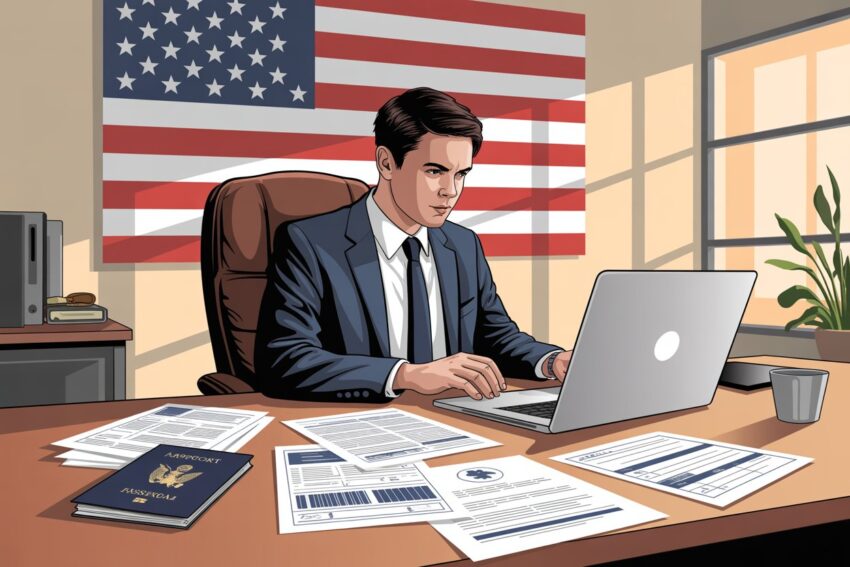
H-1B Visa Holders and Side Hustles: What You Need to Know About Freelancing Restrictions in the U.S.
H-1B Visa Holders and Side Hustles: What You Need to Know About Freelancing Restrictions in the U.S.
The H‑1B visa is a nonimmigrant work visa tied to a specific employer and job in the United States under the specialty‑occupation programme. It is designed so a foreign worker can perform services only for the employer who sponsored their H‑1B petition and in the job role described in that petition.
By law, H‑1B holders cannot engage in any other employment — including side gigs, freelance work, or self‑employment — without proper work authorisation.
This applies regardless of income size, whether the activity is full‑time, part‑time, paid through social media platforms, or even pursues small‑business ideas like home kitchens or craft sales if payment is involved.
Why Side Hustles Are Generally Prohibited
1. Employment Must Be Authorised
H‑1B holders can only work for the sponsoring employer named on their visa petition. Any additional job or income‑generating activity would normally be considered employment, and therefore would need a separate work authorisation from U.S. Citizenship and Immigration Services (USCIS).
2. Freelance or Contract Work Is Not Allowed
Independent contracting, freelancing, or side hustles — even online — are treated as unauthorized work under H‑1B rules unless there is a second valid H‑1B sponsorship or another visa category that authorises employment.
3. Passive Income vs Active Work
There’s a key difference between passive income (e.g., dividends, investment returns, rental income) and active work. Passive income is generally allowed because it does not require physical work, ongoing services, or employment activity in the U.S. Active income from work is not permitted without authorisation.
What Happens If an H‑1B Holder Accepts Income Outside Their Sponsorship?
• Violation of Visa Status: Earning income or “working” outside the terms of the H‑1B visa can lead to a breach of immigration status.
• Future Visa Risks: Unauthorised work can jeopardise future visa renewals, extensions, green‑card petitions, or other immigration benefits.
• Enforcement and Scrutiny: U.S. immigration authorities may review compliance as part of confirmations, interviews, or visa renewals, especially with expanded social media vetting for H‑1B holders.
Common Misconceptions Clarified
Myth: You Can Earn Through Social Media or a Side Business
Not legally. Even small income streams from platforms (e.g., YouTube ads, home kitchen delivery services) are considered active work if they generate revenue and are effectively employment unless the H‑1B holder has separate authorisation.
Myth: You Can Freelance if You Don’t Use Sponsor’s Time
No — the restriction is not about scheduling but about who you work for and whether that work is authorised. Any service provided in exchange for income inside the U.S. must be authorised under immigration law.
Myth: You Can Own a Business
H‑1B holders may own a company, register a business, or hold equity, but they cannot work for that business (e.g., do tasks or earn salary from it) without sponsorship or a concurrent authorised H‑1B linked to that business.
When Side Activities Are Allowed
While H‑1B work restrictions are strict, there are a few limited scenarios where extra engagement is possible:
Passive Investment – Earning passive income (e.g., dividend returns, interest, rental income) that doesn’t involve active work or labour in the U.S. is generally allowed.
Concurrent H‑1B Employment – You can work for more than one employer in the U.S. only if each job is authorised with an H‑1B or concurrent H‑1B petition.
H‑4 Dependent Work (Spouses) – Spouses of H‑1B holders on H‑4 visas may work if they hold an EAD work permit. This does not apply directly to the H‑1B principal but can allow family income generation.
Current Travel & Immigration Context (US)
In addition to work rules, U.S. immigration policy has been subject to broader changes lately:
• The U.S. State Department now reviews social media profiles for H‑1B applicants and H‑4 dependents, increasing scrutiny on online activities during visa processing.
• Although some policies have shifted, the core rule — that H‑1B holders can only work for their sponsored employer — remains firmly intact.
Bottom Line for H‑1B Holders and Side Hustle Aspirations
Active Side Hustles Are Not Permitted on H‑1B
H‑1B visa holders cannot legally take on side gigs, freelance work, contract jobs, content monetisation, or self‑employment while physically in the U.S. unless they obtain separate work authorisation that complies with immigration law.
Exceptions Are Limited and Strictly Defined
Passive income unrelated to employment is typically allowed, and sponsoring a second H‑1B for a concurrent job is possible but complex. You cannot circumvent work restrictions simply by small or informal income sources.
Key Takeaway
If you are on an H‑1B visa and considering any “side hustle” that earns money while you’re in the United States, the safe and legal stance under current rules is no — unless the work is officially authorised through USCIS in conjunction with a valid work visa for that activity.
The post H-1B Visa Holders and Side Hustles: What You Need to Know About Freelancing Restrictions in the U.S. appeared first on Travel And Tour World.
Source: travelandtourworld.com



Sorry, the comment form is closed at this time.