


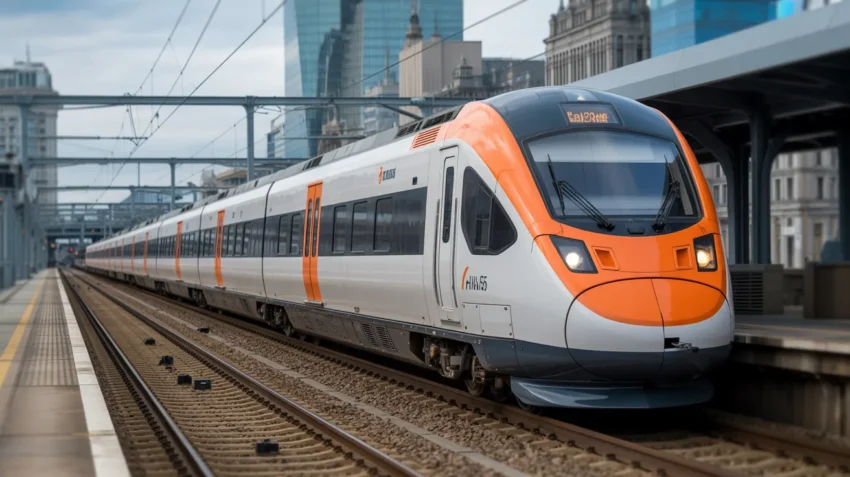
High Speed Rail Services in Spain Resumes After Severe Damage: Here’s What You Must Know
High Speed Rail Services in Spain Resumes After Severe Damage: Here’s What You Must Know
After a demanding month-long break, high-speed rail service between Madrid and southern Spain has finally been approved to resume. This crucial transportation link—a pillar of the country’s infrastructure—was suddenly cut off after a disastrous derailment near Adamuz resulted in 46 fatalities and hundreds of injuries. For the Spanish government and people, the restoration of the Madrid–Seville high-speed line represents a sobering but essential milestone. After a logistical nightmare that forced tens of thousands of passengers onto alternate bus-and-train lines, operations run by Renfe, Iryo, and OuiGo have finally resumed their operations.
The Long Road to Recovery
The restoration of the Madrid-Andalusia corridor was only made possible after the state-owned infrastructure manager, Adif, completed a series of exhaustive technical inspections. In the wake of the disaster, the rail bed near the municipality of Adamuz in the province of Córdoba was found to be severely compromised. Engineering teams were deployed to oversee the replacement of several kilometers of track and the repair of essential signaling systems. These efforts were significantly hampered by the arrival of Storm Marta, which brought torrential rains and heavy winds to the region, complicating the delicate process of rail welding and ballast replacement.
Despite the environmental setbacks, the infrastructure repairs and safety checks were finalized this week, allowing for the first high-speed units to traverse the Sierra Morena mountains once more. The initial Tuesday morning services reported minor delays as operators meticulously verified the integrity of the newly laid rails under real-world conditions.
Multi-Operator Resurgence on the Rails
With the tracks cleared and judicial authorizations secured, the competitive landscape of Spanish high-speed rail has been reinstated. Renfe has resumed its full schedule of Ave and Alvia services, while private competitors Iryo and OuiGo have also begun restoring their respective timetables. Specifically, Iryo has successfully reinstated 14 daily frequencies connecting Madrid and Seville, effectively bridging the gap between the capital and the south. Meanwhile, OuiGo is gradually scaling its operations back to 75% of its pre-accident capacity, with plans to reach full operational status as passenger confidence returns.
The impact on the regional economy has been profound. During the closure, tourism officials in Andalusia estimated losses exceeding €100 million, particularly affecting the Costa del Sol. The sudden absence of the high-speed link disrupted the mobility of thousands of business travelers and international tourists who rely on the efficiency of the Spanish rail network.
Uncovering the Truth Behind the Tragedy
As the trains begin to roll, the focus of the Railway Accident Investigation Commission (CIAF) remains fixed on the root causes of the January disaster. Preliminary reports have centered on a potential rail fracture that may have existed prior to the collision. Investigations at maintenance workshops in Madrid have identified peculiar notches on the wheelsets of multiple trains that passed through the Adamuz section on the day of the accident.
It has been noted by Transport Minister Óscar Puente that the derailment occurred on a straight section of track that had undergone a €700 million renovation less than a year prior. While human error has been largely ruled out, the integrity of the infrastructure is being scrutinized under a microscope. Technical experts are currently analyzing whether a 30-centimeter break in the rail was the catalyst for the Iryo train’s rear carriages jumping the track and colliding with an oncoming Renfe service.
Lingering Disruptions and Future Safety
While the main line to Seville is operational, the journey to Málaga remains partially compromised. A separate incident involving the collapse of a retaining wall near Antequera has necessitated a continued “bridge” service. Passengers traveling to the coastal city are currently required to transfer to buses for a portion of their journey. Adif has projected that these secondary repairs will not be completed until early March, leaving the Málaga branch in a state of partial restoration.
The Spanish government has pledged to invest heavily in climate-resilience spending across the high-speed network to prevent future catastrophes. The recent events have sparked a nationwide debate regarding the balance between rapid expansion and the meticulous maintenance of existing corridors. For the thousands of passengers now boarding trains at Madrid’s Atocha station, the resumption of service is a step toward normalcy, though the memory of the Adamuz tragedy remains etched into the history of the line.
The post High Speed Rail Services in Spain Resumes After Severe Damage: Here’s What You Must Know appeared first on Travel And Tour World.
Source: travelandtourworld.com



Sorry, the comment form is closed at this time.