


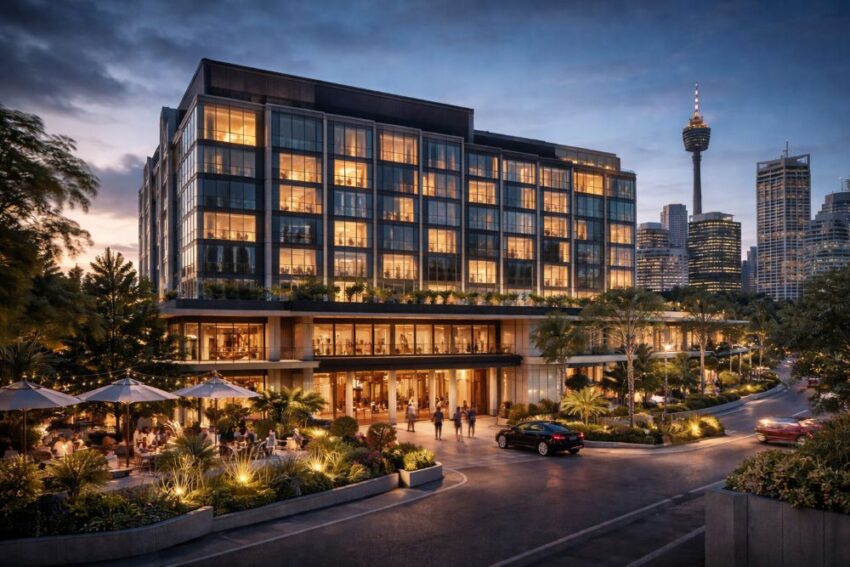
Hotel Supply Crisis in Australia: Why New Openings Are Moving Away from CBDs!
Hotel Supply Crisis in Australia: Why New Openings Are Moving Away from CBDs!
Australia’s hotel industry is experiencing a slowdown in new supply growth as construction costs remain high and the market becomes more selective. According to the latest Australian Accommodation Supply Update from Colliers, the country’s hotel development cycle is entering a more constrained phase, with fewer new openings expected in the near future. As a result, a growing portion of new hotels is being built outside traditional central business district (CBD) locations.
Moderate Growth in Hotel Supply Across Australia
In 2025, approximately 2,339 new hotel rooms were added to Australia’s ten major accommodation markets, increasing total supply by just 1.3%. This marks a significant slowdown in comparison to previous years, reflecting the impact of various challenges, including construction costs, labor shortages, and tightening development feasibility.
While new hotels were completed in most of Australia’s major capital cities, the pace of new developments has considerably slowed. Melbourne saw the largest increase, adding over 1,000 rooms, followed by Sydney’s metropolitan areas and its CBD. Notable new hotels include the 1 Hotel Melbourne by the Yarra River, The EVE Hotel Sydney, 25hours Hotel Sydney The Olympia, and Lyf Bondi Junction, projects that highlight the increasing demand for unique and design-forward accommodations.
Shift in Hotel Supply Location: Moving Away from CBD Cores
Looking ahead, around 7,272 new hotel rooms are under construction, with most scheduled to open by 2026. Interestingly, 30% of these new developments are located outside core CBD markets, focusing instead on suburban areas in major cities like Adelaide, Brisbane, Melbourne, and Sydney.
This geographical shift suggests that future hotel supply will be more dispersed, which is expected to alleviate competitive pressure in traditional CBD hotel markets. As more hotels are built in these peripheral locations, the competitive dynamics within established city centers will likely be altered.
Karen Wales, the Head of Hotels Transaction Services at Colliers, explains that while new hotel supply is still present, it has become more selective. She said that The pipeline is now skewed toward metro locations and integrated precincts rather than adding large volumes of new rooms to CBD markets. This shift will fundamentally change the impact on existing properties in these areas.
One example of this trend is the Queen’s Wharf Brisbane project, which involves multiple hotel brands within an integrated development, reflecting the broader move toward hotels situated in urban renewal areas and near major transport infrastructure.
Construction Costs Continue to Limit Future Hotel Developments
Despite some easing in tender prices during 2025, construction costs remain a significant barrier to hotel development. According to Colliers, the price of building upscale, multi-storey hotels in cities like Sydney has risen sharply, with total construction and fit-out costs now exceeding $830,000 per room.
This cost escalation is forcing developers to reassess their projects, with many reconsidering their timelines, scope, or even the feasibility of moving forward. Wales stated that Feasibility has become the primary constraint on new hotel supply. Even in areas with strong demand and improving operating performance, high construction costs, funding challenges, and holding expenses are preventing many projects from going ahead.
Looking Ahead: Expected Slowdown in New Openings
Colliers forecasts that hotel openings will peak in 2026, after which the number of completions will significantly decline. While the firm has identified over 6,500 additional proposed rooms across the country, it is expected that only a small proportion of these projects will proceed under current market conditions.
This slowdown in supply growth is likely to have implications for investors and operators in the hotel industry, as it could lead to higher asset values for existing hotels, particularly those located in prime CBD or inner-city locations. Given the elevated replacement costs of new properties, hotels in established areas are becoming more valuable by default, reinforcing the long-term appeal of high-quality, well-located hotel assets.
Implications for Investors and Hotel Operators
From an investment standpoint, the report suggests that the slowdown in new hotel supply, combined with high replacement costs, could help sustain the market’s fundamentals in the medium term. Properties in prime locations are likely to see an increase in value as new developments remain constrained.
Conclusion: Navigating the New Hotel Development Landscape
Australia’s hotel market is entering a new phase marked by slower supply growth, shifting development patterns, and continued high construction costs. While new hotel projects continue to move forward, the geographic dispersion of supply, combined with financial constraints, is reshaping the industry’s landscape. Investors and hotel operators will need to navigate these changes carefully, as opportunities in central locations may become more valuable over time.
The post Hotel Supply Crisis in Australia: Why New Openings Are Moving Away from CBDs! appeared first on Travel And Tour World.
Source: travelandtourworld.com



Sorry, the comment form is closed at this time.