


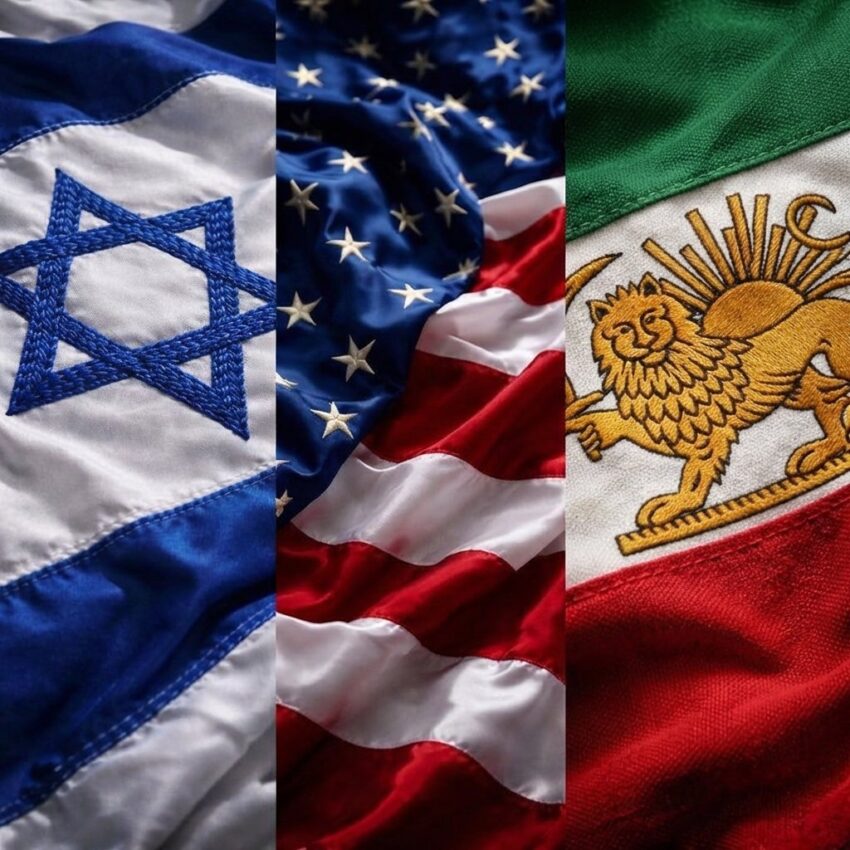
How Escalating War Like Tension with Israel-US and Iran Are Shaking Travel and Tourism Markets What’s Happening Now
How Escalating War Like Tension with Israel-US and Iran Are Shaking Travel and Tourism Markets What’s Happening Now
How Escalating War Like Tension with Israel and the US Are Shaking Travel and Tourism Markets What’s Happening Now
Escalating war like tension with Israel and the US are no longer distant diplomatic headlines. They are shaking travel and tourism markets in real time. What’s happening now is bigger than politics. It is about flights, fuel, fares and fear. As escalating war like tension with Israel and the US intensify, airlines reroute aircraft, governments update advisories and travellers rethink plans. Consequently, travel and tourism markets feel the pressure instantly.
Meanwhile, oil prices react. Insurance costs rise. Long-haul tickets fluctuate. Therefore, what’s happening now is not confined to the Middle East. It is rippling across global aviation corridors and booking systems. Escalating war like tension with Israel and the US are shaking travel and tourism markets from pilgrimage hubs to cruise routes and corporate travel desks.
However, this story goes deeper. Why are travel and tourism markets so sensitive? How exactly are escalating war like tension with Israel and the US reshaping global itineraries? And what’s happening now behind closed airline planning rooms? Travel And Tour World breaks down the facts, the risks and the real-world impact. Read on to understand the full picture.
pic.twitter.com/BZuJDudLej
— Donald J. Trump (@realDonaldTrump) February 28, 2026
The war between Israel and Iran, with direct US involvement, is no longer a distant geopolitical story. It is a travel story. It is a US travel story. It is a US tourism story. And it is reshaping the US tourism Sector across the Americas in ways few anticipated at the start of 2023.
The escalation that intensified through 2024 and 2025, and widened in 2026 with coordinated Israeli and US strikes on Iranian targets, has triggered retaliatory missile and drone responses across the region. Airspace closures. Travel advisories. Insurance spikes. Airline rerouting. Each development carries consequences for US travel, for the US tourism Sector, and for global mobility linked to the USA and the Americas.
This is not abstract diplomacy. It is aviation reality. It is economic exposure. It is tourism risk management in motion.
Emirates Shuts Down All Flights from Delhi, Mumbai, Bengaluru, Kolkata, Chennai and More to Dubai After Sudden Emergency Airspace Closure in UAE – What Every Passenger Must Do Right Now to Protect Their Plans!
Travel Advisories as the Primary Tourism Trigger
Government travel advisories are the most immediate mechanism through which geopolitical tensions affect tourism demand. When a country is placed under a high-level advisory such as “Do Not Travel” or “Avoid all travel,” tour operators reassess itineraries, travel insurers modify coverage and corporate travel departments restrict employee movement.
Iran has consistently been classified at the highest advisory level by the United States and several Western governments due to detention risks and regional instability. Israel’s advisory level fluctuates depending on security conditions, particularly during periods of escalation involving Gaza, Lebanon or Iranian-aligned actors. When multiple governments simultaneously issue strong warnings, inbound tourism demand contracts sharply.
Travel advisories influence behaviour because they represent formal risk assessments by sovereign governments. Insurance policies often exclude destinations under maximum advisory levels. Business travel policies are tied directly to these classifications. Leisure travellers also interpret advisory language as an indicator of safety. As a result, advisories function as immediate demand suppressors within tourism markets.
Diplomatic Shifts and Tourism Fluctuation
Tourism trends between Iran and international source markets have historically correlated with diplomatic developments. Following the 2015 nuclear agreement, sanctions relief created limited openings for business engagement and cultural tourism. European tour operators cautiously resumed programming. Iran’s heritage and historical sites attracted niche travel interest.
However, the reimposition of sanctions after the United States withdrew from the nuclear agreement in 2018 reversed that momentum. Financial restrictions complicated airline operations, cross-border payments and insurance arrangements. International tour companies withdrew from the market. Official tourism data reflected stagnation and contraction in inbound visitor numbers.
This pattern demonstrates a key principle: tourism depends heavily on political stability and economic predictability. When diplomatic frameworks collapse or sanctions intensify, tourism flows respond almost immediately. The nuclear file remains one of the most significant determinants of Iran’s tourism viability.
Israel: Security Escalation and Rapid Tourism Contraction
Israel’s tourism performance is highly sensitive to regional security developments. Official government statistics consistently show that significant military escalation produces immediate declines in inbound travel.
Following major confrontations, including the October 2023 conflict, inbound tourist arrivals dropped sharply. Airlines temporarily suspended routes. Cruise operators removed Israeli ports from itineraries. International conferences relocated to alternative destinations. Group pilgrimage travel slowed significantly.
The tourism sector in Israel demonstrates resilience over time, but recovery is gradual and dependent on stabilisation. Perception risk spreads quickly across global media coverage. Even when conflict is geographically contained, international travellers may postpone plans due to uncertainty.
Government-issued advisories amplify these behavioural shifts. The combined effect of travel warnings, airline suspensions and media reporting creates a measurable contraction in demand. Official statistical releases confirm this pattern repeatedly across multiple years of tension.
Doha Travel Disruption Unfolds: Qatar Airways Suspends Operations as Qatari Skies Shut Down — What It Means for International Transit Passengers
Aviation Safety and Airspace Restrictions
Aviation routing is another critical channel through which tensions affect tourism. When security risk increases in or around Iranian or Israeli airspace, aviation authorities issue notices advising caution or restriction.
Airlines respond by rerouting aircraft to avoid potential conflict zones. Rerouting increases flight duration and fuel consumption. Operational costs rise. Ticket prices may adjust accordingly.
The Middle East lies beneath major flight corridors connecting Europe, Asia and North America. Therefore, instability affects not only travel to Israel or Iran but also global connectivity. Long-haul routes linking Western Europe and Asia frequently transit near the region.
Airspace warnings do not necessarily mean full closures, but even precautionary advisories can alter airline decision-making. Aviation safety is prioritised above all else. When tensions rise, flight patterns change. This ripple effect influences travel affordability and demand far beyond the immediate area of conflict.
US-Israel Conflict with Iran Kindles Airspace Standstill in Bahrain, Stranding Thousands of Travellers Amidst Rising Tension and Fear of Threats: Everything You Need to Know
The 2020 Soleimani Strike: Demonstrating Tourism Sensitivity
The January 2020 U.S. strike that killed Iranian General Qassem Soleimani illustrates how rapidly tourism reacts to geopolitical shock. Following the strike, Iran launched retaliatory missiles at U.S. bases in Iraq. Aviation authorities issued airspace warnings. Airlines adjusted flight paths.
Although the confrontation did not escalate into prolonged warfare, tourism markets responded immediately. Insurance concerns rose. Corporate travel slowed. Tour operators monitored developments closely.
This episode demonstrates that tourism does not require sustained war to experience disruption. Even brief escalations between major powers can generate measurable travel volatility. Government confirmations of military action are sufficient to trigger caution in aviation and hospitality sectors.
Cruise Tourism and Maritime Implications
The Eastern Mediterranean cruise sector is especially vulnerable to instability. Cruise operators plan itineraries months in advance and rely on stable security conditions. When tensions rise between Israel and Iran or involve regional actors, Israeli ports may be temporarily removed from cruise schedules.
Ships reroute to alternative destinations such as Greece or Cyprus. While this protects passenger safety, it results in revenue loss for affected ports and local tourism operators.
Cruise tourism depends heavily on predictability. Insurance providers assess maritime risk in coordination with security advisories. Even limited missile exchanges or heightened alerts can cause operators to modify seasonal plans.
Although cruise lines are private entities, their operational adjustments reflect risk assessments shaped by government guidance and maritime safety protocols.
Middle East Tourism Freeze as Iran Retaliates with Air Strikes in UAE, Qatar, Bahrain, Saudi Arabia, Kuwait, and More Due to Conflict with US and Israel, Resulting in Widespread Travel Chaos and Leaving Thousands of Panicked Travelers Stranded Across the Region
Energy Volatility and Travel Affordability
Iran’s strategic position in global oil markets introduces an indirect but significant tourism impact mechanism. The Strait of Hormuz is a vital corridor for oil shipments. When tensions escalate, energy markets react quickly.
Rising oil prices increase jet fuel costs. Airlines often adjust ticket pricing in response to sustained fuel cost increases. Package tours and long-haul holidays become more expensive.
Tourism is price-sensitive, especially in the leisure segment. Increased airfare can suppress demand even if destinations remain technically open. Energy volatility therefore acts as a secondary but powerful channel linking geopolitical tension and tourism performance.
Even countries geographically distant from the Middle East feel the effect. Global oil pricing is interconnected. Aviation operating costs respond to energy market shifts worldwide.
Isreal Joins Iran, Iraq, Jordan, Qatar, Kuwait And Bahrain in Their Airspace Closures as U.S. and Israel Launch Deadly Strikes on Iran, Following Major Flight Cancellations by Qatar Airways, Lufthansa, British Airways, Turkish Airlines And Others- Is Global Air Travel On Edge?
The 1979 Turning Point: When the US–Iran Relationship Collapsed
Before 1979, Iran was one of the closest allies of the United States in the Middle East. The Shah of Iran, Mohammad Reza Pahlavi, maintained strong security and economic ties with Washington. The US supplied weapons. American companies operated in Iran. Israel and Iran, despite being quiet partners, maintained intelligence cooperation.
That relationship ended abruptly with the Iranian Revolution in 1979.
The Shah was overthrown. Ayatollah Ruhollah Khomeini established the Islamic Republic. The new regime adopted an explicitly anti-American and anti-Israel stance. The US Embassy hostage crisis, in which 52 American diplomats were held for 444 days, shattered relations completely.
Since that moment, Washington and Tehran have had no formal diplomatic relations.
Israel became identified by Iran’s leadership as a central adversary. Iranian leaders repeatedly described Israel as illegitimate. Israel, in turn, began viewing Iran as a long-term strategic threat.
This ideological rupture laid the foundation for decades of hostility.
Iran’s Regional Strategy: Building Influence Through Proxies
Iran does not project power in the traditional way of large conventional armies crossing borders. Instead, it built influence through proxy forces across the Middle East.
In Lebanon, Iran supports Hezbollah, a powerful armed group and political movement. In Gaza, Iran provides backing to Hamas and Palestinian Islamic Jihad. In Iraq and Syria, Iranian-aligned militias operate extensively. In Yemen, Iran supports the Houthi movement.
This network is often described as the “Axis of Resistance.”
Israel views these groups as extensions of Iranian strategy. Rockets launched from Lebanon or Gaza are interpreted not only as local threats but as components of Iranian influence.
The United States also sees Iran’s regional proxy activity as destabilising. US forces stationed in Iraq and Syria have faced attacks from Iranian-aligned militias. These attacks intensified in periods of heightened tension.
Thus, much of the Israel–Iran–US confrontation occurs indirectly, through third-party actors.
The “Shadow War”: Intelligence and Covert Operations
Beyond diplomacy and proxy warfare, Israel and Iran have engaged in covert conflict.
Israeli intelligence services have reportedly conducted operations targeting Iranian nuclear scientists and infrastructure. Cyberattacks, sabotage and unexplained explosions at Iranian facilities have been widely reported over the years.
Iran has also been accused of cyber operations targeting Israeli and Western infrastructure.
These covert actions rarely escalate into open warfare but sustain constant hostility.
The United States has also engaged in targeted actions. The most dramatic occurred in January 2020 when the US killed Iranian General Qassem Soleimani in a drone strike in Baghdad. Soleimani was the head of Iran’s Quds Force and a key architect of regional strategy.
Iran retaliated with missile strikes on US bases in Iraq. Although casualties were limited, the exchange brought the two countries close to direct war.
The confrontation did not escalate further at that time, but it demonstrated how quickly tensions could spiral.
Escalation Risks After October 2023
The Hamas attack on Israel in October 2023 intensified regional tensions dramatically. Israel launched a large-scale military campaign in Gaza.
Iran denied direct involvement in planning the attack but praised resistance against Israel. Hezbollah increased cross-border fire along Israel’s northern border. Iranian-aligned militias in Iraq launched attacks against US forces.
The United States increased military deployments to the region, including aircraft carriers and air defence systems, aiming to deter broader escalation.
The crisis illustrated how quickly the Israel–Iran confrontation could widen through proxy networks.
Although full regional war was avoided, the risk environment significantly deteriorated.
Escalation in the Middle East Is Now a Global Aviation Disruptor
The roots of the crisis lie in long-running tensions over Iran’s nuclear programme and its regional proxy network. Negotiations between the US and Iran during 2025 failed to produce a durable agreement. Direct Israeli strikes on Iranian facilities were followed by US military participation. Iran retaliated with missile and drone operations targeting Israeli territory and US military bases in Gulf states.
Airspace closures followed rapidly. Iran shut its skies. Iraq imposed restrictions. Several Gulf countries temporarily altered flight corridors. Airlines rerouted wide-body aircraft around conflict zones. These changes lengthened flight times between the US, Europe, Asia and the Gulf.
For US travel, that means higher operational costs. For the US tourism Sector, that means pricing pressure. For the Americas, that means shifting aviation flows that affect long-haul connectivity.
Airlines serving US travel corridors must now plan routes with greater caution. Insurance premiums for flying over sensitive zones increase. Fuel burn rises when aircraft detour. Ticket prices reflect those realities.
US tourism does not operate in isolation. It is part of a global aviation grid. When Middle East airspace destabilises, US travel feels the impact.
US Tourism Sector Exposure: Risk, Perception and Market Behaviour
The US tourism Sector depends heavily on international arrivals. Visitors from Europe, the Gulf, and parts of Asia contribute billions to the USA economy each year. When geopolitical risk rises, traveller psychology shifts.
Travel advisories issued by the US State Department influence outbound US travel patterns. When Americans see warnings about Middle East instability, bookings adjust. Some travellers postpone trips. Others reroute to Europe, the Caribbean, or domestic destinations across the Americas.
At the same time, inbound US tourism can face perception spillovers. Global headlines linking the US to military operations can alter sentiment in some overseas markets. Although the USA remains a top destination, political tension affects booking confidence in certain regions.
The US tourism Sector monitors these signals closely. Hotel occupancy trends. Airline seat capacity. Forward booking curves. Data analysts within US travel agencies track daily fluctuations.
The Americas, as a broader region, often absorb diverted demand. Caribbean islands. Mexico. Canada. South American gateways. When travellers avoid conflict-adjacent zones, they redirect spending. That redistribution benefits parts of the Americas even as instability harms others.
US tourism is therefore both vulnerable and adaptive.
Israel’s Tourism Collapse and Gradual Rebound: Lessons for the US Travel Industry
Following the October 2023 escalation between Israel and Hamas, Israel’s inbound tourism fell sharply. Monthly arrivals dropped dramatically compared with pre-conflict levels. Airlines suspended routes. Cruise calls were cancelled. Pilgrimage travel slowed.
Although partial recovery appeared in 2025 during ceasefire periods, volumes remained below pre-war peaks. This pattern offers a case study for the US tourism Sector.
When security risk dominates global news cycles, leisure travel reacts immediately. Business travel pauses. Conferences relocate. Insurance clauses activate.
US travel executives study these shifts carefully. They understand that perception can be as powerful as physical risk. The USA is not a war zone. But global political entanglement influences sentiment.
If escalation expands, US tourism planners must prepare contingency messaging. Clear communication. Safety transparency. Strong destination marketing. Those tools help stabilise demand.
The Americas have repeatedly demonstrated resilience after shocks. The US tourism Sector recovered after the pandemic. It rebounded after past geopolitical tensions. It can adjust again.
Energy Markets, Oil Prices and the Cost of US Travel
Iran is a major oil producer. The Strait of Hormuz is a strategic chokepoint. Any threat to shipping routes triggers immediate volatility in energy markets.
When oil prices rise, jet fuel costs increase. Airlines operating US travel routes must adjust fare structures. That impacts holiday budgets. It affects group tours. It influences long-haul travel decisions across the Americas.
The US tourism Sector cannot ignore energy sensitivity. Even modest oil spikes alter airline cost bases. Budget carriers feel pressure. Transatlantic flights see recalibration. Cargo rates move in parallel.
In 2026, markets responded rapidly to each strike and counterstrike. Even rumours produced price swings. US travel companies learned to hedge risk and monitor commodity futures.
The USA remains one of the largest aviation markets globally. That scale provides resilience. But scale also magnifies exposure.
Energy is the invisible backbone of US tourism.
Airspace Closures and Route Reconfiguration: The New Normal for US Aviation
When Middle East airspace becomes contested, global routing changes. Aircraft from the US to Asia often transit near or above the region. Diversions add hours to flight times. Crew scheduling becomes complex. Maintenance cycles shift.
US travel consumers see the outcome as longer journeys and sometimes higher fares. The US tourism Sector sees it as operational strain.
Airlines flying from the Americas to India, Southeast Asia or the Gulf must navigate geopolitical corridors. Safety remains paramount. Regulators issue NOTAMs. Carriers respond cautiously.
The USA aviation system remains strong. But global conflict introduces friction.
US tourism strategists increasingly factor geopolitical mapping into network planning. Risk modelling now includes missile ranges, defence systems and diplomatic trajectories.
That is the new travel reality.
US Travel Behaviour Shifts: Domestic and Regional Gain
History shows that when global instability rises, domestic tourism strengthens. Americans choose national parks, coastal resorts, and city breaks. The Americas benefit internally.
US tourism boards capitalise on this pivot. Marketing campaigns highlight safety, accessibility and value. Airlines expand domestic seat capacity. Road trips gain popularity.
The US tourism Sector often offsets international volatility with strong internal demand. The USA’s geographic diversity supports that flexibility.
Meanwhile, neighbouring countries in the Americas may attract travellers seeking alternatives to Middle East or European itineraries. Mexico, Canada and Caribbean nations can see uplift.
Thus, while conflict disrupts one corridor, US travel demand redistributes.
Diplomatic Uncertainty and Long-Term Planning in the US Tourism Sector
The broader risk lies in duration. Short conflicts cause temporary disruption. Prolonged escalation generates structural change.
If US-Iran tensions remain elevated, airlines may permanently redesign route maps. Investors may reassess exposure to Gulf markets. Cruise operators may avoid certain ports for extended periods.
The US tourism Sector must adopt scenario planning. Industry associations analyse worst-case models. Travel insurers revise clauses. Corporate travel managers update risk frameworks.
The USA thrives on openness. US travel thrives on global connectivity. Stability is therefore strategic for the Americas.
Policymakers understand that tourism is not secondary. It supports millions of jobs across the US tourism Sector. Every geopolitical decision carries downstream economic consequences.
The Big Picture: Conflict Localised, Impact Global
The war dynamic between Israel, Iran and the US remains geographically concentrated in the Middle East. Yet its ripple effects extend globally.
Airlines adjust. Energy markets react. Traveller sentiment fluctuates. The US tourism Sector recalibrates. The Americas reposition marketing strategies.
Global tourism overall has shown resilience in recent years. International arrivals worldwide approached record levels again by 2025. But resilience does not eliminate vulnerability.
US travel is integrated into a networked world. Conflict in one region affects pricing, routing and psychology everywhere.
The key variable now is containment. If escalation remains limited and diplomatic channels reopen, the US tourism Sector can absorb temporary disruption. If confrontation broadens, the Americas may face prolonged aviation and energy volatility.
The USA remains one of the most robust travel economies globally. Its scale, infrastructure and domestic demand offer buffers. Yet no modern tourism system operates immune from geopolitics.
US tourism is both exposed and adaptive. It reacts. It recalculates. It evolves.
In the months ahead, airline schedules, oil prices, diplomatic talks and regional security assessments will shape the trajectory of US travel. The Americas will watch closely. The US tourism Sector will analyse daily.
The story is still unfolding. But one reality is already clear: what happens between Israel and Iran, and how the US engages, does not stay confined to the battlefield. It travels through airspace. It moves through markets. It reshapes itineraries.
And it tests the resilience of US tourism.
Business Travel and MICE Tourism
Business travel is particularly vulnerable to geopolitical instability. Corporate travel departments frequently rely on official government advisories to determine employee mobility policies. When destinations carry maximum warning levels, non-essential travel is suspended.
Meetings, incentives, conferences and exhibitions (MICE tourism) often decline first during periods of tension. International event organisers prefer stable environments with predictable insurance coverage.
Conference relocation affects hotels, airlines and convention centres. Reduced business travel also impacts premium cabin demand, which is a major revenue driver for international airlines.
Because corporate compliance policies are strict, business travel contraction can occur even before leisure demand declines significantly. Government advisory systems therefore play a direct role in shaping this segment of tourism.
Regional Spillover Effects
Tourism volatility often extends beyond directly involved countries. Travellers sometimes generalise risk across a region rather than differentiating between states. Even when advisories specify limited border areas, perception spreads quickly.
Neighbouring countries such as Jordan, Lebanon or Egypt may experience booking fluctuations during periods of heightened Israel–Iran tension. Although these countries may not be directly involved, regional headlines influence traveller psychology.
Tourism ministries in neighbouring states frequently intensify communication campaigns to reassure visitors. However, perception effects are difficult to control once security concerns dominate media coverage.
Regional interconnectedness means that geopolitical tension produces wider tourism consequences than the immediate geographic zone of confrontation.
Global Tourism Resilience and Uneven Recovery
Official global tourism data shows that the industry has demonstrated resilience in recent years. However, recovery is uneven. Destinations affected by geopolitical instability recover more slowly than stable markets.
The pattern remains consistent: escalation produces immediate decline; stabilisation enables gradual recovery; renewed tension introduces fresh volatility.
Tourism is elastic but not immune. Government advisories, aviation notices and statistical releases confirm the cyclical relationship between geopolitical risk and travel demand.
The post How Escalating War Like Tension with Israel-US and Iran Are Shaking Travel and Tourism Markets What’s Happening Now appeared first on Travel And Tour World.
Source: travelandtourworld.com


Sorry, the comment form is closed at this time.