


How Osaka’s Tourism Struggles with China’s Decline Could Shape Japan’s Economic Future – What It Means for the Country!
How Osaka’s Tourism Struggles with China’s Decline Could Shape Japan’s Economic Future – What It Means for the Country!
As tensions between Japan and China continue to escalate, the economic impact is being felt in key regions, especially in Osaka, Japan’s vibrant cultural and economic hub. Osaka’s neon-lit entertainment districts—known for their bustling nightlife, shopping, and dining experiences—are now confronting a noticeable downturn in tourism. This decline, particularly in Chinese visitor numbers, is tied directly to the harder line on China adopted by Prime Minister Sanae Takaichi.
At the heart of this shift is Osaka’s reliance on Chinese tourism, a vital component for many local businesses, including the restaurant industry. The recent downturn has left many business owners, like Ryoji Shiokawa, a wagyu restaurant manager, grappling with the financial consequences of political decisions. As Chinese tourist numbers dwindle, the question on many minds is: can Osaka’s economy withstand the long-term effects of a tougher security stance on Beijing?
Osaka’s Economic Dependence on Chinese Tourism
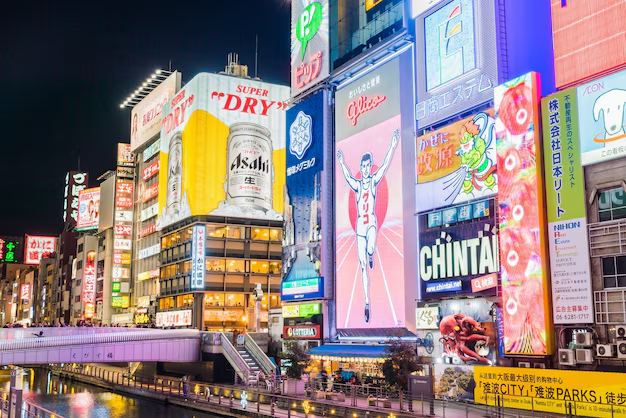
The Chinese market has long been a key driver for tourism in Osaka. With attractions like Dotonbori, famous for its neon lights and culinary delights, and a range of luxury shopping and fine dining experiences, the city has cultivated a strong tourism industry. Many restaurants, including Shiokawa’s wagyu steakhouse, have built their businesses around Chinese tour groups—especially those seeking to experience high-end dining.
At Shiokawa’s restaurant, the typical customer used to be part of a larger tour group visiting from China, eager to sample the finest Japanese beef. Wagyu steaks—often priced around 13,000 yen ($83) per platter—have been a major attraction, drawing customers willing to pay a premium for top-quality cuts of beef. However, since Prime Minister Takaichi’s remarks last year about Japan’s readiness to respond militarily to a Chinese invasion of Taiwan, tourism from China has sharply declined.
A 30% Drop in Sales
For Shiokawa, the shift in tourist dynamics has hit hard. The 30% drop in sales at his restaurant is a reflection of broader changes across Osaka’s hospitality industry. Chinese visitors, once a steady source of income, have become more cautious due to the ongoing political tensions. While the country remains a key player in global tourism, this loss of Chinese visitors is making it harder for businesses like Shiokawa’s to recover.
This decline is particularly difficult for restaurants and tourist-driven businesses that depend on large tour groups. The impact is being felt not only in restaurants but across hotel bookings, retail shops, and tour operators who catered to the Chinese market. For many businesses, the hardline policy toward China has overshadowed the otherwise vibrant tourism scene in Osaka.
Political Decisions with Economic Consequences
Japan’s relationship with China has always been complex, but the political climate under Takaichi has taken a decisive turn. In 2025, when Takaichi suggested that Japan would respond militarily if China moved to invade Taiwan, it ignited a firestorm of reactions across the region. While Japan’s security stance may have solidified its position with some global powers, it has also alienated one of its largest tourism markets: China.
The financial cost of escalating tensions with China is showing up in Osaka’s streets and businesses. As Chinese tourism declines, local businesses face the difficult decision of whether to adjust their marketing strategies or take a hit financially in the short term. Shiokawa, for example, has had to consider adapting his restaurant offerings to attract a wider audience while trying to keep his loyal customers.
Local Businesses Seek New Opportunities
In response to the challenges posed by reduced Chinese tourism, Osaka is attempting to diversify its tourist base. Local authorities are working to promote the city’s offerings to other international visitors, including those from Southeast Asia, Europe, and the United States. However, despite these efforts, many businesses are still reeling from the sudden loss of income from Chinese tourists who used to make up a large portion of Osaka’s travel economy.
For restaurants like Shiokawa’s, attracting non-Chinese visitors to replace the lost revenue has proven difficult. The high-end nature of his business, specifically focused on wagyu beef, appeals more to affluent travelers, many of whom still consider Japan a high-cost destination. Without the mass-market appeal of Chinese tourists, many Osaka businesses are left grappling with the challenges of rebranding and reaching new demographics.
Falling Visitor Numbers Impact the Broader Economy
The situation in Osaka also highlights the broader economic impact of changing geopolitical dynamics. Tourism contributes significantly to the region’s economy, with visitors spending on shopping, dining, sightseeing, and entertainment. As Chinese tourists are an important part of this economic engine, the drop in their numbers has repercussions beyond restaurants. Retailers, hotels, and tour guides are all experiencing the strain of decreased patronage.
The tourism decline is particularly challenging as it coincides with the global economic slowdown, making it harder for businesses to recover from the dual pressures of reduced tourist arrivals and increased operational costs. The pressure on Osaka’s hospitality industry continues to mount as the city works to adjust to the new normal of a politically altered tourism landscape.
Can Osaka Recover from the Tourism Dip?
Despite the current setbacks, Osaka remains an iconic destination with strong potential for recovery. The city’s infrastructure, cultural attractions, and vibrant atmosphere continue to draw international travelers, even without the full presence of Chinese visitors. However, for businesses reliant on Chinese tourism, adapting to the changing circumstances will be crucial for their survival.
In conclusion, while Osaka faces a period of uncertainty due to Japan’s tougher stance on China, the city’s rich cultural offerings and commitment to innovation and adaptation may allow it to rebound in the future. The key will be balancing political decisions with economic needs, ensuring that Osaka remains a destination for all travelers, despite the challenges posed by shifting political tides.
The post How Osaka’s Tourism Struggles with China’s Decline Could Shape Japan’s Economic Future – What It Means for the Country! appeared first on Travel And Tour World.
Source: travelandtourworld.com



Sorry, the comment form is closed at this time.